Georgia Football Transfer Jamarley Riddle Arrested for Speeding
The defensive back was taken into custody in Athens-Clarke County, adding to a string of legal incidents involving the Bulldogs program.

Sports reporter
Reports on leagues, tournaments, and athlete developments with an emphasis on verified event details, official announcements, and commercial context.
Editorial responsibility: Lead reviewer for match reporting, tournament context, and league governance coverage
Primary source: ESPN Top Headlines. Full source links and update notes are below.
Fast summary
Start here
- Defensive back Jamarley Riddle was arrested on charges including speeding and possession of a controlled substance.
- Riddle is a transfer player who recently joined the University of Georgia football program.
- The incident occurred in Athens-Clarke County, the latest in a series of traffic-related legal issues for UGA players.
What happened
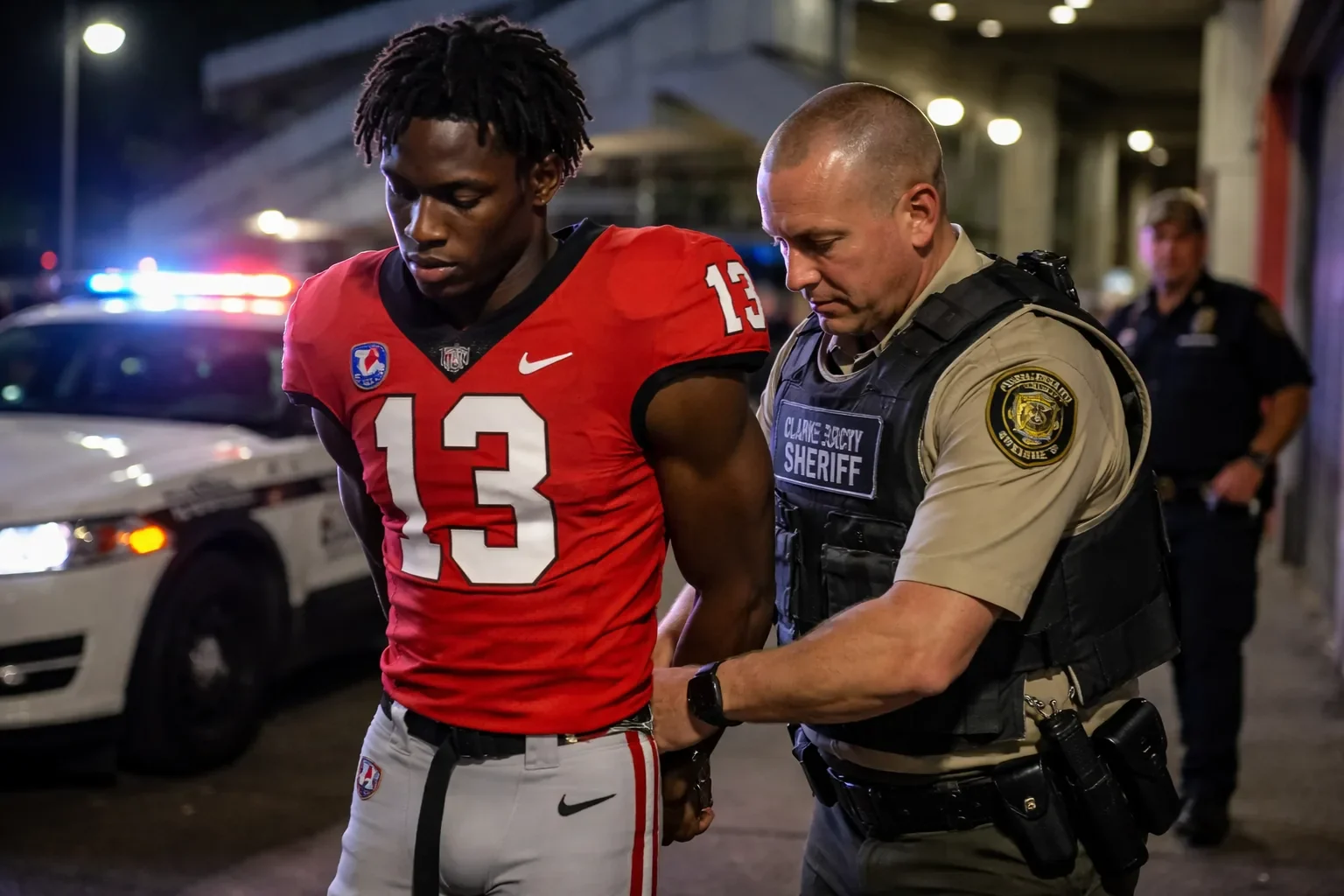
Georgia transfer Jamarley Riddle was arrested in Athens-Clarke County on speeding and drug-related charges, adding another legal incident to the University of Georgia football program's already scrutinized record around driving and off-field discipline. On its own, the arrest is a serious problem for the player. In the wider context of UGA football, it becomes part of a pattern that keeps pulling the program back into uncomfortable national conversation.
That is why the Jamarley Riddle arrest matters beyond one roster update. It lands inside an existing Georgia football accountability problem that has already drawn repeated criticism.
Why the Georgia context matters so much
Programs deal with isolated arrests every year across college sports, but Georgia's situation is viewed differently because of the accumulation of driving-related and legal issues around the team in recent seasons. Once a pattern is established, each new arrest stops feeling like a standalone event and starts looking like evidence that the program has not fully changed its culture or enforcement.
That context raises the stakes for every new case. The Jamarley Riddle arrest is now judged not just on its own facts, but on what it says about whether Georgia has solved anything at all.
Why transfer status adds another layer
Riddle's status as a transfer matters because transfers arrive inside a new system that is supposed to set expectations clearly and quickly. When a newly added player is arrested soon after joining the program, it invites uncomfortable questions about onboarding, discipline messaging, and whether the culture being sold publicly is actually strong enough to shape behavior immediately.
That does not mean the coaching staff controls every player decision. It does mean the program will be asked whether enough deterrence or accountability exists inside the environment.
The importance of the speeding charge
At many schools, a speeding charge might be treated as concerning but not nationally defining. At Georgia, traffic-related allegations carry heavier symbolic force because previous incidents have made high-speed driving a recurring issue around the program. That means the speeding element of the arrest is not incidental. It is central to why the story resonates.
The drug charge adds seriousness of its own, but the driving component is what ties the case directly to Georgia's broader reputational problem.
Why this becomes a Kirby Smart issue
Whether fair or not, repeated player incidents eventually become leadership stories. Head coach Kirby Smart is judged not just by wins and recruiting, but by whether he can create and enforce a standard that reduces preventable off-field trouble. Every new Georgia football arrest makes that leadership test more public.
This is why the program cannot rely only on internal discipline language. At some point, people want to see visible evidence that the cycle is actually being interrupted.
Roster and football implications
The immediate football impact depends on the legal process and any team-imposed discipline, but even before that, the arrest creates uncertainty around availability, development, and trust. Coaches must decide how to handle practice status, team standing, and public messaging, while the player now faces consequences that can affect both his short-term role and long-term trajectory.
In college football, off-field instability can quickly become depth-chart instability, especially for players still trying to establish themselves in a new environment.
Why this keeps following Georgia
Georgia is good enough and visible enough that every legal issue receives amplified attention. Success does not shield a program from scrutiny; in many cases it intensifies it. The Bulldogs are expected to compete for titles, but they are also expected to behave like a national powerhouse capable of controlling the avoidable parts of its own environment.
That is why the Jamarley Riddle arrest will likely be discussed as another test of whether Georgia can align elite football performance with better off-field management.
What comes next
The next steps are likely to include legal processing, possible team discipline, and some evaluation of Riddle's status within the program. More broadly, the question is whether Georgia can respond in a way that feels substantive rather than routine.
For now, the arrest of Jamarley Riddle on speeding and drug charges is another damaging headline for a program already carrying the weight of repeated legal incidents. The case is about one player, but the consequences for public perception reach much further than that.
Why it matters
This arrest continues a pattern of legal and traffic-related incidents within the Georgia football program, potentially impacting team discipline and roster availability.
Read next
Follow this story through the topic hub, more sports coverage, and the latest updates.
Weekly briefing
Get the week's key developments in one concise email.
Get a fast catch-up on the biggest stories, the context behind them, and the links worth your time.
Cadence
Weekly, for a quick catch-up
Coverage
AI, business, world, security, sports
Format
Clear takeaways and useful context
Request the briefing
Leave your email to open a prepared request and get on the list for the weekly briefing.
About the byline
Sports reporter
Olivia Park covers sports with an emphasis on competition, governance, and the business forces shaping global leagues, major events, and athlete decision-making.
Sources and methodology