TCU and Coach Sonny Dykes Agree to Multiyear Contract Extension
TCU and head football coach Sonny Dykes have finalized a multiyear contract extension following a successful run that included a 2022 CFP National

Sports reporter
Reports on leagues, tournaments, and athlete developments with an emphasis on verified event details, official announcements, and commercial context.
Editorial responsibility: Lead reviewer for match reporting, tournament context, and league governance coverage
Primary source: ESPN Top Headlines. Full source links and update notes are below.
Fast summary
Start here
- TCU and head coach Sonny Dykes have agreed to a multiyear contract extension.
- Dykes led the Horned Frogs to the College Football Playoff National Championship game in 2022.
- The extension signals the university's confidence in Dykes despite a challenging 2023 season.
What happened
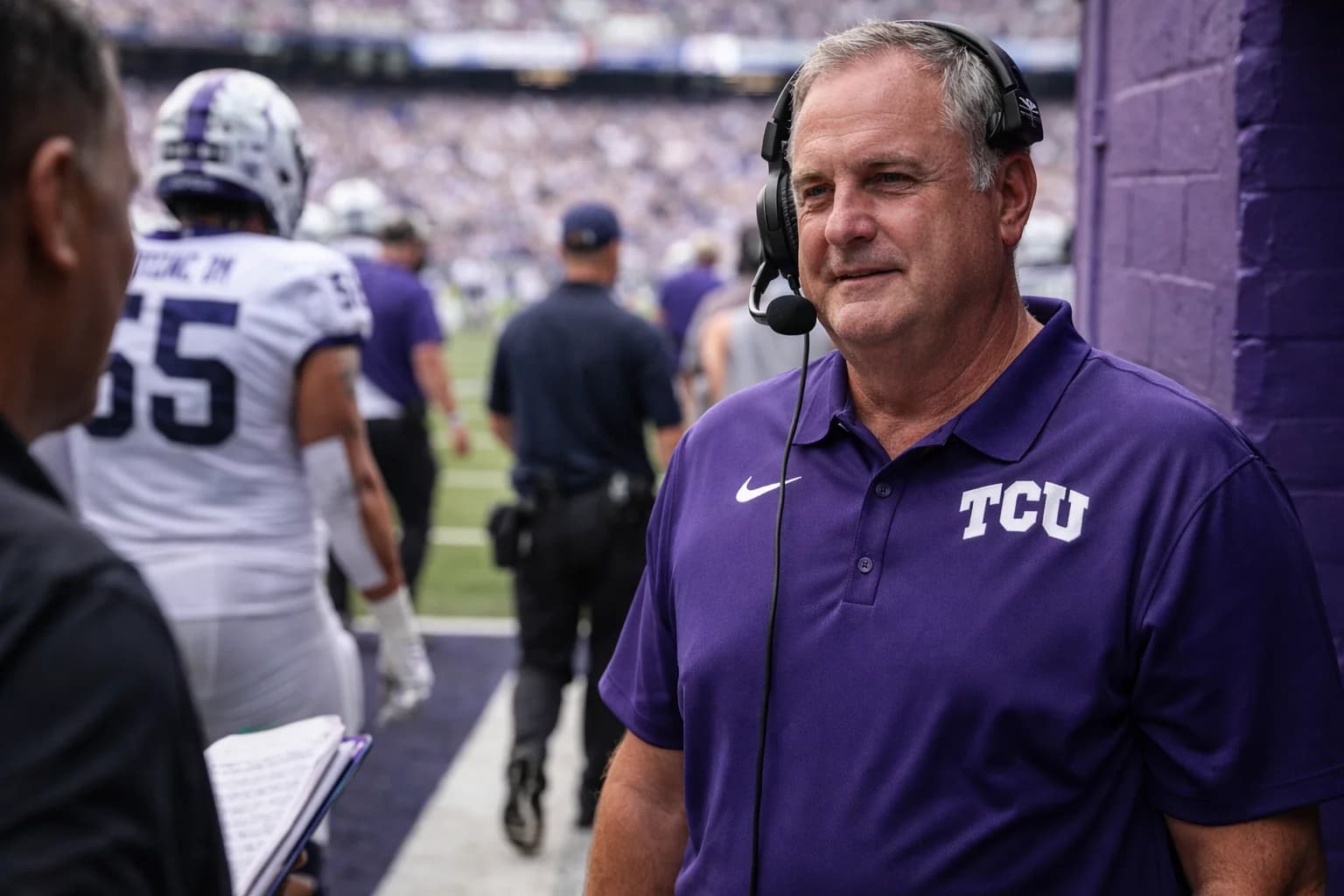
TCU has agreed to a multiyear contract extension with head coach Sonny Dykes, reinforcing the university's belief that he remains the right figure to guide the Horned Frogs through the next phase of Big 12 competition. Contract extensions always communicate something, but in college football they communicate especially loudly because they signal how a university interprets both recent results and future risk.
That is why the Sonny Dykes extension matters. It is not just a contractual housekeeping move. It is a strategic decision by TCU to choose continuity at a moment when the program could easily have drifted into uncertainty after the emotional peak of its national-title-game run.
Why TCU is backing Sonny Dykes now
The extension reflects the reality that Dykes delivered one of the most important seasons in modern TCU football history when he led the program to the College Football Playoff National Championship game. Even if later results have not matched that exact high, administrators clearly appear to view the larger arc of the program under his leadership as strong enough to justify long-term commitment.
That matters because schools do not extend coaches only for past wins. They extend them because they believe the coach can still shape the future better than the alternatives.
The 2022 CFP run still matters
Some postseason runs can be dismissed as one-year spikes. TCU's 2022 journey under Sonny Dykes was too large and too visible to be treated casually. It placed the Horned Frogs on a national stage, proved the program could rise above preseason expectations, and showed recruits, boosters, and conference peers that TCU could still punch at the highest level.
That is one reason the extension carries weight. The national-title-game appearance changed the scale at which TCU football is evaluated.
Why the post-breakthrough seasons are tricky
Programs that make dramatic jumps often struggle with what comes next. Expectations rise faster than roster cycles can stabilize, and the emotional force of a breakthrough season can make every subsequent year feel disappointing unless it matches the peak. In that environment, institutions have to decide whether they believe the coach built something sustainable or simply surfed a perfect moment.
This extension suggests TCU believes Sonny Dykes is closer to the first category than the second.
The Big 12 context
The extension is also important because the Big 12 remains a changing league with shifting power centers, broader opportunity, and constant pressure to stay relevant in playoff conversations. Stability at head coach can be a competitive advantage when rivals are still recalibrating identity, recruiting base, and institutional expectations.
For TCU, keeping Dykes in place helps preserve continuity in scheme, culture, and external messaging at a time when those things matter more than ever.
Why coaching stability matters in recruiting
Recruiting and retention are always shaped by whether players and families believe a coaching staff is secure. A multiyear extension helps eliminate some of the noise that can build around a coach's future, especially when national visibility has already made that coach an object of outside attention. It tells the roster, the recruiting trail, and the donor base that TCU is not wavering publicly.
That matters because college football now moves too fast for leadership ambiguity to remain cost-free.
Why the extension is still a bet
Even so, contract extensions are not guarantees of future success. They are bets. TCU is betting that Dykes can translate earlier breakthrough proof into a steadier long-term model rather than letting the CFP run stand as the defining and isolated peak. If the program stagnates, the extension will later be questioned. If it stabilizes and contends regularly, the move will look decisive and smart.
That is the nature of college football leadership decisions. They are judged more by what follows than by how they are announced.
What comes next
The next important question is whether TCU can convert continuity into competitive consistency. That means roster management, quarterback development, recruiting traction, and remaining near the top of a volatile Big 12. The extension gives Dykes security, but it also sharpens the expectations that come with it.
For now, TCU's multiyear extension with Sonny Dykes is a statement of institutional belief. The Horned Frogs are choosing continuity, trusting that the coach who took them to the sport's biggest stage is still the best person to shape what comes after the breakthrough.
Why it matters
This extension secures coaching stability for TCU as they navigate the evolving Big 12 landscape and build on their recent national success.
Read next
Follow this story through the topic hub, more sports coverage, and the latest updates.
Weekly briefing
Get the week's key developments in one concise email.
Get a fast catch-up on the biggest stories, the context behind them, and the links worth your time.
Cadence
Weekly, for a quick catch-up
Coverage
AI, business, world, security, sports
Format
Clear takeaways and useful context
Request the briefing
Leave your email to open a prepared request and get on the list for the weekly briefing.
About the byline
Sports reporter
Olivia Park covers sports with an emphasis on competition, governance, and the business forces shaping global leagues, major events, and athlete decision-making.
Sources and methodology