Silver: Using Caitlin Clark as a Political Football is Unfair
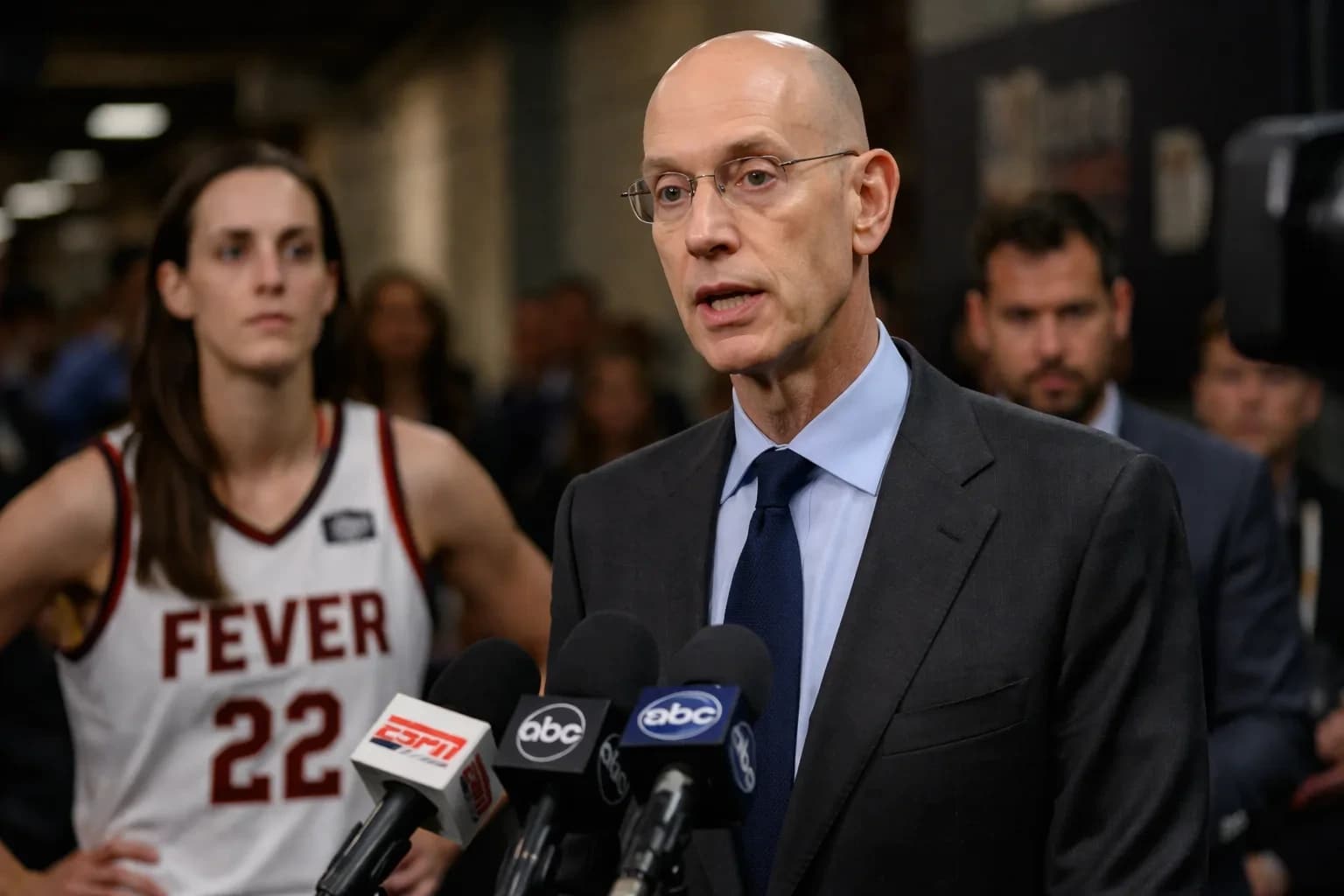
NBA Commissioner Adam Silver says it is unfair to use Fever rookie Caitlin Clark as a political tool, emphasizing her impact as a generational athlete.

Sports reporter
Reports on leagues, tournaments, and athlete developments with an emphasis on verified event details, official announcements, and commercial context.
Editorial responsibility: Lead reviewer for match reporting, tournament context, and league governance coverage
Primary source: ESPN Top Headlines. Full source links and update notes are below.
Fast summary
Start here
- NBA Commissioner Adam Silver addressed the intense discourse surrounding Indiana Fever rookie Caitlin Clark.
- Silver labeled the practice of using Clark for political leverage as fundamentally unfair to the athlete.
- The Commissioner highlighted Clark's role in driving the WNBA to unprecedented growth and viewership records.
What happened
NBA Commissioner Adam Silver addressed the intense public and media scrutiny surrounding Indiana Fever rookie Caitlin Clark. Speaking on the cultural and political discourse that has followed Clark since her entry into the WNBA, Silver expressed his dissatisfaction with how the young star has been characterized in broader societal debates. He emphasized that Clark, a generational talent who has significantly increased the league's visibility, should be evaluated based on her performance on the court rather than being cast as a symbol for external agendas. Silver's remarks come during a season where the WNBA has seen record-breaking attendance and television ratings, much of which is attributed to the arrival of the 2024 draft class and Clark's massive fan base.
What's new in this update
Silver's latest comments specifically focus on what he describes as the weaponization of Clark's identity and success in political or social arguments. He noted that it is unfair to the player herself, who is primarily focused on competing at the highest level and helping her team win games. This update clarifies the NBA's stance on the matter, as the WNBA operates under the NBA umbrella. By speaking out, Silver is attempting to redirect the focus back to the sporting achievements of the athletes and the growth of the league. He pointed out that while the attention is a sign of the league's mainstream status, the nature of the conversation has often veered into territory that distracts from the competition.
Key details
The Commissioner highlighted that the Indiana Fever and the WNBA at large have benefited immensely from Clark's presence, citing specific metrics such as sold-out arenas and multi-million viewer broadcasts. However, he warned that the polarizing rhetoric seen on social media and in some news outlets could have a detrimental effect on the players' well-being and the league's atmosphere. Silver's defense of Clark is notable because he rarely interjects into the specific media narratives surrounding individual players unless the situation impacts the broader integrity or image of the sport. His choice of words, specifically using the phrase political football, suggests a concern that Clark is being used as a proxy for debates on race, gender, and equity that she did not invite.
Background and context
Since being drafted first overall by the Indiana Fever, Caitlin Clark has been the subject of a media firestorm. Her transition from college basketball at Iowa, where she broke numerous scoring records, to the professional ranks has been accompanied by discussions regarding the Clark Effect. While her arrival has brought unprecedented sponsorship deals and media rights interest, it has also sparked controversy regarding the treatment of veteran players versus rookies, as well as the racial dynamics within women's professional basketball. Several public figures have used Clark's success to critique various aspects of the WNBA, often leading to defensive responses from other players and fans who feel the existing league culture is being overlooked in favor of a singular narrative.
What to watch next
As the WNBA season progresses and moves toward the playoffs, the league will likely continue to navigate these complex cultural waters. Watch for whether Silver's comments lead to a shift in how media outlets cover the Fever and Clark specifically. Furthermore, the WNBA is in the midst of negotiating new media rights deals, and the Caitlin Clark factor remains a central pillar of their valuation. Stakeholders will be monitoring if the league takes further steps to protect its athletes from targeted online harassment or if other league executives and team owners echo Silver's sentiment to foster a more sports-centric environment for the players. The league must balance its newfound popularity with the need to maintain a supportive environment for all its athletes.
Why it matters
The commentary from the NBA's top executive signals a pushback against the polarizing narratives that have overshadowed the WNBA's historic season and the performance of its rising stars.
Read next
Follow this story through the topic hub, more sports coverage, and the latest updates.
Weekly briefing
Get the week's key developments in one concise email.
Get a fast catch-up on the biggest stories, the context behind them, and the links worth your time.
Cadence
Weekly, for a quick catch-up
Coverage
AI, business, world, security, sports
Format
Clear takeaways and useful context
Request the briefing
Leave your email to open a prepared request and get on the list for the weekly briefing.
About the byline
Sports reporter
Olivia Park covers sports with an emphasis on competition, governance, and the business forces shaping global leagues, major events, and athlete decision-making.
Sources and methodology