Shohei Ohtani Critiques Own Form Following Leadoff Homer and Dodgers
The Los Angeles superstar remained self-critical of his plate approach on a night when the Dodgers pitching staff stifled their opponents.

Sports reporter
Reports on leagues, tournaments, and athlete developments with an emphasis on verified event details, official announcements, and commercial context.
Editorial responsibility: Lead reviewer for match reporting, tournament context, and league governance coverage
Primary source: ESPN Top Headlines. Full source links and update notes are below.
Fast summary
Start here
- Shohei Ohtani hit a leadoff home run to open the game for the Los Angeles Dodgers.
- The Dodgers pitching staff maintained a no-hit bid deep into the matchup against their opponents.
- Ohtani voiced frustration regarding his overall mechanics and hitting consistency despite the individual and team success.
What happened
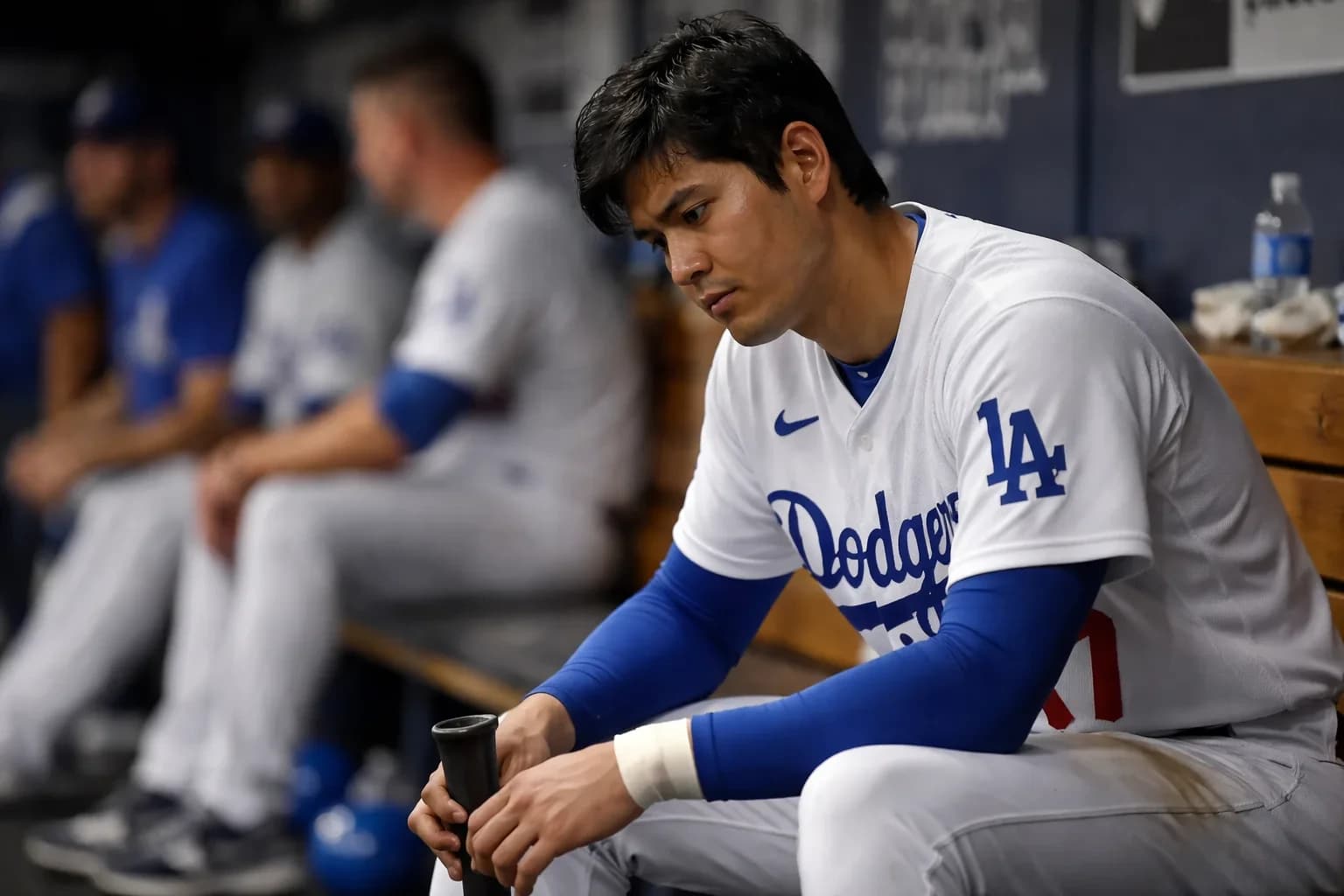
Shohei Ohtani gave the Los Angeles Dodgers an immediate jolt by opening the game with a leadoff home run, and the club's pitchers carried a no-hit bid deep into the night. On paper, it looked like exactly the kind of performance that should leave a superstar satisfied: a signature swing from baseball's biggest attraction, a dominant team result, and the feeling of momentum building around a contender.
Instead, Ohtani reportedly focused on what still felt wrong in his own offensive process. That self-criticism is the center of the story. The headline is not just that Ohtani homered while the Dodgers chased a no-hitter. It is that he still walked away unsatisfied with the quality and consistency of his at-bats.
Why Ohtani's reaction stands out
Elite athletes often describe games differently from fans because they evaluate process before outcome. A leadoff homer can look like proof everything is working, but a hitter may still dislike swing timing, balance, pitch recognition, or the way later plate appearances unfolded. Ohtani has repeatedly shown that kind of internal standard. He does not usually judge himself by one result alone, even if the result becomes the highlight everyone remembers.
That matters because Ohtani's comments give insight into how a player at his level maintains performance over a long season. Satisfaction can be a trap when mechanics are not fully where the player wants them.
Why the Dodgers context matters
This happened on a night when the Dodgers also threatened a no-hit performance as a staff, which amplified the contrast between team dominance and personal dissatisfaction. In a lesser lineup, a leadoff homer during a near-historic pitching display might be enough to define the night completely. But the Dodgers are built around championship expectations, not isolated celebrations.
That environment reinforces Ohtani's mindset. In a title-chasing clubhouse, players are encouraged to think beyond the scoreboard and toward whether their approach will hold up in October-level baseball.
The difference between production and comfort
One of the recurring truths in baseball is that production can mask discomfort. A hitter can homer and still feel late on fastballs, imbalanced on breaking pitches, or mechanically rushed. Ohtani's remarks suggest that he is separating the box-score reward from the repeatability of his swing. That is a useful distinction, especially for a player whose ceiling is measured not just in All-Star moments but in sustained MVP-level dominance.
For the Dodgers, that level of self-audit is not a problem. It is usually a positive sign that a star is still trying to sharpen already-dangerous form.
Why this says something about Ohtani specifically
Ohtani's reputation is built not only on talent, but on relentless refinement. He has spent years doing things that were supposed to be unrealistic in modern baseball, and part of that comes from refusing to accept surface-level success as final proof. When a player of that caliber says he is dissatisfied despite a home run, it reflects how narrow his personal definition of a good game can be.
That is why these comments resonate. They reveal a competitive standard that helps explain why Ohtani remains so difficult to compare with ordinary stars.
What it means for the Dodgers
From the Dodgers' point of view, the larger takeaway is encouraging rather than alarming. If Ohtani is still producing while believing there is more timing and consistency to unlock, then the offense may not yet be operating at full strength. For a team with postseason ambitions, that is a better problem than watching a star perform at his limit in May or June.
It also reinforces the tone around the roster: high expectations are not reserved for slumps. Even successful nights are treated as opportunities for calibration.
What comes next
The next question is whether Ohtani's concerns show up in upcoming at-bat quality or whether they fade as a short-term adjustment issue. Observers will watch his swing decisions, hard-contact profile, and ability to stack strong games rather than isolated highlights. That is likely the standard Ohtani is using as well.
For now, the story captures something familiar about both Shohei Ohtani and the Dodgers. A leadoff home run and a no-hit bid can dominate the public narrative, but inside a contender's clubhouse, the deeper conversation is often about repeatability, readiness, and whether good performances are actually as clean as they looked. Ohtani's dissatisfaction suggests he still sees another level ahead.
Why it matters
Ohtani's high internal standards underscore the championship-focused culture of the Dodgers as they look to optimize their star-studded roster.
Read next
Follow this story through the topic hub, more sports coverage, and the latest updates.
Weekly briefing
Get the week's key developments in one concise email.
Get a fast catch-up on the biggest stories, the context behind them, and the links worth your time.
Cadence
Weekly, for a quick catch-up
Coverage
AI, business, world, security, sports
Format
Clear takeaways and useful context
Request the briefing
Leave your email to open a prepared request and get on the list for the weekly briefing.
About the byline
Sports reporter
Olivia Park covers sports with an emphasis on competition, governance, and the business forces shaping global leagues, major events, and athlete decision-making.
Sources and methodology