Rousey Defeats Carano With 17-Second Armbar Submission
The highly anticipated clash between two of women's MMA's most iconic figures ended abruptly as Rousey secured a signature finish in the opening seconds.

Sports reporter
Reports on leagues, tournaments, and athlete developments with an emphasis on verified event details, official announcements, and commercial context.
Editorial responsibility: Lead reviewer for match reporting, tournament context, and league governance coverage
Primary source: ESPN Top Headlines. Full source links and update notes are below.
Fast summary
Start here
- Ronda Rousey won the bout in 17 seconds of the first round.
- The victory was achieved through an armbar, Rousey's primary finishing maneuver.
- The match featured two of the most influential pioneers in the history of women's professional fighting.
What happened
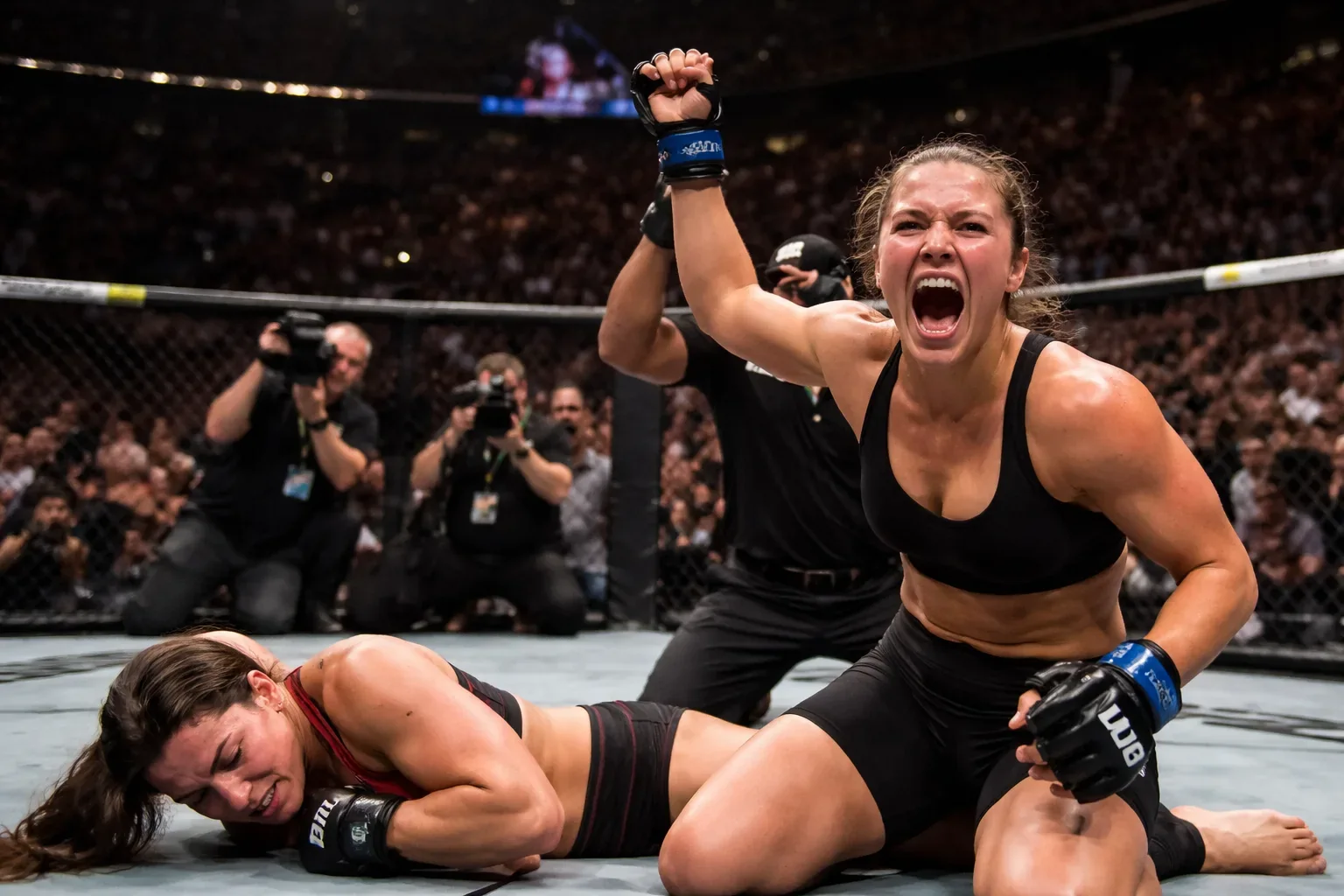
Ronda Rousey defeated Gina Carano in just 17 seconds, finishing the fight with the armbar that defined her rise to the top of women's MMA. For a matchup built on history, legacy, and years of fan speculation, the ending was brutally simple. Rousey closed distance almost immediately, forced the grappling exchange she wanted, and converted the position into a submission before the fight had time to become tactical or layered.
That speed is what gives the result its power. The bout was promoted as a meeting between two of the most important names ever associated with women's combat sports, yet it ended in a way that reinforced one of the oldest truths about Rousey's career: when opponents fail to stop the opening sequence, the fight can end before it truly begins.
Why the 17-second finish matters
Fast finishes always generate headlines, but this one carries extra weight because of the names involved. A 17-second armbar submission is not merely efficient. It becomes part of the historical record of how dominant Rousey's specialty could still look against a high-profile opponent. In combat sports, elite names are supposed to produce uncertainty. This result produced almost none once the clinch was established.
That is why the finish immediately feels memorable. It did not just settle a fight. It flattened what many expected to be a much longer symbolic showdown.
Why the armbar remains central to Rousey's identity
Rousey's armbar has always been more than a technique. It is the move most closely associated with her fame, her judo background, and the period when she transformed women's MMA into a mainstream attraction. Winning with it again in such quick fashion reinforces the idea that certain signature skills remain dangerous even when every opponent knows what is coming.
That kind of predictability-without-prevention is what makes a finishing system iconic. Everyone in the arena understands the threat. Very few can stop the chain once it starts.
The legacy angle with Gina Carano
Carano's role in the story matters because she represents an earlier foundational chapter in women's MMA. Before Rousey became the defining mainstream star of the sport, Carano had already become one of its first breakout personalities. A matchup between them therefore carries more historical meaning than a routine booking. It links two generations of visibility, style, and public attention.
Because of that, the result will be interpreted partly as a sporting outcome and partly as a legacy marker. Rousey won decisively, and the speed of the win gives her side of that comparison unusual force.
Why the fight ended so quickly
The technical explanation is also straightforward. Rousey has always been most dangerous when she can erase distance immediately, tie up before striking exchanges settle, and move opponents into a grappling situation where balance and arm position break down quickly. If Carano's best chance was to keep the fight long and striking-based, the contest ended before that version of the matchup ever had a chance to develop.
That pattern is familiar in Rousey fights. The opening seconds often decide whether the opponent will ever get to their preferred range.
What this means for both fighters
For Rousey, the result renews the discussion about how much more she wants from active competition and what level of opposition would now make sense. A finish this fast does not answer every question about a broader comeback, but it does restore leverage and attention. For Carano, the next conversation is harder. A return tied to a historic-name fight is one thing; rebuilding after such a sudden loss is another.
In combat sports, timing and narrative matter almost as much as rankings. This result strongly favors Rousey's side of both.
What comes next
The next steps will depend on whether promoters and camps see this as a one-off event or the start of a larger run. Fans will want to know whether Rousey stays active and whether Carano intends to continue competing after such a short and punishing return result.
For now, the 17-second armbar submission stands as a sharp reminder of why Ronda Rousey became one of the sport's defining forces. Against Gina Carano, the fight lasted only moments, but those moments were enough to settle a long-running hypothetical with emphatic clarity.
Why it matters
This result reinforces Rousey's dominance in the grappling department and concludes a long-discussed competitive narrative between two foundational stars of the sport.
Read next
Follow this story through the topic hub, more sports coverage, and the latest updates.
Weekly briefing
Get the week's key developments in one concise email.
Get a fast catch-up on the biggest stories, the context behind them, and the links worth your time.
Cadence
Weekly, for a quick catch-up
Coverage
AI, business, world, security, sports
Format
Clear takeaways and useful context
Request the briefing
Leave your email to open a prepared request and get on the list for the weekly briefing.
About the byline
Sports reporter
Olivia Park covers sports with an emphasis on competition, governance, and the business forces shaping global leagues, major events, and athlete decision-making.
Sources and methodology