Masters 2026: McIlroy's Late Surge Halted by Saturday Struggles
A late-round lapse on Moving Day has forced Rory McIlroy into a chase position for Sunday. The quest for the career Grand Slam faces a high-stakes finale

Sports reporter
Reports on leagues, tournaments, and athlete developments with an emphasis on verified event details, official announcements, and commercial context.
Editorial responsibility: Lead reviewer for match reporting, tournament context, and league governance coverage
Primary source: ESPN Top Headlines. Full source links and update notes are below.
Fast summary
Start here
- McIlroy entered the back nine with momentum before crucial bogeys derailed his lead.
- The 2026 leaderboard remains tightly packed, leaving several contenders within reach of the Green Jacket.
- McIlroy's history of Sunday charges at Augusta provides a glimmer of hope despite the Saturday setback.
What happened
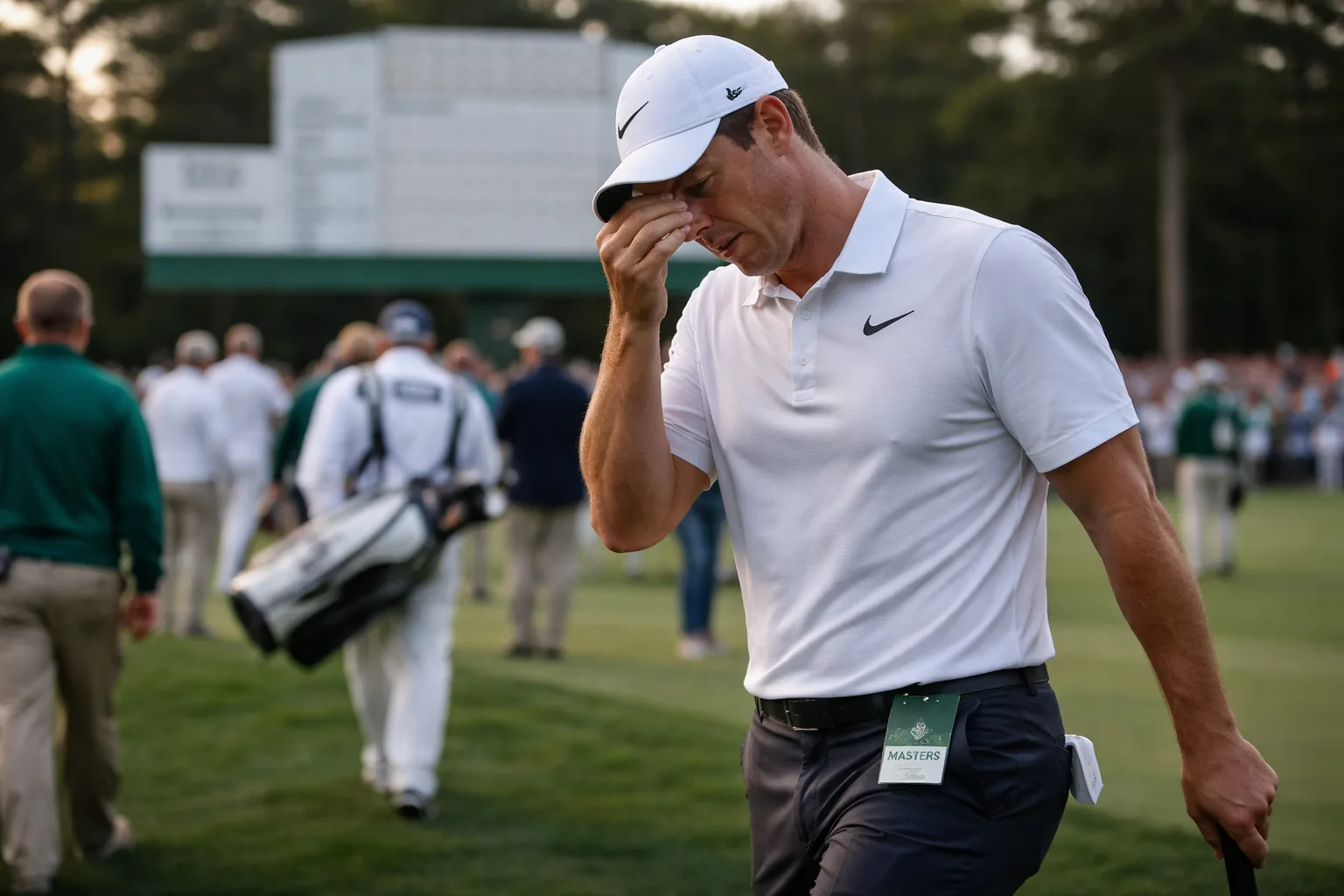
Rory McIlroy's 2026 Masters challenge took a familiar and painful turn on Saturday as a promising position at Augusta National gave way to late mistakes that knocked him out of control of the tournament heading into Sunday. The timing is what makes the stumble so significant. McIlroy was not drifting anonymously on the leaderboard. He was once again close enough to the Green Jacket for the conversation about the career Grand Slam to become immediate and unavoidable.
That is why the Rory McIlroy Masters Saturday collapse matters beyond one bad stretch of holes. At Augusta, every setback is measured not only against the round in front of him, but against a decade-plus of near-misses, emotional resets, and the weight of a missing title that still defines the unfinished part of his major championship story.
Why Saturday at Augusta always feels amplified
Moving Day at the Masters is different from ordinary third rounds because it decides who enters Sunday with command and who enters it with narrative baggage. McIlroy had an opportunity to do the first and ended up with the second. A strong front or middle stretch can disappear quickly at Augusta when the back nine demands precision, discipline, and emotional steadiness all at once.
For McIlroy, that shift feels particularly heavy because Augusta has repeatedly been the site where possibility and pressure collide. Every time he surges, the tournament revives the same question: can this finally be the year he closes the last gap in his résumé?
What the collapse changes
The immediate consequence is strategic. Instead of playing Sunday from a position where others must chase him, McIlroy now has to chase while hoping the leaders leave the door open. That changes club selection pressure, scoring psychology, and how aggressively he may need to attack early in the final round.
The deeper consequence is emotional. Every late stumble at Augusta strengthens the idea that the Masters asks different questions of McIlroy than other majors do. Whether that perception is fair or not, it becomes part of the pressure he has to carry into the final day.
The career Grand Slam shadow
Rory McIlroy's Masters pursuit is never just about one tournament. It is about the last missing piece in a career that already includes major titles, Ryder Cup moments, and a long run among golf's elite. That is what makes even a single Saturday collapse feel historically charged. If he were chasing an ordinary win, the conversation would be simpler. Because he is chasing the career Grand Slam, every dropped shot at Augusta gets attached to legacy language almost instantly.
This is also why public and media attention can become a factor in itself. McIlroy is not only playing the course and the leaderboard. He is playing against a story that revives every April and grows louder whenever he approaches the top.
What Sunday now requires
To recover, McIlroy will likely need two things at once: a low round and emotional calm. Augusta does not reward desperation for very long. Players who try to force birdies without discipline often find themselves making the sort of mistakes that remove them from contention altogether. McIlroy therefore faces the classic final-round tension: attack enough to win, but not so much that the course punishes impatience.
That challenge is made harder by a crowded leaderboard. The 2026 Masters finale is no longer a simple duel with one obvious target. It is a compressed race in which several players remain close enough to the lead that early momentum could change the entire shape of the afternoon.
Background and context
McIlroy's history at Augusta remains one of the most scrutinized unfinished stories in modern golf. The 2011 collapse still shadows every future opportunity, even though his game and career have evolved dramatically since then. That long memory is part of what makes the Masters unlike his other major starts. The tournament does not arrive as a blank slate. It arrives with accumulated psychological history.
Yet that same history is what keeps hope alive. McIlroy has shown enough brilliance at Augusta over the years that a Sunday charge never feels impossible, only incomplete until proven otherwise.
What to watch next
Watch how McIlroy begins the final round. An early birdie run could immediately reset the emotional atmosphere, while a cautious or shaky opening may make the Saturday stumble feel permanent. Also watch the leaders. The more volatile they are, the more relevant McIlroy's experience becomes if he can stay close into the back nine.
Why this matters
Rory McIlroy's Saturday stumble at the 2026 Masters matters because it transformed a clear path toward the Green Jacket into another pressure-filled Sunday chase, keeping the career Grand Slam dream alive but once again forcing him to pursue it from a position of emotional and competitive complexity.
Reader context
This story belongs to Northstar Herald's Golf and The Masters coverage, with related entities including Rory McIlroy, Augusta National, Major Championship, 2026 Masters. The report is based on ESPN Top Headlines source material.
Related coverage
Why it matters
McIlroy remains one win away from a career Grand Slam, and every failure at Augusta adds to the immense pressure of his legacy.
Read next
Follow this story through the topic hub, more sports coverage, and the latest updates.
Weekly briefing
Get the week's key developments in one concise email.
Get a fast catch-up on the biggest stories, the context behind them, and the links worth your time.
Cadence
Weekly, for a quick catch-up
Coverage
AI, business, world, security, sports
Format
Clear takeaways and useful context
Request the briefing
Leave your email to open a prepared request and get on the list for the weekly briefing.
About the byline
Sports reporter
Olivia Park covers sports with an emphasis on competition, governance, and the business forces shaping global leagues, major events, and athlete decision-making.
Sources and methodology