Acuna Exits vs. Rockies Due to Hamstring Tightness, Set for MRI
The Braves' reigning MVP left Sunday's contest early, prompting further medical evaluation to determine the severity of the issue.

Sports reporter
Reports on leagues, tournaments, and athlete developments with an emphasis on verified event details, official announcements, and commercial context.
Editorial responsibility: Lead reviewer for match reporting, tournament context, and league governance coverage
Primary source: ESPN Top Headlines. Full source links and update notes are below.
Fast summary
Start here
- Ronald Acuna Jr. was removed from the Braves' game against the Colorado Rockies.
- The official diagnosis provided by the team is hamstring tightness.
- An MRI is scheduled to assess if there is any structural damage or a strain.
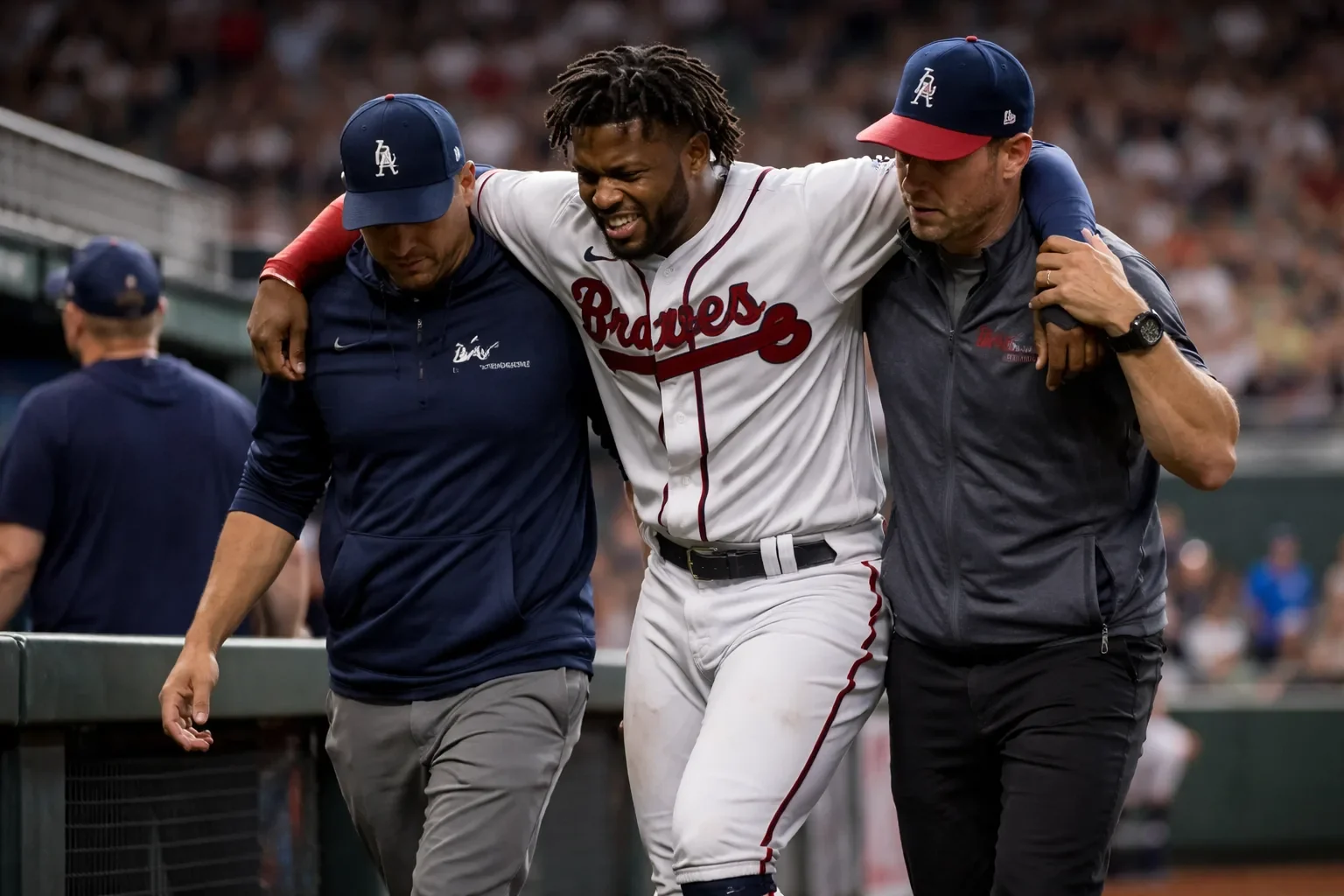
What happened
Ronald Acuna Jr. exited the Braves' game against the Colorado Rockies with hamstring tightness and is scheduled for an MRI, immediately raising concern about the health of one of Atlanta's most important players. For many stars, an early-game exit is worrying. For Acuna, whose game depends so heavily on explosive movement, base-running pressure, and all-around athleticism, any hamstring issue demands even more attention.
That is why the Ronald Acuna Jr. MRI update matters. It is not only about whether he misses a game or two. It is about whether the Braves are dealing with a brief precaution or the start of a more disruptive injury problem.
Why hamstring tightness is especially concerning for Acuna
Hamstring injuries are difficult for any baseball player, but they are particularly dangerous for players whose value comes from speed, acceleration, and fast-twitch movement. Acuna is not just a middle-of-the-order bat. He is a player who changes games with bursts: turning singles into extra bases, stealing bags, covering ground, and generating pressure that affects how opponents pitch and defend.
That means even mild hamstring tightness cannot be brushed aside. A small issue can quickly become a larger one if it is not managed carefully.
Why the MRI matters
An MRI is the clearest next step because the difference between tightness and strain can be enormous for planning. Tightness may suggest a short rest period and caution. A strain could lead to an injured-list stint, workload adjustments, and a significantly altered short-term outlook for the Braves. Teams often use careful language initially, but imaging is what converts uncertainty into a more reliable timetable.
For Atlanta, the MRI is not just diagnostic. It is strategic. It will help determine whether the club can expect rapid stabilization or must prepare for a lineup gap.
The Braves context
The Braves are built around star talent and offensive pressure, and Ronald Acuna Jr. remains central to that identity. Even when the roster has other dangerous hitters, the shape of the lineup changes when Acuna is compromised. He affects not only run production, but how the batting order functions from the top and how opponents map their pitching plans.
That is why an Acuna injury concern matters more than a generic day-to-day note. It changes the geometry of the Braves offense.
Why Atlanta has reason to be cautious
Acuna's injury history is part of the context. The Braves know better than most teams that a cornerstone player's long-term value can be harmed by rushing a return or minimizing the risk of soft-tissue trouble. Hamstring injuries are especially tricky because players may feel almost ready before the tissue is truly prepared for full sprint load.
This makes caution the logical response even if early signs are relatively encouraging. The cost of aggravation is simply too high for a player of Acuna's importance.
What the Rockies game exit signals
The fact that the Braves removed Acuna rather than pushing through the discomfort suggests the club recognized the risk quickly. In baseball, stars often try to stay in games unless the concern feels meaningful enough to change the equation. An early exit can therefore be read as an indicator that the team did not want to gamble with a condition known to worsen fast under stress.
That decision may prove wise regardless of what the MRI shows. Preventing escalation is often the first victory in managing these injuries.
What this means for the Braves if Acuna misses time
If Acuna is out for any meaningful stretch, Atlanta will have to reshuffle both lineup structure and outfield usage. The Braves have enough talent to remain dangerous, but replacing Acuna's combination of power, speed, and presence is not something teams do cleanly. It often becomes a committee problem rather than a one-player substitution.
That is why this MRI update carries competitive weight. Atlanta may be able to absorb a short absence. A longer one is a different matter.
What comes next
The immediate focus is the MRI result and whether the team classifies the issue as simple tightness or something more structural. From there, the Braves will decide whether rest, day-to-day management, or an injured-list stint is necessary.
For now, Ronald Acuna Jr. leaving the game with hamstring tightness has placed the Braves in a wait-and-see position around one of the most dynamic players in baseball. The MRI will decide whether the concern remains precautionary or becomes a real test of Atlanta's depth and discipline.
Why it matters
As a cornerstone of the Braves' offense and a top-tier MLB talent, any long-term absence for Acuna would significantly impact Atlanta's lineup and standing.
Read next
Follow this story through the topic hub, more sports coverage, and the latest updates.
Weekly briefing
Get the week's key developments in one concise email.
Get a fast catch-up on the biggest stories, the context behind them, and the links worth your time.
Cadence
Weekly, for a quick catch-up
Coverage
AI, business, world, security, sports
Format
Clear takeaways and useful context
Request the briefing
Leave your email to open a prepared request and get on the list for the weekly briefing.
About the byline
Sports reporter
Olivia Park covers sports with an emphasis on competition, governance, and the business forces shaping global leagues, major events, and athlete decision-making.
Sources and methodology