Top 50 USMNT Players Ranked by Club Form Ahead of World Cup
A new assessment of the U.S. Men's National Team player pool highlights the impact of European club performance on roster standing.

Sports reporter
Reports on leagues, tournaments, and athlete developments with an emphasis on verified event details, official announcements, and commercial context.
Editorial responsibility: Lead reviewer for match reporting, tournament context, and league governance coverage
Primary source: ESPN Top Headlines. Full source links and update notes are below.
Fast summary
Start here
- Christian Pulisic maintains his position as the premier USMNT talent following a prolific season at AC Milan.
- Rankings heavily weight consistent minutes in Europe's top five leagues over domestic or secondary league play.
- The list highlights a growing gap between established European starters and domestic pool players as the World Cup approaches.
What happened
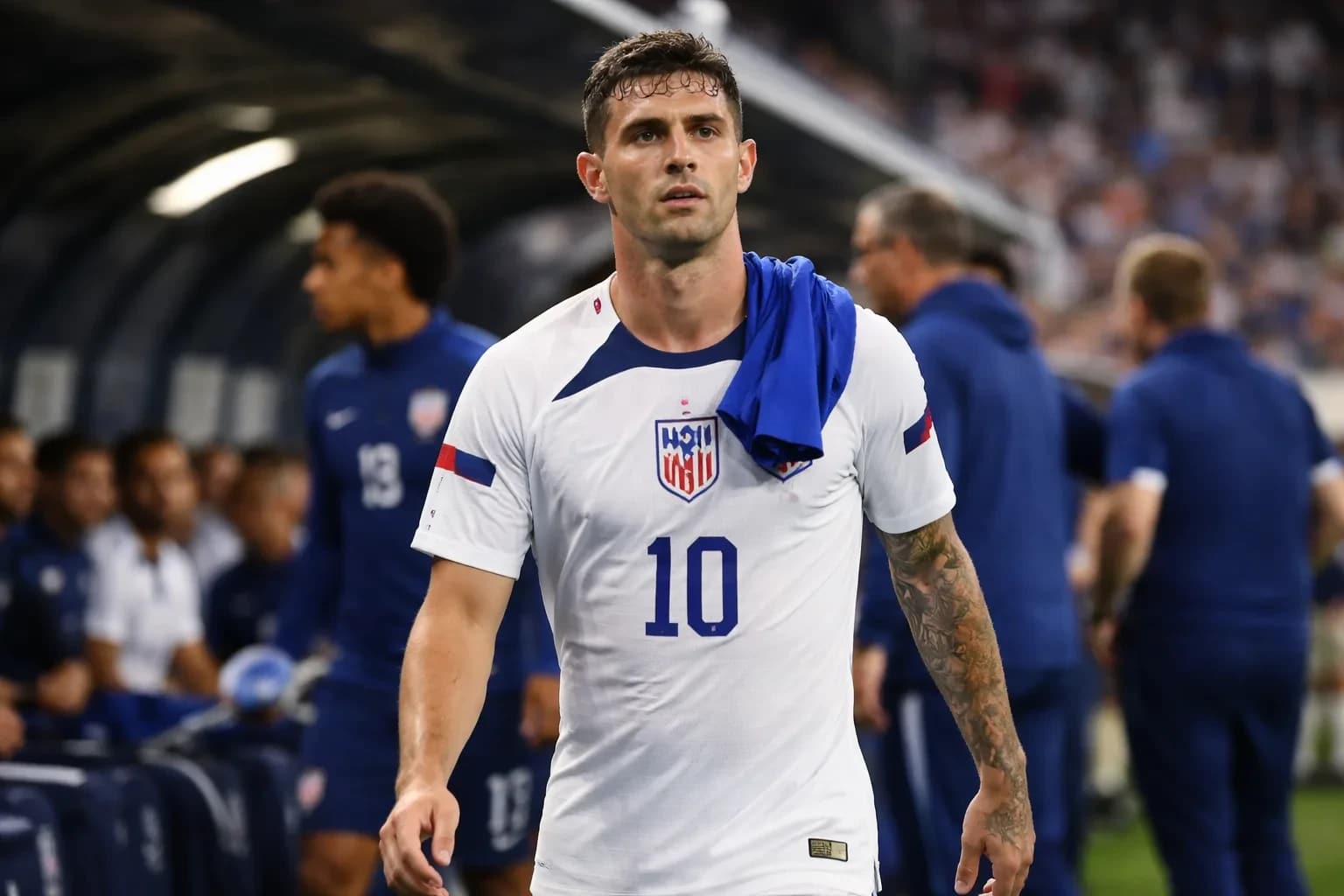
ESPN has published a new ranking of the top 50 players in the U.S. Men's National Team pool, ordering the group largely by current club form as the 2026 World Cup cycle moves forward. The list is not an official roster projection, but it functions as something close to a public temperature check on the USMNT depth chart. It reflects where key players such as Christian Pulisic stand, which regular contributors are rising or fading, and how heavily European club performance is shaping expectations under Mauricio Pochettino.
That is why these rankings matter more than ordinary list content. The USMNT is now close enough to the 2026 World Cup that every discussion about form, minutes, and pecking order begins to sound like a roster argument.
Why club form matters so much now
At this stage of a World Cup cycle, reputation alone becomes less persuasive. Coaches want evidence that players are performing weekly, not just living off prior international status. That is especially true for a manager such as Mauricio Pochettino, whose teams typically depend on intensity, tactical discipline, and competitive sharpness rather than sentimental loyalty to established names.
So a ranking built around club form is more than media noise. It mirrors how serious national-team decision making usually works when a tournament gets closer.
Why Christian Pulisic still anchors the discussion
Christian Pulisic remaining at or near the top of the USMNT hierarchy makes intuitive sense because his role combines quality, production, and leadership visibility. His form at AC Milan gives him both credibility and security in the player pool. He is no longer just the face of American soccer marketing. He remains the player most likely to change a high-level match with a decisive action.
That matters because every national team needs clarity at the top. When the leading attacker is also producing consistently at club level, the coaching staff can build around something solid rather than theoretical.
The Europe-versus-domestic tension
One of the clearest messages in a ranking like this is the premium placed on regular minutes in top European leagues. That does not automatically mean MLS-based players or players outside the top five leagues cannot contribute. It does mean the threshold for breaking above more established European-based talent is higher.
This tension shapes almost every USMNT debate. Fans and analysts want openness, but tournament football tends to reward players already operating in fast, demanding, tactically sophisticated environments each week.
What the rankings suggest about Pochettino's player pool
A top-50 USMNT ranking also helps reveal the real structure of the squad. There are likely a core group of near-automatic choices, then a second tier of players who are highly useful but role-dependent, and then a wider group competing for the final tournament spots. That bottom third of the list is often where the most movement happens, because injuries, club transfers, coaching changes, and position-specific needs can quickly alter selection logic.
For Pochettino, that fluidity may be useful. It allows him to demand performance rather than inheritance.
Why this matters for the 2026 World Cup
Because the United States will be under unusual pressure as a host, the standard for selection will likely be harsher than in a normal cycle. The public will expect not only qualification-level competence, but a squad capable of making a serious tournament run. That raises the value of rankings like this as conversation tools, because they help frame the emerging gap between players who look locked in and those still fighting to prove they belong.
In other words, the list is not just about who is best now. It is about who looks trustworthy when the World Cup arrives.
What comes next
The next international windows, transfer moves, and club seasons will reshape the list quickly. A player on the fringe can jump ten places with regular starts and strong form, while an established name can slide if minutes disappear. That volatility is exactly why club form remains the best short-term predictor of movement in the USMNT pool.
For now, the ranking of the top 50 USMNT players offers a useful snapshot of where the World Cup cycle stands. It confirms Christian Pulisic's place at the top, reinforces the importance of high-level club minutes, and shows that Mauricio Pochettino's eventual 2026 decisions are likely to be driven less by past reputation than by present performance.
Why it matters
These rankings serve as a barometer for roster selection under manager Mauricio Pochettino as the team builds toward the 2026 World Cup on home soil.
Read next
Follow this story through the topic hub, more sports coverage, and the latest updates.
Weekly briefing
Get the week's key developments in one concise email.
Get a fast catch-up on the biggest stories, the context behind them, and the links worth your time.
Cadence
Weekly, for a quick catch-up
Coverage
AI, business, world, security, sports
Format
Clear takeaways and useful context
Request the briefing
Leave your email to open a prepared request and get on the list for the weekly briefing.
About the byline
Sports reporter
Olivia Park covers sports with an emphasis on competition, governance, and the business forces shaping global leagues, major events, and athlete decision-making.
Sources and methodology