Pochettino Embraces Risk with Final USMNT World Cup Squad Selections
The head coach has finalized his roster for the tournament, opting for tactical flexibility over established veterans.

Sports reporter
Reports on leagues, tournaments, and athlete developments with an emphasis on verified event details, official announcements, and commercial context.
Editorial responsibility: Lead reviewer for match reporting, tournament context, and league governance coverage
Primary source: ESPN Top Headlines. Full source links and update notes are below.
Fast summary
Start here
- Mauricio Pochettino has finalized the U.S. Men's National Team roster for the upcoming World Cup.
- The selection process highlights a willingness to omit established names in favor of specific tactical fits.
- This roster represents the first major tournament squad under Pochettino's leadership since taking the helm.
What happened
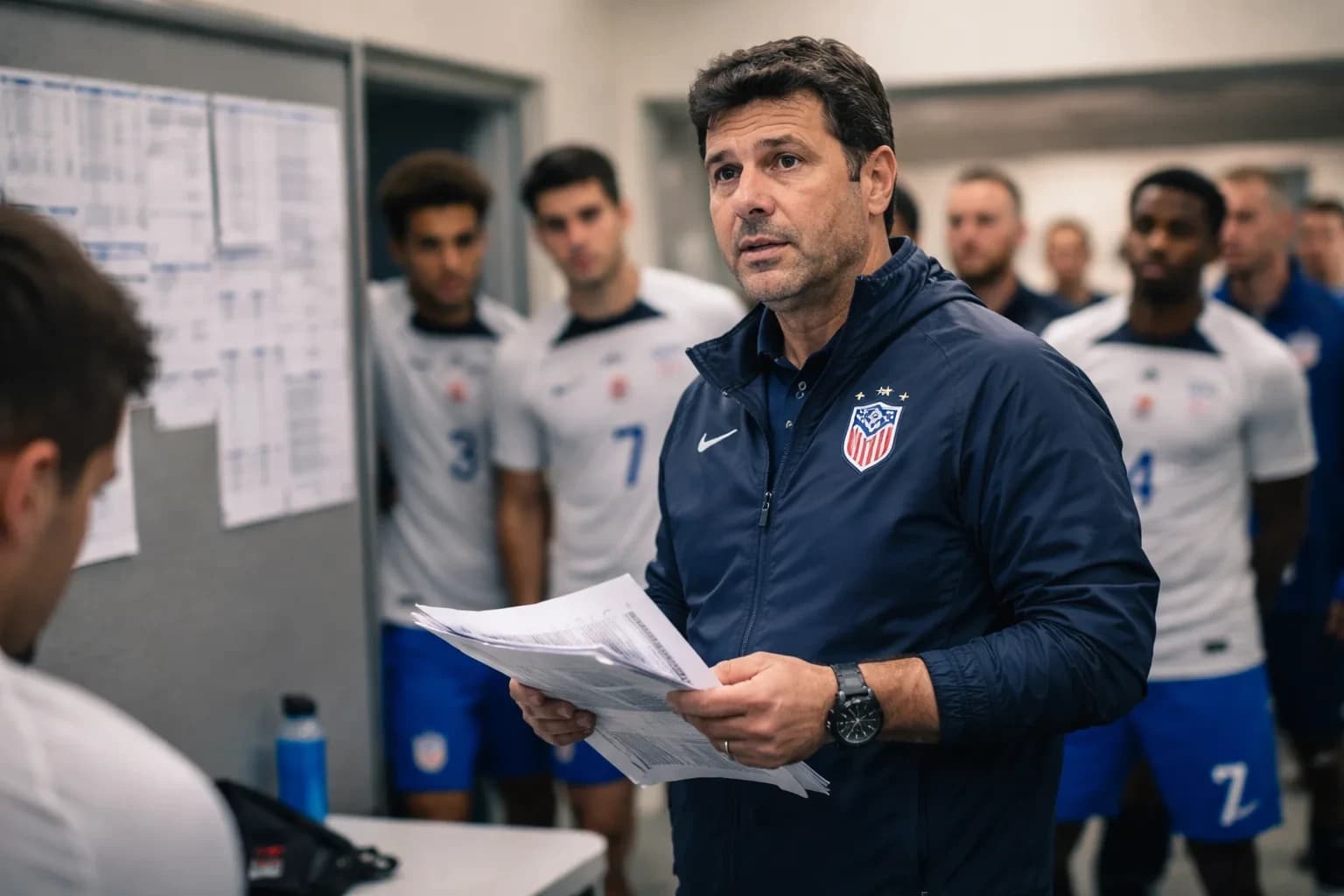
Mauricio Pochettino's final USMNT World Cup roster has been framed as a set of strategic risks, with selections and omissions suggesting that the Argentina-born coach is willing to prioritize tactical fit, energy, and system compliance over familiarity and seniority. For a national team, that is a meaningful choice. World Cup rosters are always political in a football sense: they tell you not just who the coach trusts, but what kind of team he wants to be when the margin for error disappears.
That is why the roster matters so much. It is less a list of names than a statement of football philosophy.
Why Pochettino's approach feels different
Pochettino has built his reputation on intensity, structure, and the willingness to ask players to serve a system rather than simply express individual talent. If his USMNT roster choices feel risky, it is likely because they reflect those priorities. Coaches who prize pressing shape, recovery runs, and tactical obedience often make decisions that frustrate fans attached to reputation or past service.
That does not mean the choices are reckless. It means they are coherent with a particular vision of how tournament football should be played.
Why tactical fit can outweigh experience
International football gives coaches limited time with players, which makes tactical fit especially valuable. A manager may prefer a player with slightly less star power if that player executes the team's pressing triggers, transitions, or positional rotations more reliably. In a World Cup, one weak fit can destabilize an entire side, especially in midfield and defensive phases.
This is why roster risk is often misunderstood. The biggest gamble is not always taking a younger or less proven player. Sometimes it is taking a familiar veteran who no longer suits the system being built.
The USMNT and the home-World-Cup pressure
Because the United States is moving toward a home World Cup cycle, every major roster decision now carries added symbolic weight. Pochettino is not just trying to survive a tournament. He is trying to define the competitive identity of the program at a moment when expectations are rising. Fans do not only want qualification or respectability. They want evidence that the team is evolving toward a version capable of competing seriously on home soil.
That pressure changes how even normal selection debates are interpreted. Every choice becomes a referendum on ambition.
Why omissions matter as much as inclusions
Some of the most revealing parts of any national-team roster are the names that are not there. When a coach leaves out an established player, he is signaling that past international status no longer guarantees protection. That can be controversial, but it can also be healthy if the squad has become too static or too dependent on hierarchy rather than merit and tactical need.
For the USMNT, that kind of decision may be necessary if the program wants to stop recycling comfort and start testing ceiling.
The risk-reward balance
Of course, risk-taking at roster level only looks wise if it produces a more coherent team. If the bolder selections fail to settle into the squad, the criticism will be immediate. Tournament football is ruthless that way. Coaches are often praised for bravery only after results justify it. Before then, every unconventional choice is exposed.
That is what makes this roster so important for Pochettino's early legacy. He is asking not just for trust, but for proof.
What comes next
The next stage is camp integration, where roster theory meets actual chemistry. This is where the risk calculation becomes visible: can the chosen players absorb the tactical demands quickly enough, and can the squad deliver enough cohesion in the opening matches to make the decisions look intentional rather than experimental?
For now, Pochettino's USMNT World Cup roster signals that he is willing to shape the team around his system rather than around sentiment. Whether that becomes a masterstroke or a controversy will depend on results, but the message is already clear: the coach is not trying to inherit the old version of the team. He is trying to replace it with one he believes can survive the pressure of the modern tournament game.
Why it matters
As the program looks toward a home World Cup in 2026, Pochettino's unconventional roster choices will define his early legacy and the team's tactical identity.
Read next
Follow this story through the topic hub, more sports coverage, and the latest updates.
Weekly briefing
Get the week's key developments in one concise email.
Get a fast catch-up on the biggest stories, the context behind them, and the links worth your time.
Cadence
Weekly, for a quick catch-up
Coverage
AI, business, world, security, sports
Format
Clear takeaways and useful context
Request the briefing
Leave your email to open a prepared request and get on the list for the weekly briefing.
About the byline
Sports reporter
Olivia Park covers sports with an emphasis on competition, governance, and the business forces shaping global leagues, major events, and athlete decision-making.
Sources and methodology
- https://www.espn.com/soccer/story/_/id/48882849/usmnt-final-world-cup-roster-pochettino-taking-risks