Miguel Almiron Issued Unusual Red Card for Covering Mouth in
The Newcastle United midfielder was dismissed following a rare officiating decision regarding player conduct during an international fixture.

Sports reporter
Reports on leagues, tournaments, and athlete developments with an emphasis on verified event details, official announcements, and commercial context.
Editorial responsibility: Lead reviewer for match reporting, tournament context, and league governance coverage
Primary source: ESPN Top Headlines. Full source links and update notes are below.
Fast summary
Start here
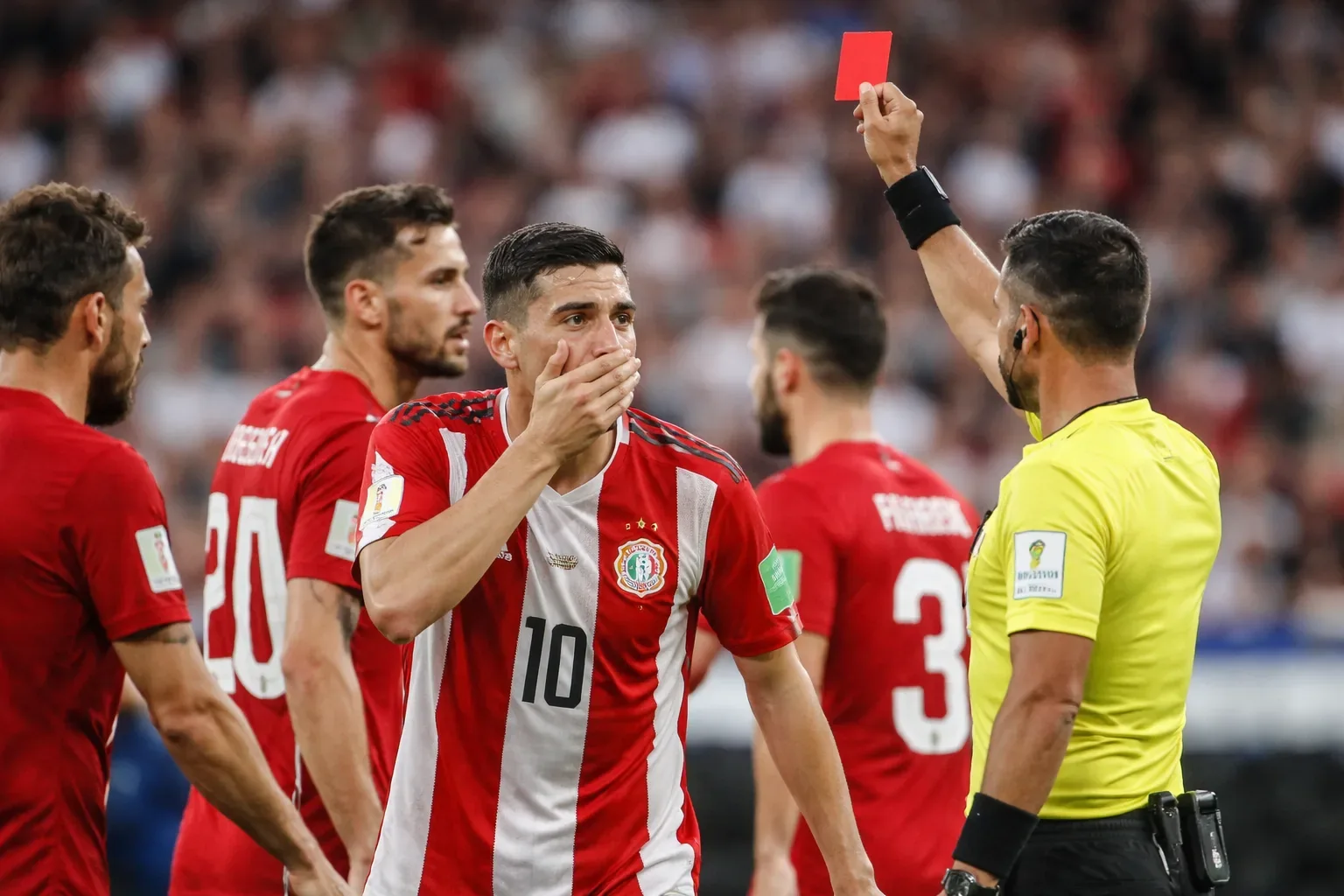
- Midfielder Miguel Almiron was sent off during Paraguay's match against Turkey for covering his mouth.
- The incident has drawn international attention due to the rarity of a dismissal for a non-violent, non-verbal gesture.
- The match took place within the broader context of the 2026 World Cup international competition cycle.
What happened
Paraguay's Miguel Almiron was shown a red card during an international match against Turkey after an official ruled against him for covering his mouth near the refereeing crew, producing one of the strangest dismissals of the current international football cycle. The incident has immediately drawn attention because the gesture itself is common in modern football. Players often cover their mouths when speaking to teammates, opponents, or officials in order to avoid lip-reading by television cameras and stadium feeds.
That is exactly why this red card feels so unusual. It appears to transform a familiar act of caution into a disciplinary event serious enough to change the match.
Why the decision stands out
Most direct red cards come from violent conduct, denial of a clear scoring chance, abusive language, or a clearly reckless challenge. A dismissal tied to a player covering his mouth is different because the gesture is usually ambiguous on its own. It does not automatically indicate dissent, insult, or deception. That ambiguity is what has turned the incident into a broader debate about refereeing interpretation rather than simply player misconduct.
In other words, the issue is not only what Almiron did. It is how officials chose to read it.
Why players cover their mouths in football
In televised international football, players are increasingly aware that close-range cameras can capture emotional or tactical exchanges in detail. Covering the mouth has become a routine way to keep private conversations private. It can be used for harmless tactical communication, emotional venting, or simply a habit formed in media-saturated environments.
That context matters because it makes the red card harder to evaluate from the gesture alone. Without clear evidence of what was said or intended, many observers are likely to question whether the punishment matched the act.
Why this matters for Paraguay
Miguel Almiron is not a fringe name for Paraguay. He is a central attacking figure, a recognizable international player, and someone whose removal can materially alter the team's shape and threat level. That means the dismissal has both symbolic and practical consequences. It is controversial because it is unusual, and it is consequential because it happened to a player who meaningfully affects the match.
For Paraguay, the concern is not only reputational fairness. It is also competitive cost if any suspension follows.
The officiating and governance angle
Football authorities have spent recent years emphasizing respect toward referees and stronger punishment for abuse or intimidation. That broader trend may help explain why officials are becoming more aggressive about controlling player conduct. But there is a difference between enforcing respect and expanding discretion so far that routine gestures become grounds for dismissal.
This incident therefore fits into a wider tension in modern football: players, fans, and coaches want consistency, while officials are often asked to interpret conduct in real time under increasingly strict behavioral expectations.
Why the debate will continue
Because the gesture is visually simple but contextually unclear, this red card is almost guaranteed to remain disputed unless the official report provides a much fuller explanation. If the dismissal was tied not merely to the hand-over-mouth action but to words or conduct judged abusive, that could change how the incident is understood. If not, the criticism is likely to intensify.
That is what makes the match report important. In rare cases like this, paperwork can matter nearly as much as replay footage.
What comes next
The Paraguayan federation will likely review the referee's explanation carefully, and any disciplinary follow-up will determine whether the incident becomes a brief controversy or a longer eligibility issue during the 2026 World Cup cycle. Observers will also watch whether governing bodies or refereeing analysts clarify the rule application publicly.
For now, Miguel Almiron's red card for covering his mouth against Turkey stands as one of the most unusual officiating moments of the international season. It raises basic questions about gesture, intent, and referee discretion, and it reminds players that in the current football environment, even familiar habits can become flashpoints if officials decide they signal something more.
Why it matters
This unusual application of disciplinary rules highlights the intensifying scrutiny of player behavior and communication with officials in international soccer.
Read next
Follow this story through the topic hub, more sports coverage, and the latest updates.
Weekly briefing
Get the week's key developments in one concise email.
Get a fast catch-up on the biggest stories, the context behind them, and the links worth your time.
Cadence
Weekly, for a quick catch-up
Coverage
AI, business, world, security, sports
Format
Clear takeaways and useful context
Request the briefing
Leave your email to open a prepared request and get on the list for the weekly briefing.
About the byline
Sports reporter
Olivia Park covers sports with an emphasis on competition, governance, and the business forces shaping global leagues, major events, and athlete decision-making.
Sources and methodology