Norway Fans' 'Viking Row' Highlights World Cup Atmosphere as
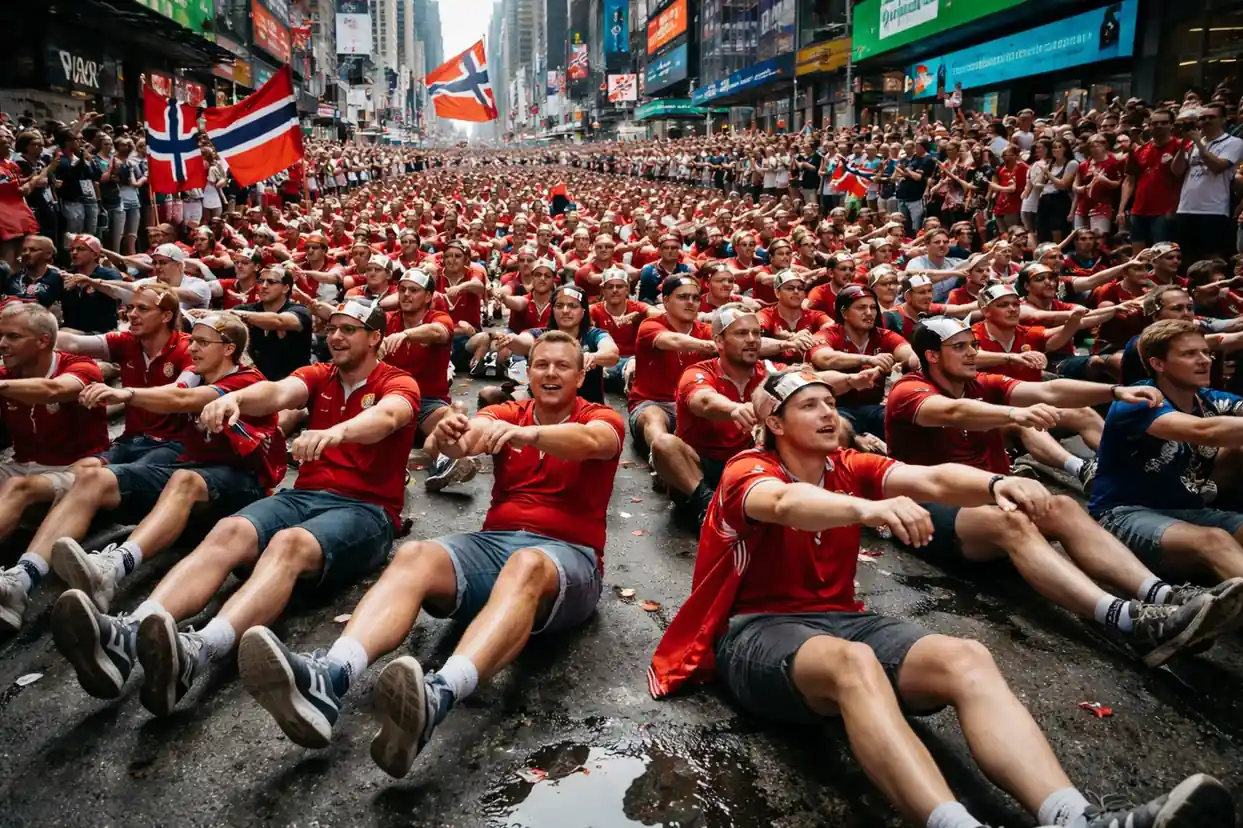
Norwegian supporters gathered in a public square to perform their signature ritual while European powerhouses Germany and the Netherlands continued group

Sports reporter
Reports on leagues, tournaments, and athlete developments with an emphasis on verified event details, official announcements, and commercial context.
Editorial responsibility: Lead reviewer for match reporting, tournament context, and league governance coverage
Primary source: ESPN Top Headlines. Full source links and update notes are below.
Fast summary
Start here
- Norwegian fans performed a synchronized 'Viking Row' in a central square to celebrate their tournament presence.
- The demonstration coincided with high-stakes World Cup matches involving Germany and the Netherlands.
- Fan traditions and cultural displays continue to define the atmosphere of the tournament's host cities.
What happened
Norway supporters staged a large public "Viking Row" as World Cup action continued, turning a city square into a theatrical expression of fan identity while tournament attention also focused on Germany and the Netherlands. The scene served as a reminder that the World Cup is never only about the matches themselves. It is also about how supporters bring national symbolism, humor, choreography, and public energy into shared spaces beyond the stadium.
That is why this kind of moment becomes part of tournament coverage. The games may determine advancement, but the atmosphere determines much of the tournament's character.
What the Viking Row represents
The "Viking Row" is more than a crowd gimmick. It is a piece of Norwegian fan culture built around a recognizable national image, performed in a way that is playful, coordinated, and highly visible. Fans sit in formation and mimic the movement of rowing a longship, turning folklore into public choreography. During a World Cup, rituals like this work because they are instantly legible even to neutral observers.
In practical terms, the Viking Row helps supporters make their presence felt without needing a scoreboard to do it for them.
Why fan culture matters at the World Cup
The World Cup is one of the few sporting events where off-field identity is almost as important as on-field performance. Supporters do not simply wear colors and watch matches. They occupy streets, squares, transit hubs, bars, and fan zones, and in doing so they reshape host cities temporarily. That is why gestures like Norway's Viking Row matter. They are part of the public language of the tournament.
For many viewers, these scenes are not background noise. They are central to what makes the World Cup feel global rather than merely elite.
The Germany and Netherlands context
The timing of the Viking Row also mattered because it unfolded on a day when European heavyweights such as Germany and the Netherlands were central to the competitive story. That contrast is part of what makes World Cup daily coverage so rich. Even when one team's supporters provide the visual highlight, the tournament remains layered with simultaneous storylines about favorites, tactical expectations, and group-stage pressure.
The result is a kind of moving festival in which fan rituals and football stakes constantly reinforce each other.
Why Norway's supporters stand out
Norwegian fans have built a reputation for organized, spirited, and often creative support. Displays like the Viking Row help maintain that identity and distinguish their tournament presence from more conventional chanting or march-style celebrations. In an environment where dozens of national fan cultures compete for attention, a memorable ritual has real power.
It gives casual observers something immediate to associate with the team and the country, even if they know little about the football itself.
Why these scenes matter commercially and culturally
Tournament organizers, broadcasters, and host cities all benefit from moments like this. Fan rituals make the event more photogenic, more shareable, and more emotionally textured. They also remind audiences that global football competitions succeed because they are civic spectacles as much as athletic contests.
In that sense, the Viking Row is not just colorful decoration. It is part of the World Cup product and part of the reason people who are not hardcore fans still get pulled into the tournament.
What comes next
As group-stage play continues, more fan displays will likely emerge from different national groups, each adding another layer to the atmosphere surrounding the football. Norway's Viking Row may be one of the standout moments so far, but the larger story is how consistently supporter culture keeps shaping the feel of the event.
For now, the Norway fans' Viking Row captures something essential about the World Cup. While Germany and the Netherlands handle the competitive work on the pitch, supporters ensure the tournament remains a global cultural performance off it. That combination of elite sport and public ritual is what makes the World Cup feel larger than a bracket.
Why it matters
Cultural displays like the 'Viking Row' underscore the unique fan engagement that defines the World Cup, complementing the competitive action between top-tier national teams.
Read next
Follow this story through the topic hub, more sports coverage, and the latest updates.
Weekly briefing
Get the week's key developments in one concise email.
Get a fast catch-up on the biggest stories, the context behind them, and the links worth your time.
Cadence
Weekly, for a quick catch-up
Coverage
AI, business, world, security, sports
Format
Clear takeaways and useful context
Request the briefing
Leave your email to open a prepared request and get on the list for the weekly briefing.
About the byline
Sports reporter
Olivia Park covers sports with an emphasis on competition, governance, and the business forces shaping global leagues, major events, and athlete decision-making.
Sources and methodology