Washington Nationals Issue Permanent Ban Following White Nationalist
A fan was removed from Nationals Park and barred from future events after promoting an extremist website during a home game.

Sports reporter
Reports on leagues, tournaments, and athlete developments with an emphasis on verified event details, official announcements, and commercial context.
Editorial responsibility: Lead reviewer for match reporting, tournament context, and league governance coverage
Primary source: ESPN Top Headlines. Full source links and update notes are below.
Fast summary
Start here
- A spectator at a Washington Nationals game was removed for displaying a banner linked to a white nationalist group.
- The team has issued a lifetime ban to the individual involved in the incident.
- The display violated the franchise's strict code of conduct regarding discriminatory and offensive materials.
What happened
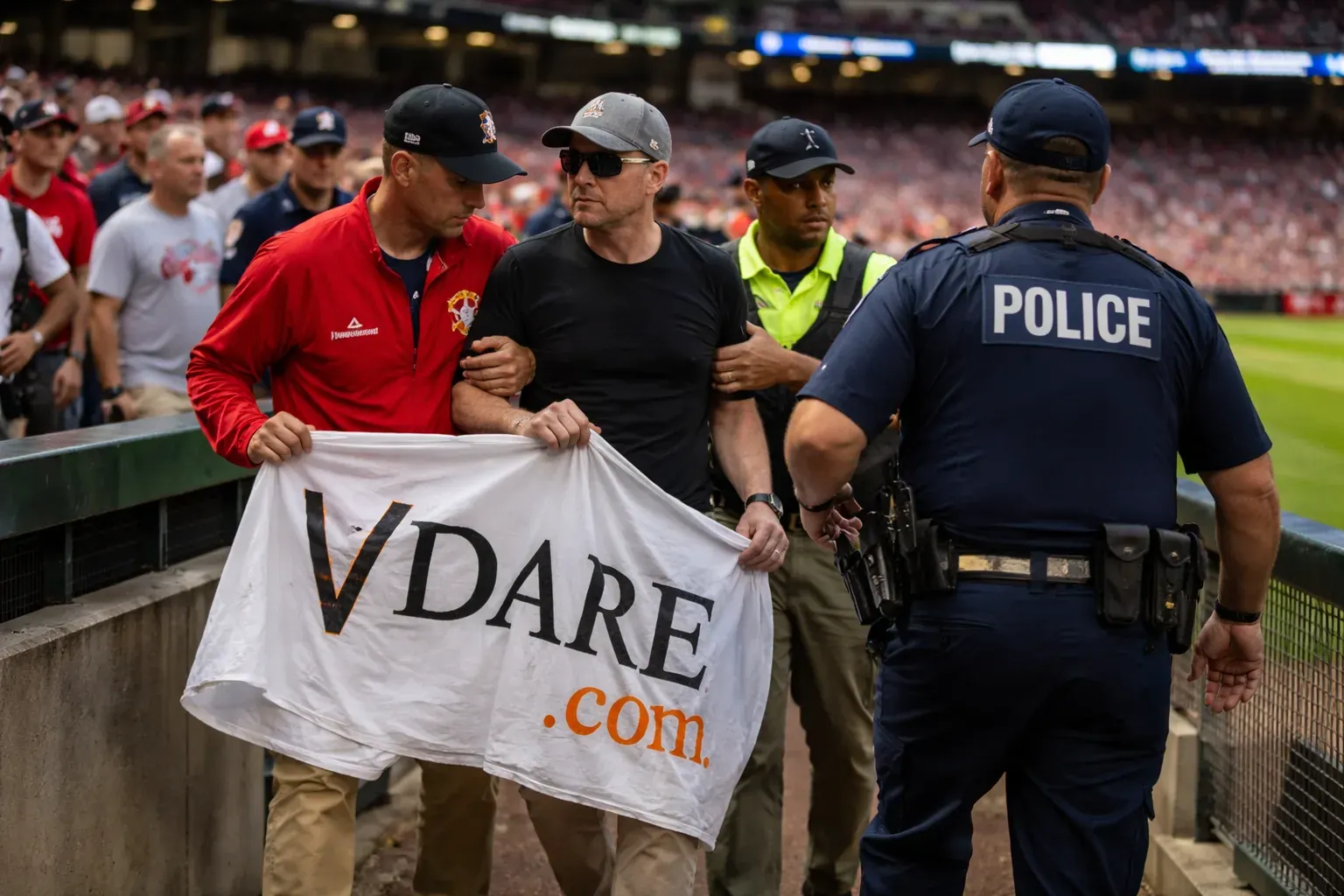
The Washington Nationals have permanently banned a spectator after the person displayed a banner promoting a white nationalist website during a game at Nationals Park. According to the team, the fan was removed from the ballpark and later issued a lifetime ban, making clear that the display violated stadium conduct rules and crossed beyond ordinary disruptive behavior. The incident quickly became more than a routine security matter because it involved an attempt to use a Major League Baseball venue as a platform for extremist messaging.
That distinction is why the Nationals' response matters. A white nationalist banner at a sporting event is not just offensive signage. It is an effort to turn a public entertainment space into a recruitment or publicity channel. Teams and leagues increasingly treat that type of act as a direct threat to the environment they are responsible for protecting.
Why the Nationals acted quickly
Professional sports organizations now operate under strong pressure to respond immediately when discriminatory or extremist material appears in a stadium. The Washington Nationals' lifetime ban reflects that reality. Clubs know that hesitation can be interpreted as tolerance, and tolerance can invite repeat behavior. A strong penalty therefore serves two purposes: it removes the individual involved and signals that the venue will not be used to normalize hate-based messaging.
The decision also fits the broader logic of fan-conduct policies. Ballparks are marketed as shared public spaces where families, tourists, and local supporters can attend safely. A banner linked to white nationalism directly undermines that expectation because it introduces intimidation and ideological provocation into an environment meant for civic entertainment.
The bigger issue for MLB and other leagues
The incident is part of a larger pattern that teams across American sports have had to address. Stadiums and arenas are attractive targets for political and extremist messaging because they offer large live audiences, television visibility, and easy opportunities for amplification on social media. Even a brief display can be photographed, circulated, and turned into propaganda by the groups behind it.
That is why leagues like MLB have moved toward more explicit zero-tolerance standards. The issue is not simply whether fans are behaving badly. It is whether organized hate groups or their sympathizers can use high-profile public events to gain attention. Teams understand that once a venue becomes seen as a permissive stage, the reputational and security risks escalate quickly.
Background and context
Major League Baseball clubs have dealt with a range of disruptive fan incidents over the years, from ordinary crowd misconduct to targeted political displays. The line becomes much clearer when the content promotes extremist ideology. In those cases, clubs are not balancing speech aesthetics or vague offensive behavior. They are responding to material tied to discriminatory movements that many venues explicitly ban under codes of conduct.
The Washington Nationals' action also reflects a wider trend in sports governance. Teams are increasingly expected to enforce their rules not just against physical altercations or abusive behavior, but also against symbols, banners, and slogans that create a hostile environment for spectators and employees.
What this means for stadium security
One likely outcome is more scrutiny around signs, flags, and banners brought into the stadium. That does not necessarily mean dramatic procedural changes, but incidents like this often lead to renewed training for gate staff, clearer escalation procedures, and more aggressive review of materials that could be used for ideological promotion once fans are inside.
Security planning at major venues has expanded in recent years from crowd management to reputational risk management. The reason is simple: not every threat is physical at first. Sometimes the first move is symbolic, designed to test whether a venue will react firmly or allow the message to linger.
What to watch next
The next questions are whether the Nationals adjust any public-facing guidance on banners and signs, and whether MLB reinforces club-level authority to issue lifetime bans for extremist conduct. Similar incidents in other sports have shown that rapid response matters both for deterrence and for reassuring fans that teams are taking hate-based behavior seriously.
Why this matters
The Washington Nationals' lifetime ban matters because it shows how sports franchises are increasingly treating extremist messaging as a direct stadium safety and conduct issue rather than a minor fan disturbance, setting a clear boundary against hate-based publicity inside MLB venues.
Reader context
This story belongs to Northstar Herald's sports coverage, with related entities including MLB, Washington Nationals, Fan Conduct, Extremism. The report is based on ESPN Top Headlines source material.
Related coverage
Why it matters
This enforcement highlights the ongoing efforts by professional sports leagues to restrict the use of stadiums as platforms for extremist recruitment and messaging.
Read next
Follow this story through the topic hub, more sports coverage, and the latest updates.
Weekly briefing
Get the week's key developments in one concise email.
Get a fast catch-up on the biggest stories, the context behind them, and the links worth your time.
Cadence
Weekly, for a quick catch-up
Coverage
AI, business, world, security, sports
Format
Clear takeaways and useful context
Request the briefing
Leave your email to open a prepared request and get on the list for the weekly briefing.
About the byline
Sports reporter
Olivia Park covers sports with an emphasis on competition, governance, and the business forces shaping global leagues, major events, and athlete decision-making.
Sources and methodology