Dolphins Make De'Von Achane NFL's Third-Highest-Paid Running Back
Miami has secured the explosive playmaker with a new four-year deal that resets the financial landscape for the running back position.

Sports reporter
Reports on leagues, tournaments, and athlete developments with an emphasis on verified event details, official announcements, and commercial context.
Editorial responsibility: Lead reviewer for match reporting, tournament context, and league governance coverage
Primary source: ESPN Top Headlines. Full source links and update notes are below.
Fast summary
Start here
- De'Von Achane and the Miami Dolphins have agreed to a four-year contract extension.
- The agreement makes Achane the third-highest-paid running back in the NFL by annual average value.
- The deal secures a core component of head coach Mike McDaniel's high-powered offensive scheme.
What happened
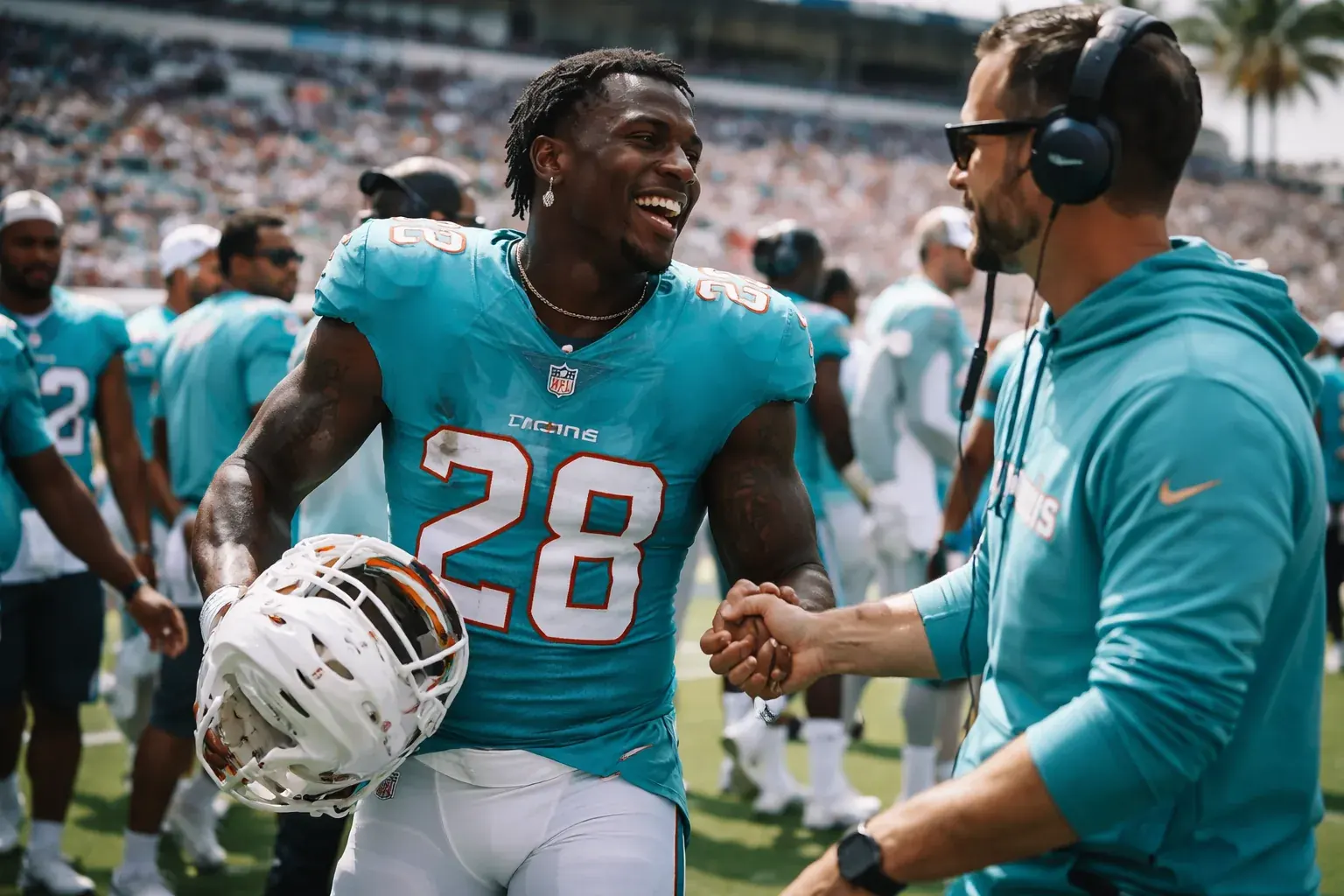
The Miami Dolphins signed De'Von Achane to a four-year extension, locking in one of the NFL's most explosive offensive players and making him the third-highest-paid running back in the league by average annual value. The move gives Miami long-term control over a player who has become central to head coach Mike McDaniel's speed-based offense and to the Dolphins' broader identity as a high-variance, big-play unit.
For Achane, the contract is both a reward and a market signal. For the Dolphins, it is a statement that they are willing to pay a premium for a running back whose value goes well beyond traditional rushing volume.
What's new in this update
The most important development is not simply that Miami extended Achane, but how aggressively it chose to do so. Making him the NFL's third-highest-paid running back suggests the Dolphins view him less as a replaceable backfield piece and more as a scheme-defining offensive weapon.
That matters because the running back market has been one of the league's most closely debated economic areas. Teams have routinely hesitated to pay premium prices at the position, especially after rookie deals. By committing major money to Achane, Miami is effectively arguing that certain dual-threat backs still deserve elite investment when their impact changes how defenses align.
Key details
The De'Von Achane contract extension reportedly runs four years and keeps him tied to Miami through what should be his athletic prime. Full guarantees and exact payout structure may shape how the deal is ultimately judged, but the headline is already clear: Achane has been paid at the top of the market.
Why the Dolphins made that move is easy to understand:
- Achane brings elite speed that stresses defenses horizontally and vertically
- He contributes in both the run game and passing game
- He fits perfectly in Mike McDaniel's spacing-and-motion system
- He has already shown game-breaking efficiency early in his career
Those traits matter more than raw rushing totals in modern NFL offenses. Miami is not paying only for carries. It is paying for explosive-play probability, matchup distortion, and a player who can influence defensive structure every time he steps on the field.
Background and context
The Miami Dolphins running back extension also reflects a shift in how some teams think about premium talent at the position. The old market logic treated most running backs as short-term assets, easy to cycle through and rarely worth elite second contracts. That logic still exists, but players like Achane complicate it because they function almost like hybrid offensive pieces rather than standard early-down backs.
In Miami's case, the scheme amplifies that effect. McDaniel's offense is built around speed, spacing, and forcing linebackers and safeties into impossible run-pass decisions. Achane is one of the clearest embodiments of that design. Replacing his burst and versatility would not be as simple as drafting another back and assigning him the same touches.
This is also a timing decision. Extending Achane now allows Miami to secure him before the market potentially moves again, especially if more multi-role backs begin to receive aggressive contracts.
What to watch next
The next question is how the Dolphins balance this deal with the rest of a roster that already contains major financial commitments. Paying Achane at this level raises the pressure on Miami to make sure the offense remains elite enough to justify allocating premium cap space to a running back.
Three follow-up questions matter most:
- Whether other young running backs use Achane's deal as a comparison point
- How Miami manages cap flexibility around its offensive core
- Whether Achane can stay healthy and productive under an expanded spotlight
If he continues to produce explosive plays at a rare rate, the deal may quickly look justified. If injuries or volatility intervene, critics of top-end running back contracts will point to it as another cautionary example.
Why this matters
The Miami Dolphins sign De'Von Achane to four-year extension story matters because it pushes back against the idea that premium running back contracts are always bad bets. Miami is wagering that Achane is not just a runner, but a system amplifier whose speed and versatility are worth paying to preserve.
More broadly, the deal may influence how teams price the next generation of offensive skill players who blur the line between running back, receiver, and pure explosive threat.
Why it matters
This contract reflects a shift in how the NFL values young, versatile running backs who contribute significantly to the passing game and explosive play metrics.
Read next
Follow this story through the topic hub, more sports coverage, and the latest updates.
Weekly briefing
Get the week's key developments in one concise email.
Get a fast catch-up on the biggest stories, the context behind them, and the links worth your time.
Cadence
Weekly, for a quick catch-up
Coverage
AI, business, world, security, sports
Format
Clear takeaways and useful context
Request the briefing
Leave your email to open a prepared request and get on the list for the weekly briefing.
About the byline
Sports reporter
Olivia Park covers sports with an emphasis on competition, governance, and the business forces shaping global leagues, major events, and athlete decision-making.
Sources and methodology