Madonna, Shakira, and BTS to Perform at First World Cup Final
FIFA introduces a high-profile halftime performance featuring global icons for the upcoming tournament final, adopting a format similar to the NFL's Super

Sports reporter
Reports on leagues, tournaments, and athlete developments with an emphasis on verified event details, official announcements, and commercial context.
Editorial responsibility: Lead reviewer for match reporting, tournament context, and league governance coverage
Primary source: ESPN Top Headlines. Full source links and update notes are below.
Fast summary
Start here
- Madonna, Shakira, and BTS have been confirmed as the headline acts for the inaugural World Cup final halftime performance.
- This marks the first time FIFA has officially integrated a large-scale musical production into the championship match interval.
- The move signals an effort to expand the tournament's global cultural reach and commercial appeal through cross-genre musical icons.
What happened
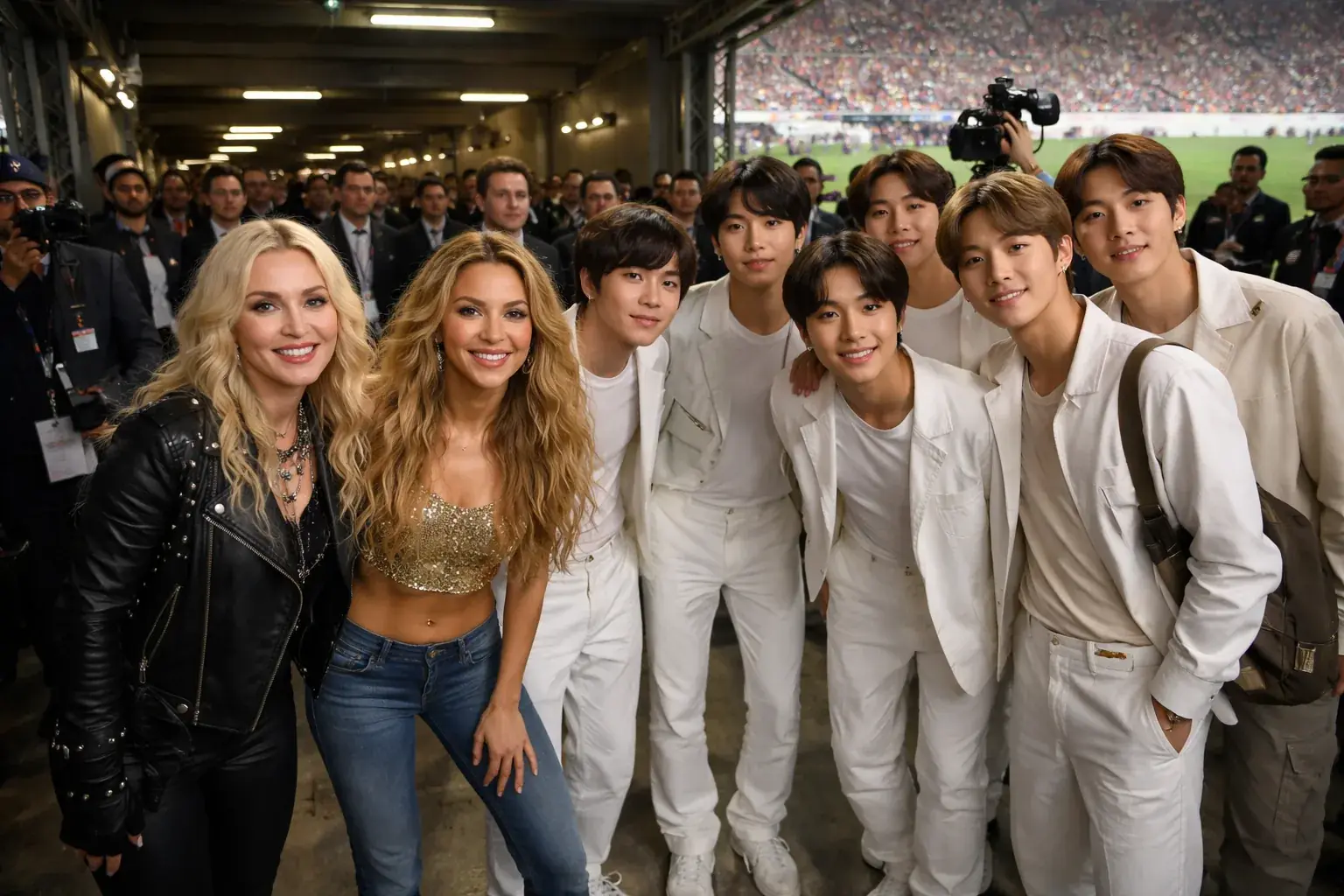
FIFA says Madonna, Shakira, and BTS will headline the first-ever World Cup final halftime show, introducing a major entertainment shift to the biggest match in international football. The announcement matters because the World Cup final has historically treated halftime as a short competitive interval rather than a cultural stage. By building a superstar performance into that space, FIFA is signaling that the final is no longer just the sport's summit event. It is also being reframed as a global entertainment product.
That makes the World Cup halftime show story about more than celebrity booking. It is about how FIFA wants the final to function in the modern media economy.
Why the lineup is so deliberate
The combination of Madonna, Shakira, and BTS is not random star stacking. It is a deliberately international lineup designed to span generations, regions, and fan cultures. Madonna brings iconic pop prestige, Shakira brings an artist already deeply associated with global football audiences, and BTS brings one of the largest and most organized fan communities in world music.
That matters because FIFA's audience is broader than the NFL's or any domestic sports league's. If the organization is going to introduce a halftime show, it needs performers with cross-border recognition strong enough to justify the interruption and convert the final into an even larger global media event.
Why this changes the World Cup final
A World Cup final halftime show represents a structural break with tradition. Football's halftime is usually short, tactical, and team-focused. Managers adjust shape, players recover, and viewers stay locked on the sporting tension. A major live concert format changes the rhythm completely. It introduces a different set of priorities: stage logistics, broadcast choreography, sponsor integration, and event pacing.
That is what makes this a real FIFA strategy shift rather than a cosmetic extra. The organization appears willing to borrow from the Super Bowl playbook and recast halftime as a spectacle in its own right.
The commercial and broadcast angle
The World Cup already commands enormous global attention, so adding a halftime performance is not about rescuing viewership. It is about extending monetization, broadening the event's cultural footprint, and giving broadcasters and sponsors another premium content moment inside the final itself. In media terms, halftime becomes an additional headline event rather than a pause between them.
That is likely why the move has such significance. FIFA is not simply entertaining viewers. It is expanding the inventory of what the final can sell, promote, and dominate socially in real time.
Why Shakira's presence feels especially symbolic
Among the announced performers, Shakira carries special symbolic weight because she is already tied to World Cup culture in the popular imagination. Her involvement helps bridge tradition and reinvention. FIFA can present the halftime show as new without making it feel detached from football history, because one of the artists is already closely associated with the tournament's cultural memory.
Madonna and BTS then expand that frame outward, turning the event into something that speaks not just to football fans but to the larger global entertainment audience FIFA wants to capture.
The logistical challenge
One reason the idea is so striking is that staging a concert inside a World Cup final creates technical complications football has not usually had to solve at halftime scale. A pitch is not a football stadium platform designed for rapid concert turnover. That means the production itself will become part of the story: how FIFA handles setup, timing, field protection, and broadcast pacing without undermining the match.
That challenge matters because if the production feels seamless, FIFA may normalize the format permanently. If it feels invasive or clumsy, criticism could be intense even if the performers themselves deliver.
Why this matters
The first World Cup final halftime show matters because it marks FIFA's clearest effort yet to transform the final from a pure sporting climax into a hybrid of football, entertainment, and global broadcast spectacle, with Madonna, Shakira, and BTS serving as the proof-of-concept lineup for that ambition.
Why it matters
The introduction of a halftime show at the World Cup final represents a significant shift in FIFA's broadcasting strategy, aiming to maximize global viewership and entertainment value.
Read next
Follow this story through the topic hub, more sports coverage, and the latest updates.
Weekly briefing
Get the week's key developments in one concise email.
Get a fast catch-up on the biggest stories, the context behind them, and the links worth your time.
Cadence
Weekly, for a quick catch-up
Coverage
AI, business, world, security, sports
Format
Clear takeaways and useful context
Request the briefing
Leave your email to open a prepared request and get on the list for the weekly briefing.
About the byline
Sports reporter
Olivia Park covers sports with an emphasis on competition, governance, and the business forces shaping global leagues, major events, and athlete decision-making.
Sources and methodology