Schwarber Reaches 20 Home Runs in Phillies Comeback Victory
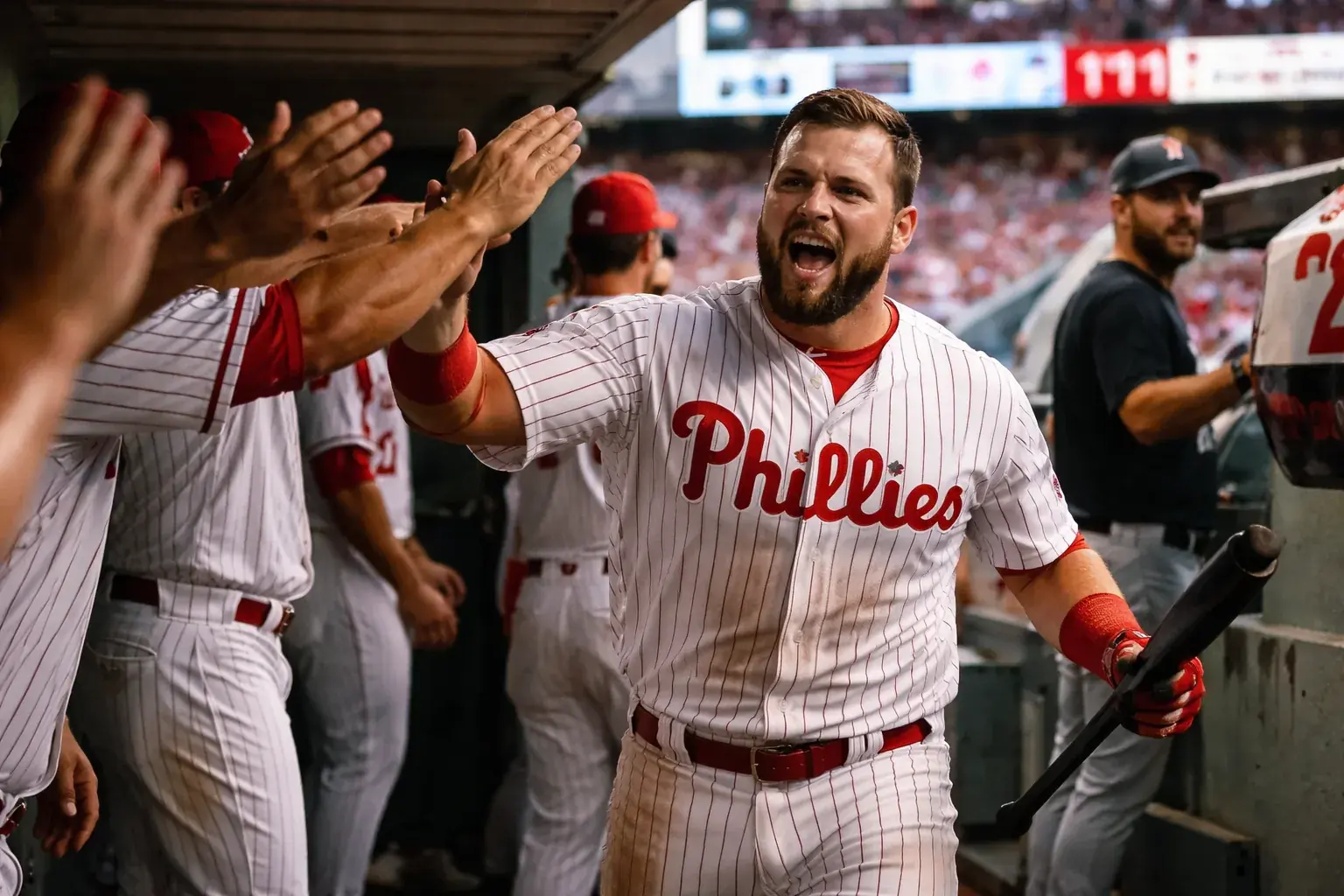
Kyle Schwarber's two-homer night fueled a Philadelphia Phillies rally to secure a wild win in Pittsburgh.

Sports reporter
Reports on leagues, tournaments, and athlete developments with an emphasis on verified event details, official announcements, and commercial context.
Editorial responsibility: Lead reviewer for match reporting, tournament context, and league governance coverage
Primary source: ESPN Top Headlines. Full source links and update notes are below.
Fast summary
Start here
- Kyle Schwarber hit two home runs to reach 20 for the season.
- The Philadelphia Phillies overcame a deficit to defeat the Pittsburgh Pirates.
- The contest was a high-scoring affair that showcased the Phillies' offensive momentum.
What happened
Kyle Schwarber hit two home runs to reach the 20-homer mark and power the Philadelphia Phillies to a comeback win over the Pittsburgh Pirates. The game developed into exactly the kind of loose, high-scoring contest where a lineup's biggest power source can change the entire shape of the night, and Schwarber did precisely that. His home runs were not just milestone swings. They were central to the Phillies' ability to erase a deficit and turn a messy game into a road victory.
That matters because Schwarber's role in Philadelphia is not simply to hit for power eventually. It is to swing games suddenly.
Why the 20-homer mark matters
Reaching 20 home runs this early in a season is a meaningful indicator of sustained power, not just a brief hot streak. Schwarber has long been one of baseball's most dangerous volume home run hitters, and when he gets there in emphatic fashion with a multi-homer game, it reinforces that the Phillies' offense still runs through his ability to alter scoreboards quickly.
For a lineup like Philadelphia's, that kind of power gives the team an unusual kind of patience. It does not need every inning to be clean if one or two swings can erase earlier failures.
Why Schwarber's profile works for the Phillies
Schwarber's game has always invited a tradeoff conversation: strikeouts, streakiness, and swing-and-miss risk on one side; game-breaking power, lineup fear, and plate-discipline value on the other. The Phillies do not ask him to be a contact-first stabilizer. They ask him to produce impact. On nights like this, the logic of that bet becomes obvious.
A player who can hit two home runs in a comeback win does not merely contribute. He changes the strategic environment for both teams.
Why comeback wins reveal lineup strength
The comeback angle matters as much as the homers because it shows the Phillies did not need a clean script to win. Teams with deep offensive confidence can absorb early damage, keep taking quality swings, and trust that pressure will eventually turn. Schwarber's two-home run performance became the clearest expression of that collective trait.
In long MLB seasons, comeback victories often tell you more about a team than easy wins do. They reveal whether the offense can keep functioning emotionally as well as mechanically.
The Pirates side of the story
For Pittsburgh, a loss like this can feel especially frustrating because games against a power-heavy team become dangerous even when you have built an early advantage. The Pirates likely knew that no lead was comfortable with Schwarber coming up in key spots, and that is exactly the type of tension elite sluggers create. Opponents are often forced to manage not only what has happened, but what might happen one swing later.
That is part of Schwarber's value. He can make the other dugout feel unstable even before the ball leaves the park.
Why this matters in the standings race
Power surges from established stars matter even more when a team is trying to hold or improve position over months rather than days. The Phillies need consistency, but they also need periodic bursts from players who can carry stretches almost on their own. Schwarber's 20-homer pace and multi-homer games help provide that foundation, especially when the rest of the lineup is trying to weather injuries, slumps, or uneven pitching support.
This is how strong regular seasons are built: not by avoiding chaos, but by having enough offense to survive it.
What comes next
The next question is whether Schwarber can keep extending the heater that this two-homer night reflects. Opposing teams will continue trying to neutralize him with sequencing and matchup management, but when he is locked in, the plan often becomes less about prevention than damage limitation.
For now, the Phillies' comeback win over the Pirates belongs to Kyle Schwarber. His two home runs did not simply mark a personal milestone. They restored control to Philadelphia in a game that was getting away and reinforced why his power remains one of the most important forces in the Phillies' pursuit of position, momentum, and postseason credibility.
Why it matters
Schwarber's power surge provides a critical offensive boost for the Phillies as they solidify their position in the standings.
Read next
Follow this story through the topic hub, more sports coverage, and the latest updates.
Weekly briefing
Get the week's key developments in one concise email.
Get a fast catch-up on the biggest stories, the context behind them, and the links worth your time.
Cadence
Weekly, for a quick catch-up
Coverage
AI, business, world, security, sports
Format
Clear takeaways and useful context
Request the briefing
Leave your email to open a prepared request and get on the list for the weekly briefing.
About the byline
Sports reporter
Olivia Park covers sports with an emphasis on competition, governance, and the business forces shaping global leagues, major events, and athlete decision-making.
Sources and methodology