Jonathan Toews Announces Retirement After 15 Seasons and Three
The former Chicago Blackhawks captain and two-time Olympic gold medalist ends his career after sitting out the 2023-24 season due to health challenges.

Sports reporter
Reports on leagues, tournaments, and athlete developments with an emphasis on verified event details, official announcements, and commercial context.
Editorial responsibility: Lead reviewer for match reporting, tournament context, and league governance coverage
Primary source: ESPN Top Headlines. Full source links and update notes are below.
Fast summary
Start here
- Toews led the Chicago Blackhawks to three Stanley Cup titles and won the Conn Smythe Trophy in 2010.
- He is a member of the Triple Gold Club, having won a Stanley Cup, Olympic gold, and a World Championship.
- The retirement follows a period of health struggles, including chronic immune response syndrome and long COVID.
What happened
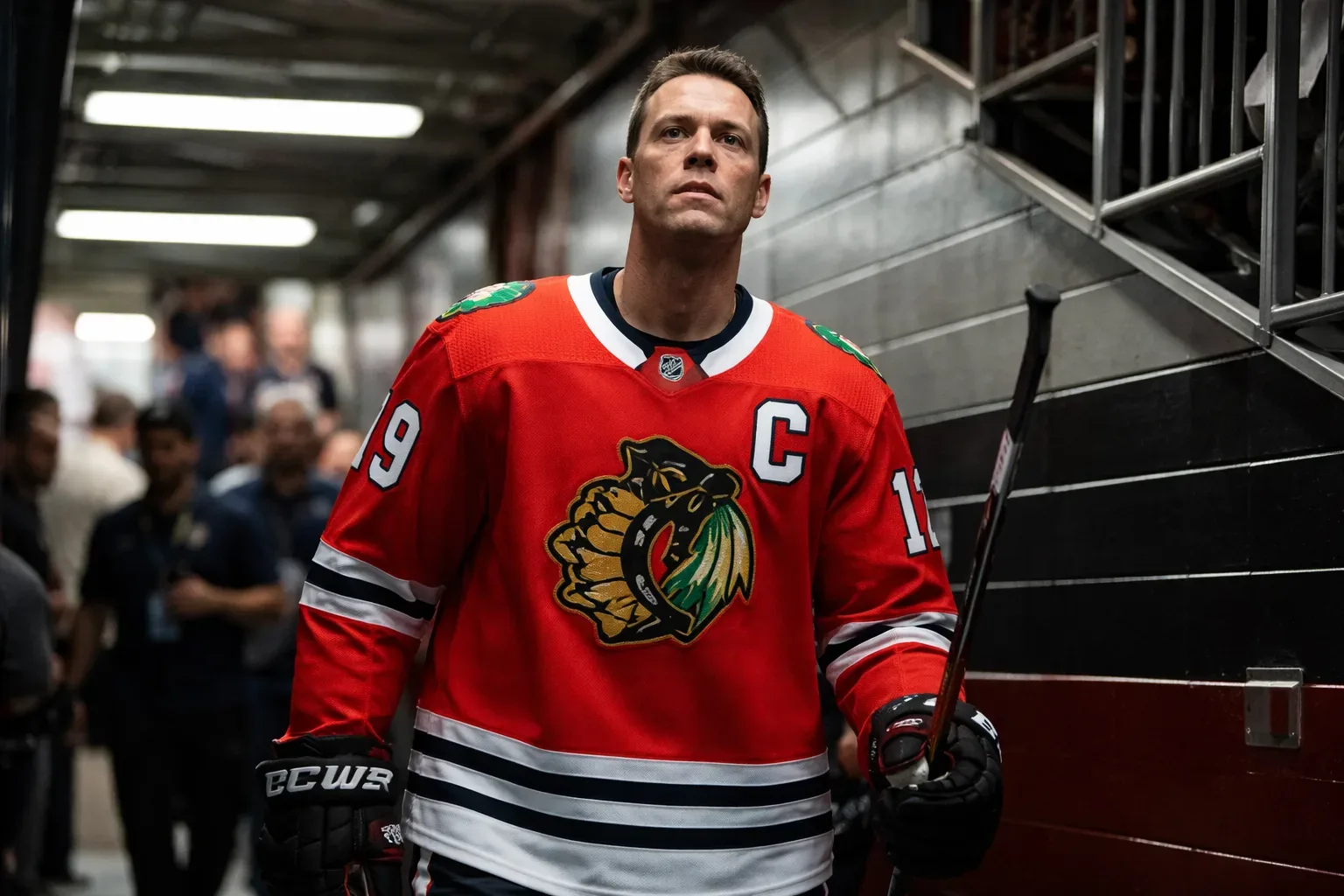
Jonathan Toews has announced his retirement, closing the book on one of the defining leadership careers of the modern NHL. The longtime Chicago Blackhawks captain leaves the game after 15 seasons, 1,067 regular-season games, three Stanley Cup championships, major international success, and years of recognition as one of hockey's premier two-way centers. His retirement also brings formal finality to a career that had already been reshaped in its later phase by significant health challenges.
That is why this is bigger than a routine retirement notice. Toews was not just a decorated player. He was a symbolic center of an era for the Blackhawks and for the league.
Why Toews' legacy is so large
Toews built his reputation on far more than point totals. He became one of the NHL's most respected players because he combined leadership, defensive responsibility, playoff poise, and elite matchup credibility. On championship teams, he was the kind of center coaches trusted in every situation: offensive zone, defensive zone, power play, penalty kill, late game, and postseason.
That is a rare profile. Hockey has always valued stars who can score. It reserves a different level of respect for stars who can control the game without needing every shift to be built around offense.
The Chicago Blackhawks dynasty context
For many fans, Jonathan Toews will remain inseparable from the Blackhawks teams that won the Stanley Cup three times in the 2010s and helped define the decade. He was the captain, the reference point, and the player whose temperament often seemed to reflect the team's own identity. The Chicago dynasty had multiple elite figures, but Toews was widely viewed as its emotional and competitive anchor.
That matters because dynastic teams are remembered not only by banners, but by the personalities who made their competitive standards believable.
Why the health struggles matter
The later years of Toews' career were complicated by chronic immune response syndrome and the lingering effects of long COVID, both of which affected his availability and ultimately his ability to continue at the level he had set earlier in his career. Those health battles became an important part of his story because they changed how the hockey world understood his final seasons.
Instead of a simple decline narrative, Toews' ending became one shaped by resilience, uncertainty, and the reality that even elite athletes can be pushed to their limits by conditions that are difficult to control or predict.
The Triple Gold and Hall of Fame case
Toews' resume extends far beyond Chicago. As a member of the Triple Gold Club with Stanley Cup success, Olympic gold, and a world championship, he belongs to a very small and historically serious group in hockey. Add in the Conn Smythe Trophy, Selke-level defensive reputation, and his long period as captain of a championship team, and the Hall of Fame discussion becomes more about timing than substance.
In other words, the retirement raises legacy questions only because the answers are already so strong.
Why Toews mattered to the NHL
The NHL has cycled through different types of stars over the last two decades, but Toews represented a particular ideal: the captain who could play the hardest minutes, say little publicly, and still define a franchise through steadiness and accountability. That archetype resonates deeply in hockey culture, which helps explain why his retirement carries emotional weight beyond Chicago.
He was not only productive. He was legible as a leader in a way that very few players are.
What comes next
The next chapters are predictable even if their timing is not. The Blackhawks will almost certainly honor him in ways that reflect his place in franchise history, and Hall of Fame conversation will build naturally as eligibility approaches. Fans will also revisit the Blackhawks' championship era through his departure, because retirements often trigger a broader re-examination of what a player represented at his peak.
For now, Jonathan Toews' retirement marks the end of one of the NHL's most complete careers of the modern era. Three Stanley Cups, elite defensive credibility, Olympic gold, and years of captaincy would be enough on their own. Combined, they make his exit feel less like the retirement of a former star and more like the closing of a chapter in hockey history.
Why it matters
Toews was the leadership pillar of the Blackhawks' 2010s dynasty and remains one of the most decorated players in international and professional hockey history.
Read next
Follow this story through the topic hub, more sports coverage, and the latest updates.
Weekly briefing
Get the week's key developments in one concise email.
Get a fast catch-up on the biggest stories, the context behind them, and the links worth your time.
Cadence
Weekly, for a quick catch-up
Coverage
AI, business, world, security, sports
Format
Clear takeaways and useful context
Request the briefing
Leave your email to open a prepared request and get on the list for the weekly briefing.
About the byline
Sports reporter
Olivia Park covers sports with an emphasis on competition, governance, and the business forces shaping global leagues, major events, and athlete decision-making.
Sources and methodology