Bad Vibes and Therapy Sessions: The New York Mets' Month of Misery
Following a high-spending offseason, the Mets' 2026 campaign has hit rock bottom with clubhouse tension and a historic April slump.

Sports reporter
Reports on leagues, tournaments, and athlete developments with an emphasis on verified event details, official announcements, and commercial context.
Editorial responsibility: Lead reviewer for match reporting, tournament context, and league governance coverage
Primary source: ESPN Top Headlines. Full source links and update notes are below.
Fast summary
Start here
- Juan Soto’s high-profile arrival in New York has been overshadowed by a significant early-season offensive drought.
- Manager Carlos Mendoza and star shortstop Francisco Lindor have initiated 'therapy sessions' to fix deteriorating team chemistry.
- A symbolic lighting of the Empire State Building in purple coincided with the team's lowest point of the young season.
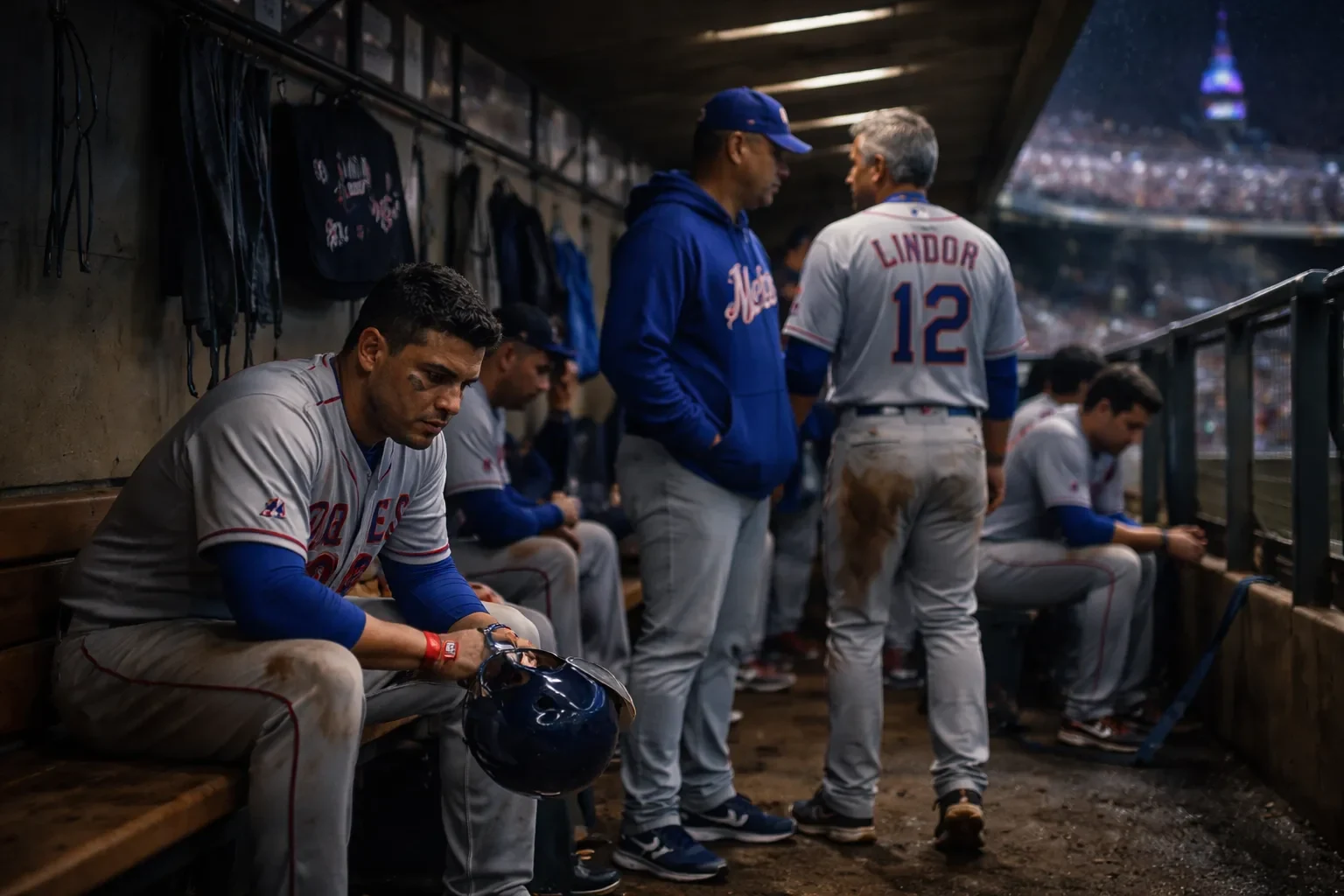
What happened
The New York Mets' disastrous April 2026 collapse has turned one of baseball's most expensive and ambitious rosters into one of its most uncomfortable stories. What was supposed to be a season of contention quickly became a month defined by offensive underperformance, clubhouse anxiety, and the kind of public "bad vibes" narrative that follows the Mets faster than almost any franchise in American sports.
That makes the Mets April collapse about more than a bad stretch in the standings. It has become an early referendum on roster construction, leadership, expectation management, and whether this version of the club was ever emotionally equipped to carry the weight of its own hype.
Why the collapse feels bigger than the record alone
Teams slump every season. The Mets problem is that this slump arrived almost immediately after a high-spending winter and the kind of messaging that implied New York had built a roster ready to impose itself. When collapse follows expectation that quickly, every losing streak starts to feel diagnostic. Fans and media do not treat it as random variation. They treat it as evidence that something more structural is wrong.
That is why the language around therapy sessions and bad vibes matters. The story is no longer just about batting average with runners in scoring position or one starter's ERA. It is about whether the club's internal environment is weakening performance in ways numbers alone cannot fully explain.
Juan Soto's slump magnifies everything
Juan Soto was supposed to symbolize a new offensive certainty. When a star of that caliber struggles early, the effect on narrative is enormous. It is not only that the lineup loses production. It is that the player expected to stabilize the offense becomes part of the visible instability instead.
For the Mets, that is especially dangerous because star performance and public mood are tightly linked. Soto's slump turns every quiet inning into a referendum on the entire winter plan, not just one player's timing at the plate.
Why clubhouse management is now central
Reports of therapy-style conversations involving Carlos Mendoza, Francisco Lindor, or broader team discussion suggest the organization recognizes that performance problems are no longer confined to mechanics. When a team starts formally trying to address chemistry, communication, or emotional drift in April, it signals that the issue is serious enough to threaten the normal hierarchy of correction.
That does not mean the effort is misguided. In fact, acknowledging tension early may be necessary. But it does reveal how fast the season's emotional temperature has risen.
Why the Mets are uniquely vulnerable to this narrative
The Mets carry a franchise history that makes every high-cost disappointment feel like part of a pattern. Fair or not, that history means outside observers are quick to interpret setbacks as signs of another familiar unraveling. A different club might get more grace. The Mets get a storyline waiting to be activated.
That is why symbolic moments, like a purple-lit Empire State Building colliding with the team's lowest point, resonate so strongly. The franchise does not just lose games. It seems to lose them theatrically.
What the front office has to decide
The deeper question is whether this is a temporary April spiral or an early warning that the roster lacks cohesion under pressure. If the offense normalizes and the internal tension cools, the month may eventually look like an ugly overreaction zone. If the problems persist into May and beyond, then the Mets may have to rethink lineup roles, leadership structure, or even the durability of the current managerial arrangement.
That is why April matters so much. It may not define the standings, but it can define the tone of every decision that follows.
What to watch next
Watch for whether Soto rebounds, whether the Mets start winning close games again, and whether public language from Lindor and Mendoza shifts from damage control to confidence. More than anything, watch the feel of the club. Baseball teams can survive bad weeks. They struggle much more when tension becomes identity.
Why this matters
The New York Mets' April 2026 collapse matters because it threatens to turn a high-payroll contender into a case study in expectation failure. If the team cannot reverse both the results and the mood, this month will be remembered not as an early stumble, but as the moment the season's central weakness became impossible to hide.
Why it matters
The Mets' massive payroll and championship expectations make this early-season collapse a potential turning point for the franchise's leadership and long-term roster construction.
Read next
Follow this story through the topic hub, more sports coverage, and the latest updates.
Weekly briefing
Get the week's key developments in one concise email.
Get a fast catch-up on the biggest stories, the context behind them, and the links worth your time.
Cadence
Weekly, for a quick catch-up
Coverage
AI, business, world, security, sports
Format
Clear takeaways and useful context
Request the briefing
Leave your email to open a prepared request and get on the list for the weekly briefing.
About the byline
Sports reporter
Olivia Park covers sports with an emphasis on competition, governance, and the business forces shaping global leagues, major events, and athlete decision-making.
Sources and methodology