Gerrit Cole Hits 99.6 MPH in Sixth Rehab Start as Return Date Nears
The reigning American League Cy Young winner displayed peak arm strength in his latest minor league appearance, signaling a potential return to the New

Sports reporter
Reports on leagues, tournaments, and athlete developments with an emphasis on verified event details, official announcements, and commercial context.
Editorial responsibility: Lead reviewer for match reporting, tournament context, and league governance coverage
Primary source: ESPN Top Headlines. Full source links and update notes are below.
Fast summary
Start here
- Gerrit Cole reached a maximum velocity of 99.6 mph during his sixth minor league rehab assignment.
- The start took place at the Triple-A level as the final stages of his recovery from elbow inflammation.
- The high velocity marks a significant milestone in his ramp-up toward a 2024 major league debut.
What happened
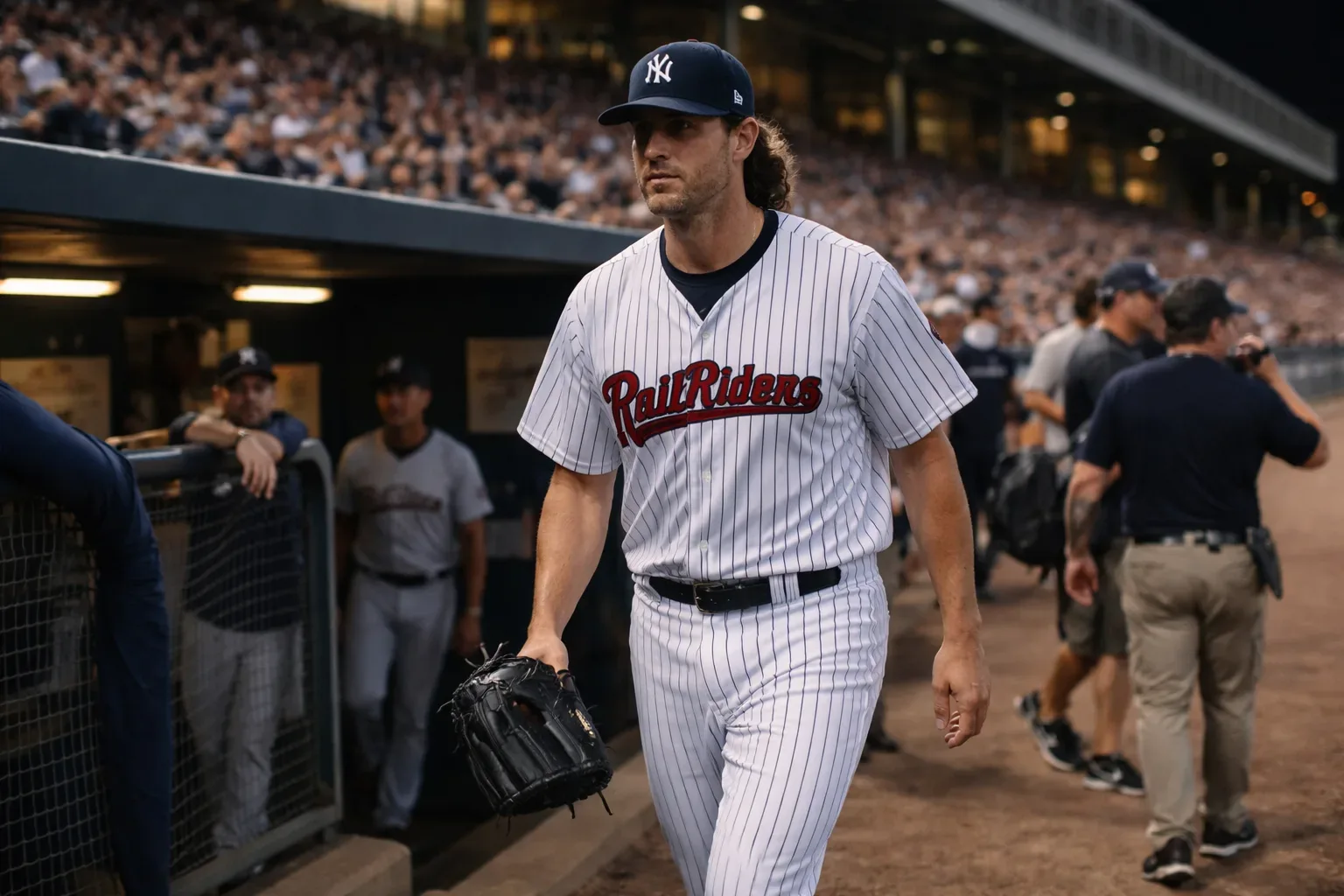
Gerrit Cole reached 99.6 mph in his sixth Triple-A rehab start, a notable velocity marker that signals the Yankees ace may be approaching the end of his recovery process. For an ordinary pitcher, one hard radar-gun reading can be encouraging. For Gerrit Cole, who is returning from elbow-related issues and is expected to anchor a contender's rotation, it becomes one of the clearest public indicators of where his comeback actually stands.
That makes the Gerrit Cole rehab velocity story about more than one pitch. It is about whether the Yankees are getting back the version of Cole who can dominate major league lineups rather than a diminished version who is merely available.
Why 99.6 mph matters
Velocity alone does not prove a pitcher is fully ready, but it is one of the most closely watched signals in a rehab assignment because it reflects confidence, physical freedom, and willingness to throw without visible restraint. Touching 99.6 mph suggests Cole is not simply surviving outings with reduced effort. He appears capable of accessing the upper end of his fastball range again.
That matters especially for a pitcher whose identity is tied to power, command, and the credibility of every pitch in his arsenal. If hitters have to respect elite fastball velocity, the rest of Cole's game often becomes far more difficult to attack.
Why the Yankees need him back
The Yankees can manage stretches of a season without one star, but an ace like Cole changes the structure of the rotation. He affects matchup planning, bullpen usage, and the confidence with which a team approaches big series. A healthy Gerrit Cole does not only improve one spot every fifth day. He changes the overall pitching environment around him.
That is why his return has been watched so intensely. For a team with postseason expectations, adding back a Cy Young-caliber starter can feel less like a reinforcement and more like a reset of the ceiling.
What the rehab process has been testing
Rehab starts are not just box-score exercises. Teams monitor pitch count, recovery between outings, command of secondary pitches, physical reaction the next day, and how consistently the pitcher can repeat mechanics under rising effort. Cole touching nearly 100 mph is important, but the Yankees will care just as much about whether he maintained his delivery and bounced back cleanly afterward.
This is where a return can still become complicated. A pitcher may show headline velocity and still need more time if stamina, recovery, or command lag behind. That is why the evaluation is broader than radar-gun excitement.
Background and context
Cole entered the year as one of baseball's premier frontline starters and the reigning AL Cy Young winner, making any absence especially disruptive for New York. The Yankees may be able to survive short stretches with patchwork depth, but they are constructed with the assumption that Cole sits at the top of the rotation and absorbs the hardest assignments. Without him, the margin for pitching regression elsewhere gets much thinner.
That is part of what makes this rehab milestone so important. It is not just the return of a good pitcher. It is the possible return of the pitcher the entire staff is built around.
What to watch next
The next questions are practical: whether the Yankees believe Cole needs one final tune-up, how his pitch mix looked beyond the fastball, and whether his arm responds well in the 24 to 48 hours after the outing. Teams often speak optimistically during rehab, but actual activation decisions reveal what they really think.
Why this matters
Gerrit Cole hitting 99.6 mph matters because it strongly suggests the Yankees ace is regaining top-end arm strength, bringing New York closer to restoring the kind of frontline pitching presence that can stabilize a rotation and materially change the club's championship outlook.
Why it matters
The Yankees have been without their primary ace all season due to injury; Cole's return to elite velocity suggests he is physically ready to stabilize the team's starting rotation.
Read next
Follow this story through the topic hub, more sports coverage, and the latest updates.
Weekly briefing
Get the week's key developments in one concise email.
Get a fast catch-up on the biggest stories, the context behind them, and the links worth your time.
Cadence
Weekly, for a quick catch-up
Coverage
AI, business, world, security, sports
Format
Clear takeaways and useful context
Request the briefing
Leave your email to open a prepared request and get on the list for the weekly briefing.
About the byline
Sports reporter
Olivia Park covers sports with an emphasis on competition, governance, and the business forces shaping global leagues, major events, and athlete decision-making.
Sources and methodology