Chicago White Sox Projected to Pick First in Opening 2026 MLB Mock
Kiley McDaniel's first mock draft for the 2026 cycle identifies the Chicago White Sox as the top pick holders in an evolving amateur talent field.

Sports reporter
Reports on leagues, tournaments, and athlete developments with an emphasis on verified event details, official announcements, and commercial context.
Editorial responsibility: Lead reviewer for match reporting, tournament context, and league governance coverage
Primary source: ESPN Top Headlines. Full source links and update notes are below.
Fast summary
Start here
- The Chicago White Sox are currently projected to hold the first overall pick in the 2026 MLB Draft.
- ESPN analyst Kiley McDaniel's Mock Draft 1.0 provides the first formal structure for the 2026 amateur class rankings.
- The projections incorporate early scouting data from high school showcases and collegiate performances.
What happened
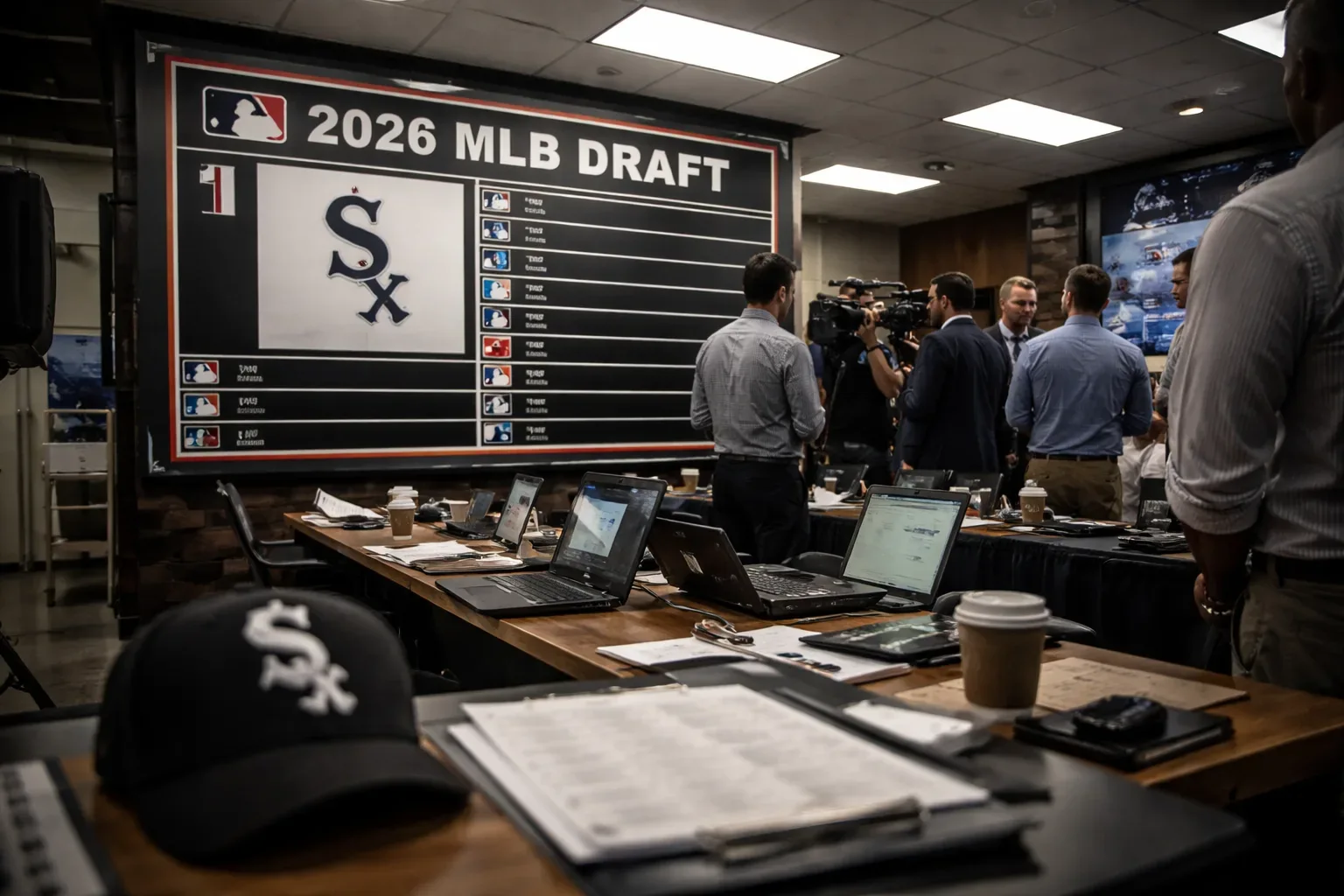
ESPN has published its first 2026 MLB mock draft, with analyst Kiley McDaniel projecting the Chicago White Sox to sit atop the board in the earliest version of the class. As with any initial MLB mock draft, the piece is less about certainty than about framing the early talent landscape and showing how clubs might align with specific player types before the order and scouting consensus fully settle.
That makes the 2026 MLB mock draft important even at this early stage. In baseball, draft cycles are long, fluid, and heavily shaped by development curves. An opening mock does not tell teams who they will pick. It tells readers which names, tools, and organizational situations are beginning to define the next amateur market.
Why the White Sox angle leads the conversation
The Chicago White Sox projected at No. 1 immediately puts organizational direction into focus. A team expected to pick first is not just selecting the best player available in a vacuum. It is making a franchise-level decision about timeline, risk tolerance, and how aggressively it wants to reset or accelerate a rebuild.
That is why the White Sox being tied to the top pick matters beyond draft order mechanics. It forces the baseball world to start asking what kind of player best serves their system: a polished college performer with a clearer path, or a higher-variance prep talent with more ceiling and more developmental uncertainty.
Why early MLB mock drafts are useful anyway
Skeptics often dismiss first-wave mock drafts because the board can change dramatically over time. That criticism is fair, but incomplete. Early mock drafts are useful because they reveal what evaluators currently value and which players are already separating themselves in scouting conversations. They also show how the draft is being framed before late spring surges, injury changes, or signability questions reshape the picture.
In other words, a 2026 MLB Mock Draft 1.0 is not a forecast of the final result. It is a snapshot of the market before volatility does what it always does.
The MLB draft process makes early projections harder
Baseball's draft is uniquely difficult to project compared with the NFL or NBA because the variables are so layered. High school players can explode physically in a year. College performers can reshape the board through one dominant spring. Teams weigh tools, track record, medicals, signability, bonus pool strategy, and internal model preferences in ways that are often less visible from the outside.
The lottery system adds another wrinkle. A club that looks positioned for a certain slot in the earliest conversation may not actually end up drafting there. That means the White Sox mock-draft headline should be read as an early directional marker, not a locked-in outcome.
Why Kiley McDaniel's board matters
Mock drafts carry more weight when they come from analysts with strong scouting networks and long familiarity with how organizations behave. McDaniel's projections are useful not because they guarantee accuracy, but because they often synthesize the kind of information fans do not get from public stat lines alone: body projection, industry sentiment, team preferences, and the likely movement of names as the cycle matures.
That is especially valuable in baseball, where casual fans may know the draft far less intimately than the drafts in other major sports. An initial mock draft helps turn a diffuse prospect class into a structured conversation.
What to watch next
The biggest changes will come from spring and summer performance, showcase events, and clearer information about how clubs value the top tier. Watch whether the White Sox remain aligned with the first pick, whether one or two amateur stars start separating from the field, and how college-versus-prep risk shapes the narrative around the very top of the 2026 board.
Why this matters
The first 2026 MLB mock draft matters because it starts organizing the next draft class around real names, real team contexts, and real scouting debates. For the White Sox, being projected at No. 1 makes the story even more consequential. It signals that the franchise's rebuilding choices may soon intersect with one of the most important amateur decisions in baseball.
Why it matters
Early draft projections set the market for amateur talent and signal how struggling franchises plan to utilize high-value picks for long-term organizational rebuilding.
Read next
Follow this story through the topic hub, more sports coverage, and the latest updates.
Weekly briefing
Get the week's key developments in one concise email.
Get a fast catch-up on the biggest stories, the context behind them, and the links worth your time.
Cadence
Weekly, for a quick catch-up
Coverage
AI, business, world, security, sports
Format
Clear takeaways and useful context
Request the briefing
Leave your email to open a prepared request and get on the list for the weekly briefing.
About the byline
Sports reporter
Olivia Park covers sports with an emphasis on competition, governance, and the business forces shaping global leagues, major events, and athlete decision-making.
Sources and methodology