Big 12 Monitoring Options in Ongoing Lawsuit Over Texas Tech QB
The conference is reportedly in no rush to drop its legal action against the university as it evaluates the broader implications of the eligibility

Sports reporter
Reports on leagues, tournaments, and athlete developments with an emphasis on verified event details, official announcements, and commercial context.
Editorial responsibility: Lead reviewer for match reporting, tournament context, and league governance coverage
Primary source: ESPN Top Headlines. Full source links and update notes are below.
Fast summary
Start here
- The Big 12 is maintaining its lawsuit against Texas Tech regarding the eligibility of quarterback Brendan Sorsby.
- Conference officials are monitoring legal fallout and the potential for new options before making a final determination on the litigation.
- The dispute highlights ongoing friction between conference bylaws and the evolving landscape of player transfers and eligibility.
What happened
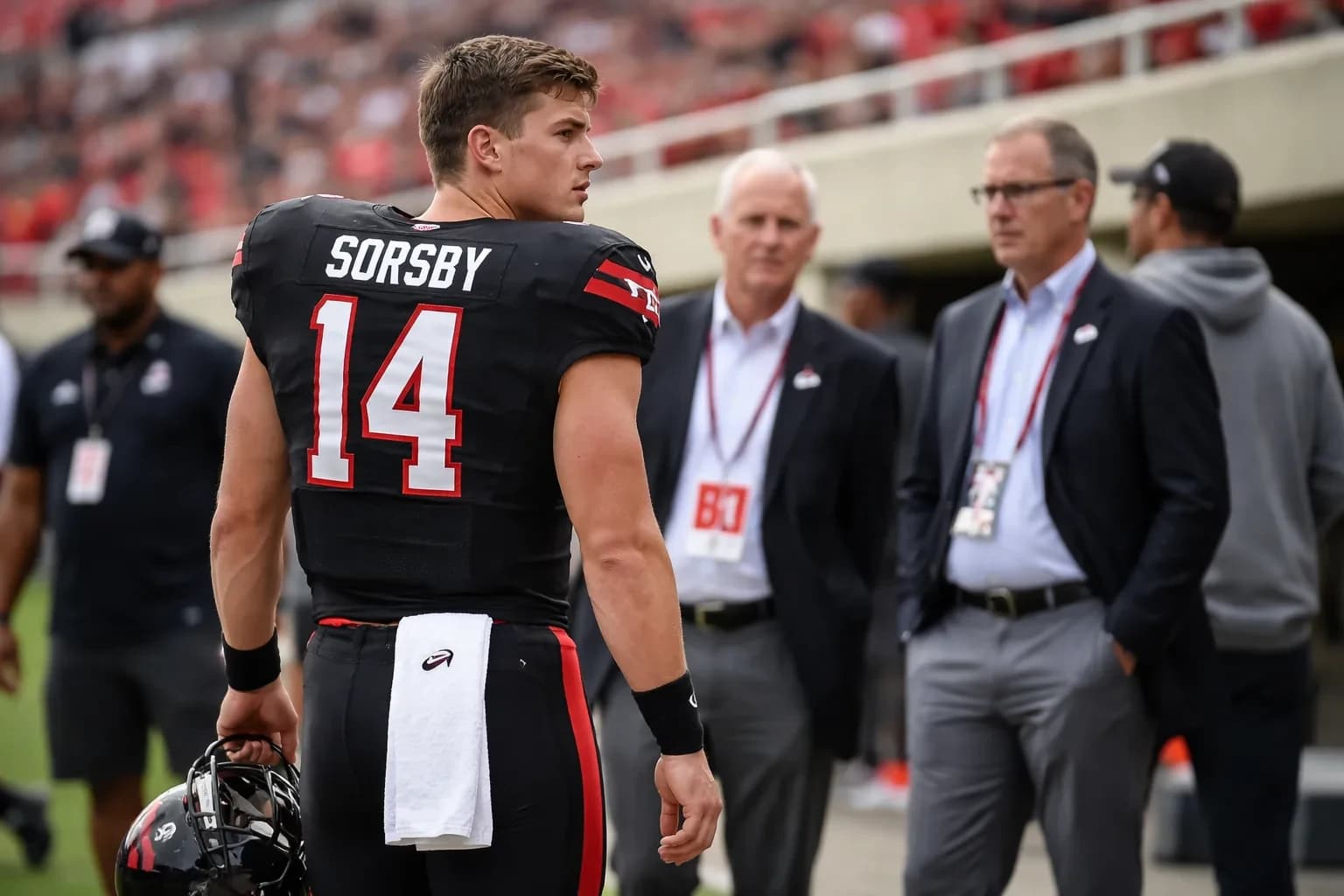
The Big 12 is keeping its lawsuit alive against Texas Tech over the eligibility of quarterback Brendan Sorsby, signaling that the conference does not view the dispute as a narrow one-player disagreement. Instead, the case appears to be about something larger: who has authority to interpret and enforce conference-level rules in an era where transfers, player mobility, and legal challenges are reshaping college football almost in real time.
That is why this story matters beyond Texas Tech. A conference suing one of its own member schools over a quarterback's eligibility is not standard college sports friction. It is evidence that administrative power structures are under real strain.
Why Brendan Sorsby is at the center
Sorsby matters here not only because he is a quarterback, but because quarterbacks often turn eligibility disputes into urgent public controversies. A backup lineman can trigger a rules argument quietly. A likely starting quarterback cannot. Once the player in question is central to a team's season, every technical interpretation of transfer or eligibility policy becomes a competitive issue as well as a legal one.
That makes the dispute higher stakes for both the school and the conference.
Why the Big 12 may be holding firm
The conference's reported reluctance to quickly drop the lawsuit suggests it is thinking institutionally rather than tactically. If the Big 12 backs away too easily, it may fear setting a precedent that weakens its ability to enforce internal rules later. In a landscape where schools are increasingly willing to challenge restrictions, conferences have a strong incentive to show that their bylaws still carry force.
This is one reason the case matters so much. It may be less about Sorsby alone and more about whether member institutions still believe conference rules can meaningfully constrain roster decisions.
Why Texas Tech's position matters too
From the university's perspective, the dispute likely reflects the opposite concern. Schools now operate in a transfer portal era where player movement is faster, legal scrutiny is stronger, and delays in eligibility decisions can have major on-field consequences. If a school believes a conference rule is outdated, inconsistently applied, or vulnerable to legal challenge, it has every reason to push back.
That tension is becoming normal in college sports: conferences want order, schools want flexibility, and players are increasingly at the center of the collision.
The transfer portal and sports law context
The Brendan Sorsby case fits a much broader college athletics pattern. Rules that once seemed stable are now being tested against new expectations around athlete rights, mobility, and competitive access. Eligibility disputes used to be handled more quietly through internal processes and NCAA channels. Today they are more likely to become legal matters because the financial and competitive stakes are far higher.
In that sense, this case is not an anomaly. It is part of the new operating environment for Power conference football.
Why this matters for the Big 12
If the conference cannot enforce a rule against a member school without ending up in prolonged litigation, its practical authority may weaken. But if it pushes too aggressively, it risks looking disconnected from the realities of modern player movement. That is the institutional dilemma. The Big 12 needs to defend its role without appearing to fight the future with tools that no longer fit the moment.
This is why observers across college football are paying attention. The outcome may shape how similar disputes are handled elsewhere.
What comes next
The next stage will likely come through additional court filings, behind-the-scenes negotiation, or a potential settlement that lets both sides avoid a more damaging precedent. But even if the specific dispute resolves quietly, the underlying issue will remain: conferences and schools are still renegotiating power in the transfer era, and legal action is becoming one of the main ways that fight is expressed.
For now, the Big 12's decision to maintain legal action against Texas Tech over Brendan Sorsby's eligibility shows how unstable the old rulebook has become. This is not merely a procedural college football disagreement. It is a test case in sports law, conference governance, and the unresolved balance between institutional control and player-era mobility.
Why it matters
This legal clash underscores the growing tension between conferences and member schools over roster management and the enforcement of internal regulations in the transfer portal era.
Read next
Follow this story through the topic hub, more sports coverage, and the latest updates.
Weekly briefing
Get the week's key developments in one concise email.
Get a fast catch-up on the biggest stories, the context behind them, and the links worth your time.
Cadence
Weekly, for a quick catch-up
Coverage
AI, business, world, security, sports
Format
Clear takeaways and useful context
Request the briefing
Leave your email to open a prepared request and get on the list for the weekly briefing.
About the byline
Sports reporter
Olivia Park covers sports with an emphasis on competition, governance, and the business forces shaping global leagues, major events, and athlete decision-making.
Sources and methodology