Anthropic Pulls Newest Models Following US Government National
Federal authorities forced the removal of Fable 5 and Mythos 5 models after researchers allegedly bypassed safety guardrails.

AI reporter
Reports on model launches, frontier labs, developer platforms, and AI policy with an emphasis on claims verification and rollout context.
Editorial responsibility: Lead reviewer for AI coverage, launch claims, and policy context
Primary source: TechCrunch AI. Full source links and update notes are below.
Fast summary
Start here
- The US government ordered Anthropic to suspend access to Fable 5 and Mythos 5 models citing national security risks.
- The ban follows an Amazon research report alleging that the models' guardrails could be successfully bypassed.
- Cybersecurity experts have signed an open letter calling the ban dangerous and suggesting the vulnerabilities are industry-wide.
What happened
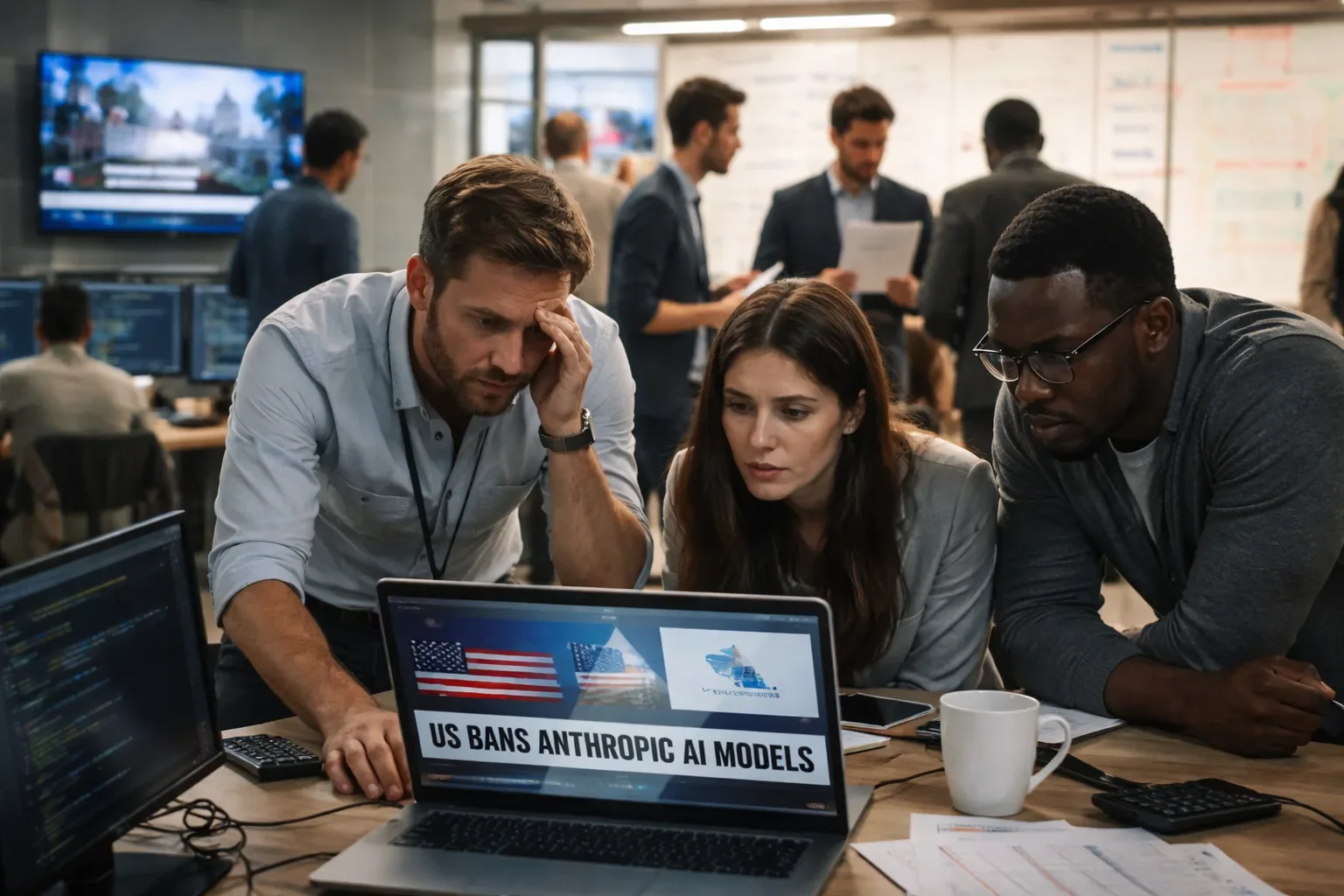
The US government has ordered Anthropic to pull access to its newest AI models, Fable 5 and Mythos 5, citing national security concerns after researchers reportedly demonstrated ways to bypass the systems' guardrails. The move is significant not only because it targets a high-profile AI company, but because it pushes government intervention directly into the release cycle of frontier models. If authorities can effectively force the withdrawal of a major model family, the AI industry may now be entering a more explicit phase of state oversight.
That is why this story matters beyond Anthropic. It may mark a turning point in how governments intervene before market and developer adoption fully takes hold.
Why the guardrail issue matters
Model guardrails are one of the main ways AI companies try to limit harmful use, but the industry also knows they are imperfect. Jailbreaks, prompt attacks, and policy bypasses have affected most advanced systems at some point. The key question is not whether bypasses exist at all. It is how severe, reproducible, and operationally dangerous they are. If the government judged the issues in Fable 5 and Mythos 5 serious enough to justify removal, then the threshold for acceptable model risk may be shifting.
That matters because the difference between "known limitation" and "national security concern" is a regulatory gap the industry has not fully settled.
Why Anthropic is a consequential target
Anthropic is one of the central companies in the modern generative AI race, and any direct action against its models automatically becomes a signal to the rest of the sector. A small startup facing restrictions would be one thing. A major model developer being forced to suspend access is another. It tells competitors, enterprise customers, and investors that scale and reputation do not guarantee operational freedom if the state decides a model crosses a security line.
This is why the ban is being read as precedent, not just punishment.
The Amazon research angle
The reported role of Amazon researchers is also notable because it adds complexity to the story. If a major technology actor helped surface the vulnerabilities, observers will naturally ask whether this is an ordinary security disclosure, a competitive tension point, or both. That does not invalidate the findings, but it does make the politics around them harder to ignore.
In frontier AI, technical criticism and strategic market positioning are often intertwined, whether companies admit it or not.
Why experts are pushing back
The open-letter criticism from cybersecurity specialists is important because it challenges the premise that banning Anthropic's models meaningfully solves the problem. If the vulnerabilities cited are widespread across the industry, then singling out one company may look more symbolic than systemic. That does not mean government inaction would be preferable. It means selective intervention risks looking arbitrary unless accompanied by a broader standard that applies to all comparable models.
This is one of the biggest unresolved questions in AI governance: should enforcement be company-specific or framework-wide?
The IPO and market consequences
Any forced withdrawal of flagship models can affect more than product access. It can alter fundraising, enterprise confidence, developer trust, and public-market narratives around readiness and governance. For a company like Anthropic, which sits close to the center of investor attention, this kind of regulatory action can influence how future growth is judged. It creates a new category of risk that is neither purely technical nor purely political, but both.
That is why the episode may matter to the whole AI market, not just to users of Fable 5 or Mythos 5.
What comes next
The immediate questions are whether Anthropic can revise and relaunch the models, whether the government clarifies the standard used for intervention, and whether competing model providers now face similar scrutiny. If authorities do not articulate a durable rule set, the industry may end up operating in a climate where every major release carries uncertain political exposure.
For now, the US government order against Anthropic's latest models is one of the clearest signs yet that AI safety disputes are moving from internal policy and media criticism into formal state power. Whether the ban proves protective, selective, or precedent-setting, it has already changed the conversation about who gets to decide when an AI model is too risky to remain online.
Why it matters
This federal intervention sets a major precedent for government oversight of AI releases and could impact Anthropic's IPO and the broader developer ecosystem.
Read next
Follow this story through the topic hub, more ai coverage, and the latest updates.
Weekly briefing
Get the week's key developments in one concise email.
Get a fast catch-up on the biggest stories, the context behind them, and the links worth your time.
Cadence
Weekly, for a quick catch-up
Coverage
AI, business, world, security, sports
Format
Clear takeaways and useful context
Request the briefing
Leave your email to open a prepared request and get on the list for the weekly briefing.
About the byline
AI reporter
Alex Rivera reports on artificial intelligence with an emphasis on model launches, frontier lab strategy, developer tooling, and the policy decisions shaping commercial deployment.
Sources and methodology