Spotify and Universal Music Strike Deal for AI-Powered Fan Remixes
The new partnership will allow Spotify Premium subscribers to create AI covers and remixes while ensuring artists and labels receive a share of the

AI reporter
Reports on model launches, frontier labs, developer platforms, and AI policy with an emphasis on claims verification and rollout context.
Editorial responsibility: Lead reviewer for AI coverage, launch claims, and policy context
Primary source: TechCrunch AI. Full source links and update notes are below.
Fast summary
Start here
- Spotify and Universal Music Group (UMG) have signed a licensing agreement for fan-made AI music creation tools.
- The feature will launch as a paid add-on exclusive to Spotify Premium subscribers.
- A revenue-sharing model will compensate participating artists and songwriters for the AI-generated music based on their work.
What happened
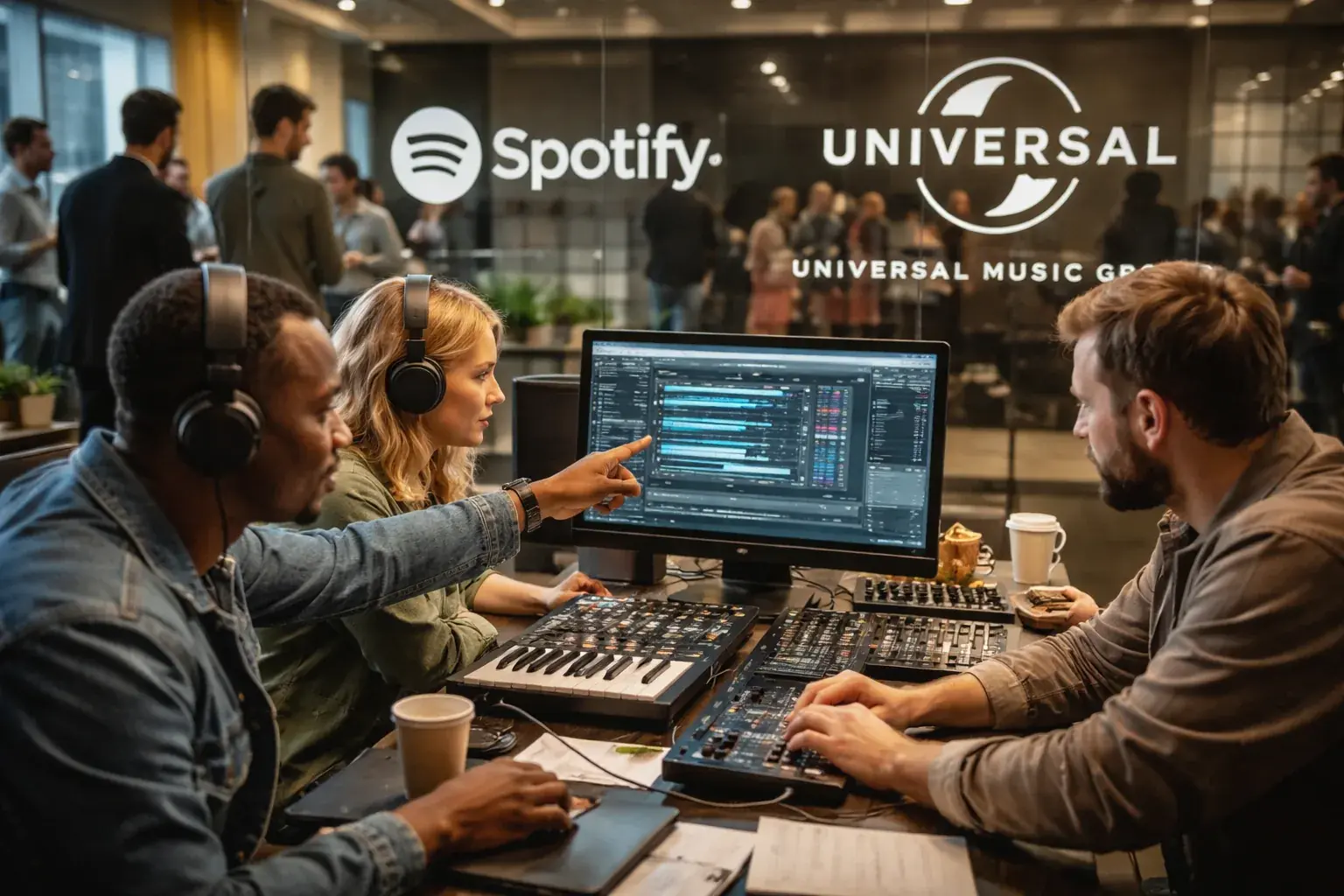
Spotify and Universal Music Group have signed a licensing agreement that will allow paying Spotify subscribers to create AI-generated remixes and covers using music from participating artists, while building compensation directly into the system for rights holders. The deal marks one of the clearest moves yet by a major streaming platform and a major label to turn generative AI from a legal threat into a controlled commercial product.
Instead of treating AI music creation as something that happens only outside the official industry, Spotify and UMG are trying to bring it inside a licensed framework. That means fan creativity is no longer viewed purely as infringement risk. It becomes a product category, one that can potentially generate revenue, deepen subscriber engagement, and give labels a way to shape how AI music is used rather than simply suing after the fact.
What's new in this update
The most important new detail is the structure: this will launch as a paid add-on for Spotify Premium users and will operate on a model of consent, credit, and compensation. That distinguishes it from many AI music tools that trained on copyrighted works or enabled imitation without clear licensing or artist approval.
Spotify says the system will share revenue with participating artists, songwriters, and labels when their work forms the basis for AI-generated tracks. Specific economics and rollout timing are still to come, but the framework signals a broader shift in how major music companies are thinking about generative AI. Instead of treating all synthetic music manipulation as hostile, they are building lanes where it can be monetized legally.
Key details
The deal comes after a period of escalating conflict between the music industry and AI music startups such as Suno and Udio. In those disputes, labels argued that generative models were being trained and commercialized on copyrighted material without permission. Spotify and UMG are now presenting an alternative path: if AI creation is going to happen anyway, build it inside a licensed ecosystem where the platform, the label, and the artist all have a role.
Several strategic goals are visible:
- Keep fan remix culture inside the official streaming platform.
- Give rights holders a measurable revenue stream from AI-derived engagement.
- Reduce incentives for unlicensed third-party tools to dominate fan creativity.
- Position Spotify as a neutral infrastructure layer for legal AI music creation.
Spotify also indicated that it is in talks with additional music groups, suggesting the company wants to scale this model beyond a single-label experiment.
Background and context
The music industry has been unusually aggressive in confronting generative AI because recorded music is easy to imitate, easy to distribute, and commercially sensitive. Labels fear not only outright copying, but also the erosion of artist control over voice, style, and derivative works. At the same time, fans clearly want more participatory ways to interact with songs they love.
That tension is what makes this deal important. It offers a compromise between prohibition and chaos. The message is that fan-made AI music may be acceptable if the rights framework is explicit, the economics are shared, and the platform retains enough control to prevent unrestricted copying and impersonation.
What to watch next
The next questions are operational. Which artists opt in? How much creative latitude will users actually get? Will remixes be limited, stylized, and constrained, or will they feel open-ended enough to satisfy fans? The answers will determine whether the product is a novelty or a durable new format for streaming platforms.
Why this matters
This matters because it may become the blueprint for how the mainstream music business absorbs generative AI. If the Spotify-UMG model works, the industry's center of gravity could shift from litigation alone to licensed participation, turning AI music from a threat at the edge into a regulated part of the commercial core.
Reader context
This story belongs to Northstar Herald's Generative AI and Artificial Intelligence coverage, with related entities including Spotify, Universal Music Group, Music Industry, Copyright. The report is based on TechCrunch AI source material.
Related coverage
Why it matters
This deal represents a significant pivot in the music industry's approach to AI, moving from litigation against startups toward a regulated, consent-based model for fan-generated content.
Read next
Follow this story through the topic hub, more ai coverage, and the latest updates.
Weekly briefing
Get the week's key developments in one concise email.
Get a fast catch-up on the biggest stories, the context behind them, and the links worth your time.
Cadence
Weekly, for a quick catch-up
Coverage
AI, business, world, security, sports
Format
Clear takeaways and useful context
Request the briefing
Leave your email to open a prepared request and get on the list for the weekly briefing.
About the byline
AI reporter
Alex Rivera reports on artificial intelligence with an emphasis on model launches, frontier lab strategy, developer tooling, and the policy decisions shaping commercial deployment.
Sources and methodology