Apple Prepares Major Siri Overhaul and ChatGPT Rival for iOS 27
Leaked renders suggest Apple will integrate Siri more deeply into the iPhone interface while launching a standalone chatbot app powered by third-party and

AI reporter
Reports on model launches, frontier labs, developer platforms, and AI policy with an emphasis on claims verification and rollout context.
Editorial responsibility: Lead reviewer for AI coverage, launch claims, and policy context
Primary source: TechCrunch AI. Full source links and update notes are below.
Fast summary
Start here
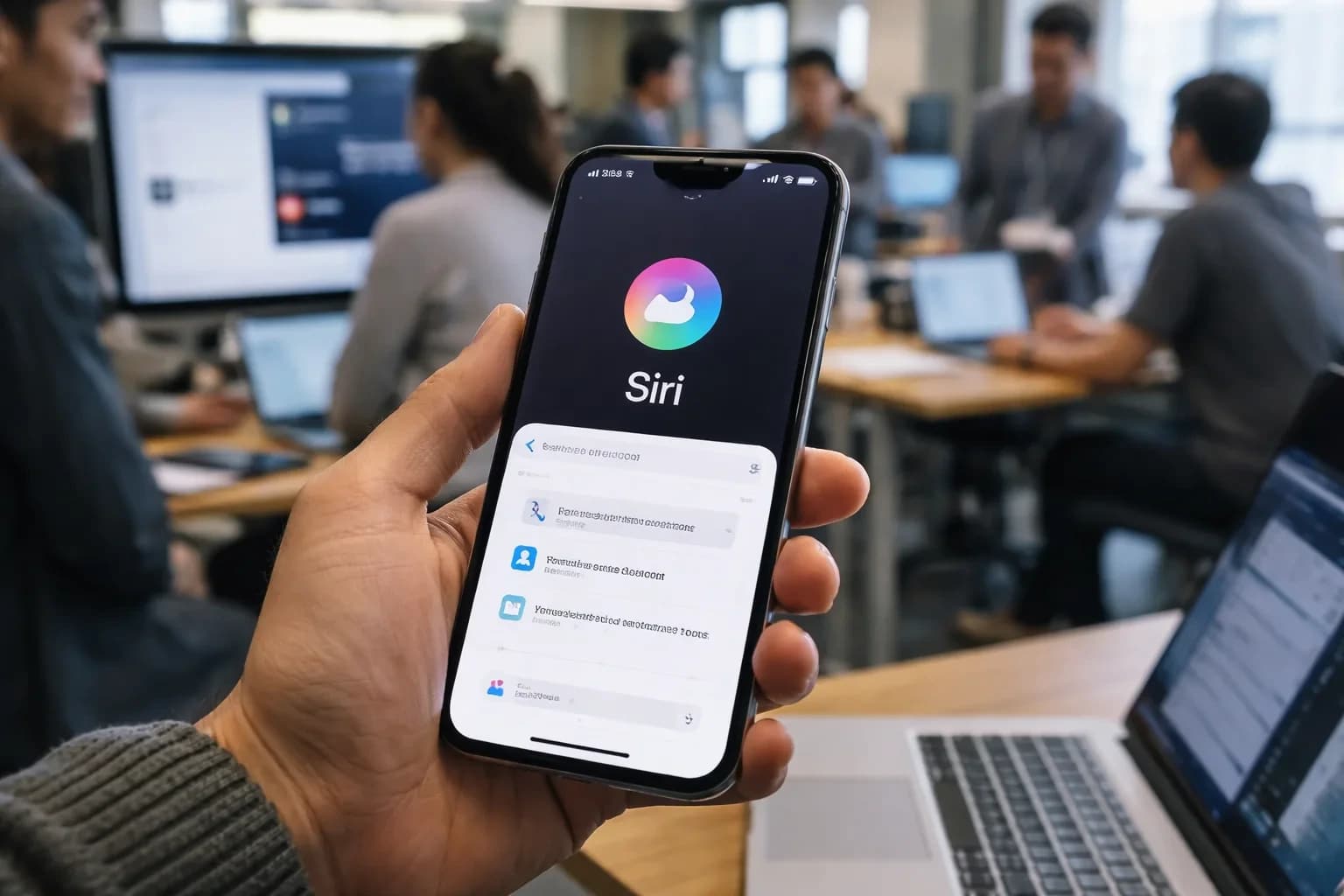
- A new standalone Siri app will compete with ChatGPT, allowing users to view chat history and upload documents or photos.
- Siri interactions will be integrated into the Dynamic Island and Spotlight Search for more seamless system-wide query handling.
- Apple is reportedly partnering with Google to use Gemini AI technology under the hood to bolster Siri's intelligence.
What happened
Leaked details about iOS 27 suggest Apple is preparing a more ambitious Siri strategy that goes beyond incremental assistant upgrades. The reported plan has two tracks: a rebuilt Siri woven more deeply into the iPhone interface and a standalone chat-style Siri app that could function as Apple's answer to ChatGPT, Claude, and other AI-native assistants.
That matters because Apple has so far looked cautious compared with companies that moved quickly to ship prominent AI chat products. A separate Siri app with chat history, document uploads, and photo analysis would mark a substantial shift in how Apple presents artificial intelligence to users. Instead of treating AI as a hidden background feature, Apple would be putting it in front of users as a destination experience.
What's new in this update
The most notable new detail from the leak is the interface strategy. Siri is not only expected to improve in intelligence; it is expected to appear in more of the system. Reports suggest Dynamic Island interactions, upgraded Spotlight Search behavior, and tighter contextual responses across iPhone workflows. That would make Siri feel less like a separate voice tool and more like an ambient assistant embedded throughout iOS.
The leak also points to a broader architectural shift inside Apple. Rather than relying only on internal models, the company is reportedly leaning in part on Google's Gemini technology for cloud-based reasoning while still building local on-device models for privacy-sensitive or lower-latency tasks. That hybrid model would allow Apple to improve capability faster without abandoning its long-standing privacy narrative.
Key details
If the reports are accurate, the standalone Siri app would support persistent conversations, file uploads, and visual inputs in a format familiar to users of modern AI chatbots. That alone would push Siri much closer to the mainstream large-language-model experience than prior Apple assistant updates ever did.
The system-wide changes may be just as important as the app itself. A smarter Spotlight layer and Dynamic Island interaction model could bring AI into everyday phone use without requiring users to open a dedicated assistant app for every task. That is a classic Apple move: take an emerging behavior and integrate it into the operating system so it feels native rather than bolted on.
Key questions now include:
- How much of the intelligence runs on device versus in the cloud.
- Whether Gemini integration is limited, optional, or central to the new Siri.
- How Apple will differentiate a Siri chatbot from existing products like ChatGPT.
- Whether the new interface improves utility or just adds more AI surface area.
Background and context
Apple has historically preferred to control its core platforms end to end, especially for user-facing features that define the identity of its devices. Generative AI has complicated that approach because the pace of model improvement and the infrastructure needed to support it have favored companies that already built large cloud AI stacks.
That tension has left Apple in a delicate position. It has the world's most powerful consumer-device ecosystem and an enormous installed base, but it entered the chatbot era later than OpenAI, Google, and Microsoft. The leaked Siri plans suggest Apple is trying to use its distribution advantage now that user expectations have changed. If billions of devices can receive a usable AI assistant through a system update, scale becomes a competitive weapon.
What to watch next
WWDC will be the obvious checkpoint. The most important things to watch are whether Apple confirms a standalone Siri app, how it explains third-party model involvement, and whether the new Siri is positioned as a daily assistant or as a premium advanced feature for newer hardware tiers.
Why this matters
This matters because Apple does not need to invent the chatbot category to reshape it. If the company can make a Siri app and system-wide assistant feel trustworthy, polished, and easy to access across the iPhone ecosystem, it could push AI chat into mainstream consumer behavior at a scale few rivals can match.
Reader context
This story belongs to Northstar Herald's Generative AI and Artificial Intelligence coverage, with related entities including Apple, Siri, iOS 27, iPhone. The report is based on TechCrunch AI source material.
Related coverage
Why it matters
Apple's massive user base of 2.5 billion devices gives it a unique opportunity to scale AI tools to a mainstream audience that hasn't yet adopted standalone chatbots. It also marks a shift in Apple's strategy to rely on external partners like Google for complex cloud-based AI tasks.
Read next
Follow this story through the topic hub, more ai coverage, and the latest updates.
Weekly briefing
Get the week's key developments in one concise email.
Get a fast catch-up on the biggest stories, the context behind them, and the links worth your time.
Cadence
Weekly, for a quick catch-up
Coverage
AI, business, world, security, sports
Format
Clear takeaways and useful context
Request the briefing
Leave your email to open a prepared request and get on the list for the weekly briefing.
About the byline
AI reporter
Alex Rivera reports on artificial intelligence with an emphasis on model launches, frontier lab strategy, developer tooling, and the policy decisions shaping commercial deployment.
Sources and methodology