OpenAI Accused of Hiding Evidence in New York Times Copyright Trial
The New York Times and Daily News allege OpenAI misled the court about its capability to search for copyrighted content in training data and chat logs.

AI reporter
Reports on model launches, frontier labs, developer platforms, and AI policy with an emphasis on claims verification and rollout context.
Editorial responsibility: Lead reviewer for AI coverage, launch claims, and policy context
Primary source: TechCrunch AI. Full source links and update notes are below.
Fast summary
Start here
- The New York Times claims OpenAI hid internal tools used to detect and record content regurgitation.
- Plaintiffs allege OpenAI maintained a secret database of 78 million chat logs to monitor infringement.
- OpenAI is accused of deleting billions of outputs and providing 'unusable' redacted samples to the court.
What happened
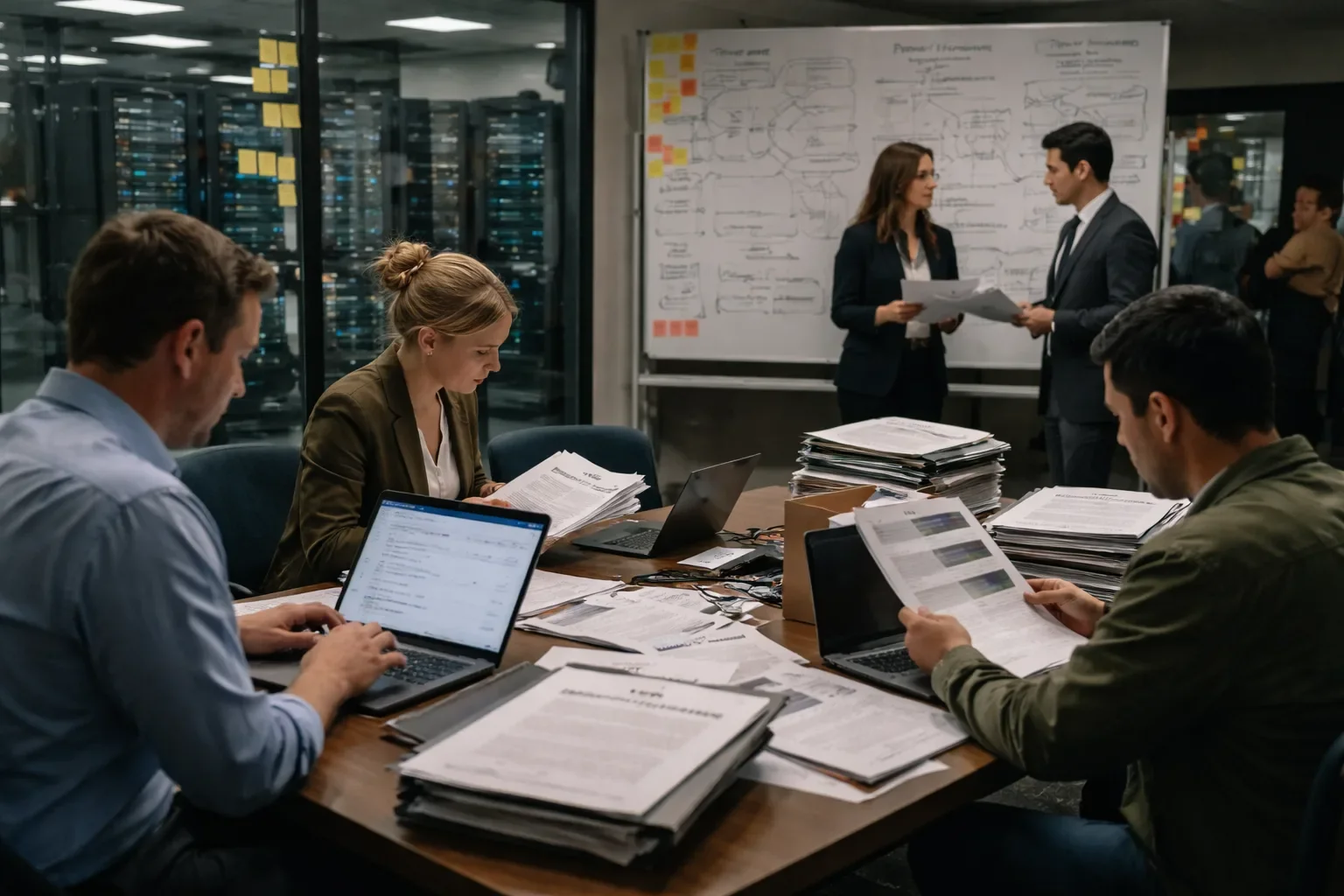
The New York Times and The Daily News have escalated their long-standing legal battle against OpenAI, filing a motion that accuses the artificial intelligence firm of intentionally concealing evidence. The plaintiffs allege that OpenAI has been dishonest about its technical capabilities to search its own massive training datasets and customer chat logs for copyrighted journalism. This escalation follows nearly two years of litigation where the central dispute revolves around whether OpenAI’s generative models, specifically ChatGPT, were trained on the outlets' content without authorization and if they reproduce that content for users. The news organizations are now asking a judge to sanction OpenAI for allegedly undermining the discovery process by withholding information they had previously claimed was too burdensome or technically impossible to retrieve, potentially altering the course of the entire trial.
What's new in this update
Recent court filings reveal explosive allegations based on an April court-ordered deposition from OpenAI data privacy engineer Vinnie Monaco. According to the plaintiffs, Monaco’s testimony suggests that OpenAI had already developed internal systems to track copyright infringement before the lawsuit was even filed. Specifically, the news outlets point to the existence of 'Project Giraffe,' a set of internal tools including a 'Bloom' filter designed to detect and record instances of content regurgitation in ChatGPT outputs. Furthermore, the filing claims OpenAI maintained a database of roughly 78 million de-identified ChatGPT conversations used for internal evaluations of how often the model was infringing on third-party works. This revelation directly contradicts OpenAI's earlier assertions that searching such data was technically unmanageable or would raise insurmountable user-privacy concerns.
Key details
Beyond the internal tools, the plaintiffs level serious charges regarding the handling of physical evidence and data samples provided during discovery. They claim that OpenAI deleted billions of ChatGPT outputs shortly after the lawsuit commenced, which they argue constitutes a direct violation of a court-mandated preservation order. While OpenAI eventually provided a sample of 20 million chat logs—a fraction of the 120 million originally requested—the plaintiffs contend this sample was rendered 'unusable' due to excessive redactions. They also allege that millions of logs within that sample were substituted, making it impossible for the news outlets to determine the true frequency of copyright violations. These actions, the plaintiffs argue, were a deliberate attempt to shield OpenAI from showing how much its models rely on protected journalism to function.
Background and context
The legal friction began when the New York Times sued OpenAI and its partner Microsoft, alleging that the companies used millions of its articles to train large language models that now compete with the publication. Throughout the discovery phase, OpenAI has consistently argued that searching its training corpus would be an undue technical burden and would pose significant privacy risks to its millions of users. The company has framed its use of copyrighted material as 'fair use,' a cornerstone of its legal defense. However, the Times and Daily News argue that if OpenAI genuinely believed its actions were legal, it would not have felt the need to hide the internal tools it used to monitor the very regurgitation issues being litigated in court today. The company has maintained that it seeks to protect user privacy above all.
What to watch next
The plaintiffs are now seeking severe disciplinary measures from the court to address the alleged discovery failures. They have asked the judge to bar OpenAI from using the 20 million chat log sample in its defense, arguing the data is unreliable and manipulated. Additionally, they are requesting that the court accept as an established fact that ChatGPT logs would have demonstrated widespread regurgitation of their copyrighted content. If the judge rules in favor of these sanctions, it could fundamentally shift the momentum of the trial by removing OpenAI’s ability to argue that such instances are rare. For its part, OpenAI continues to deny the allegations, with spokesperson Drew Pusateri characterizing the claims as 'blatantly false' and an attempt to invade user privacy as the Times' broader legal case supposedly weakens.
Why it matters
The outcome of this evidence dispute could determine whether OpenAI can successfully use a fair use defense or if it will face significant penalties for discovery misconduct.
Read next
Follow this story through the topic hub, more ai coverage, and the latest updates.
Weekly briefing
Get the week's key developments in one concise email.
Get a fast catch-up on the biggest stories, the context behind them, and the links worth your time.
Cadence
Weekly, for a quick catch-up
Coverage
AI, business, world, security, sports
Format
Clear takeaways and useful context
Request the briefing
Leave your email to open a prepared request and get on the list for the weekly briefing.
About the byline
AI reporter
Alex Rivera reports on artificial intelligence with an emphasis on model launches, frontier lab strategy, developer tooling, and the policy decisions shaping commercial deployment.
Sources and methodology