Legora Hits $5.6 Billion Valuation as Nvidia Joins Legal AI Race
The Swedish legal tech firm secured a $50 million Series D extension and surpassed $100 million in ARR, positioning it as a primary challenger to Harvey.

AI reporter
Reports on model launches, frontier labs, developer platforms, and AI policy with an emphasis on claims verification and rollout context.
Editorial responsibility: Lead reviewer for AI coverage, launch claims, and policy context
Primary source: TechCrunch AI. Full source links and update notes are below.
Fast summary
Start here
- NVentures, Nvidia’s venture capital arm, made its first legal AI investment by backing Legora.
- Legora's valuation rose to $5.6 billion after surpassing $100 million in annual recurring revenue.
- The startup is engaged in an aggressive expansion and marketing battle with $11 billion rival Harvey.
What happened
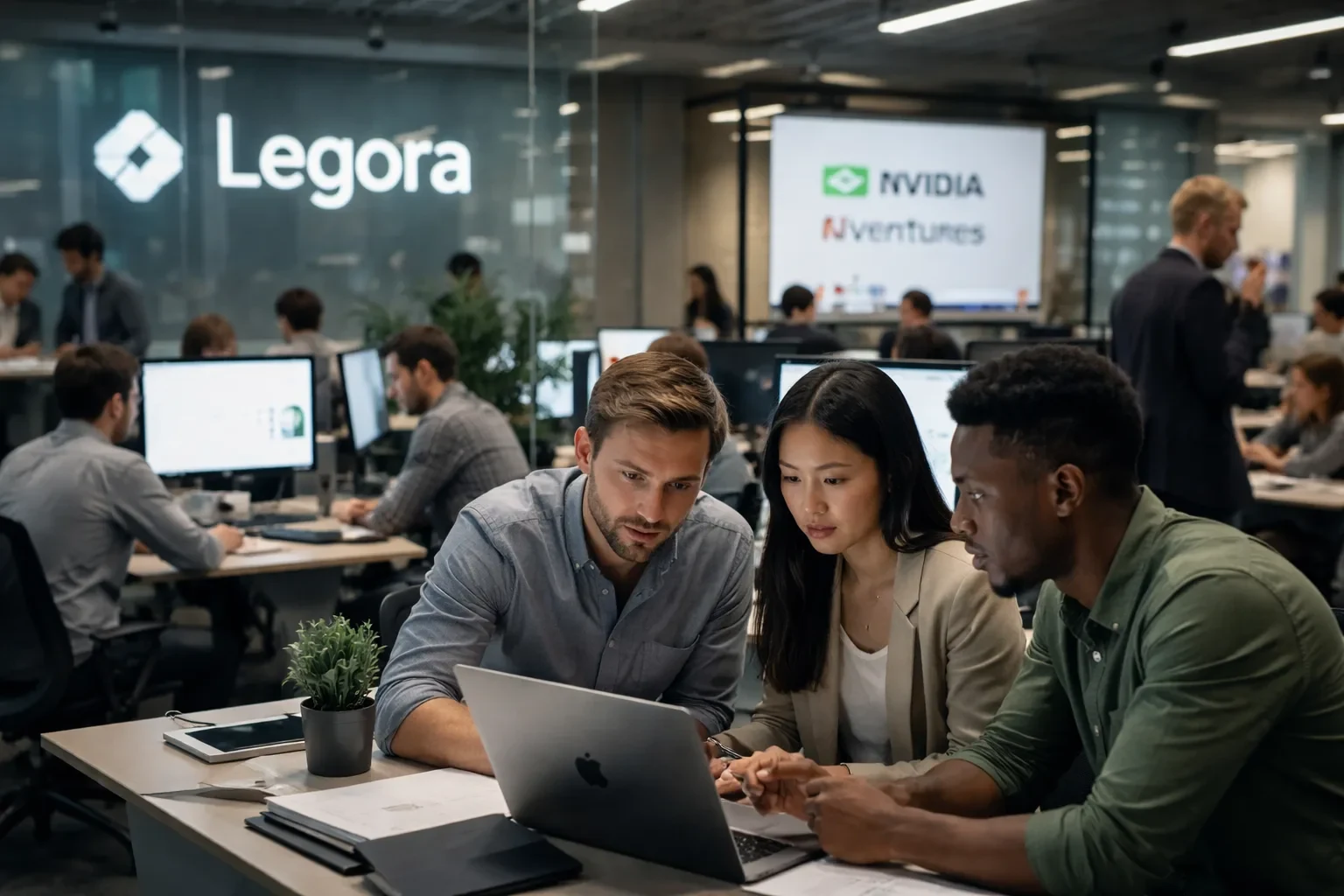
Legora has reached a $5.6 billion valuation after closing a $50 million Series D extension led by NVentures, Nvidia's venture investment arm. The raise adds fresh momentum to one of the fastest-growing companies in legal AI and strengthens the sense that software for law firms and in-house counsel has become one of the most commercially attractive enterprise categories in generative AI.
The new financing came shortly after Legora crossed $100 million in annual recurring revenue, a benchmark that investors increasingly treat as proof that a generative AI company has moved beyond early experimentation. For Legora, the combination of triple-digit recurring revenue, international expansion, and backing from Nvidia gives the company more credibility in its contest with Harvey, the better-known U.S.-based rival that has already achieved an even higher valuation.
What's new in this update
The Nvidia connection is the biggest new signal in this round. NVentures had not previously made a major bet on the legal AI segment, so its decision to back Legora suggests that sector-specific AI applications are now attracting the same strategic interest that once centered mostly on horizontal copilots and model providers.
The extension also followed unusually quickly after Legora's earlier $550 million Series D round, showing how aggressively investors are competing to gain exposure to breakout enterprise AI companies. Rather than waiting for a slower operating history, capital is being deployed on the assumption that category leaders in legal workflow automation could become durable infrastructure providers across contract review, due diligence, compliance, and research.
Key details
Legora says it now serves more than 1,000 law firms and corporate legal teams, including major international names such as Linklaters, Bird & Bird, and Cleary Gottlieb. Those customer references matter because legal buyers are typically conservative and slow to adopt new workflow software. Winning prominent firms suggests that the product is being trusted in real drafting and review environments, not just in trial programs.
The company is also pushing hard into the United States, where Harvey has established stronger brand recognition. That rivalry is increasingly visible in both hiring and marketing. Legal AI startups are no longer competing only on product demos or benchmark claims. They are competing on who becomes the default layer for how lawyers search files, draft documents, summarize cases, and manage knowledge inside large organizations.
Several factors are helping fuel the race:
- Law firms want to cut time spent on document-heavy work without reducing billable quality.
- Corporate legal departments face pressure to do more with smaller teams.
- Foundation models have improved enough to handle structured legal tasks with fewer hallucination risks than earlier systems.
- Investors see legal services as a large, expensive, and still under-digitized market.
Background and context
Legora and Harvey both rely on underlying foundation models from larger AI labs, including OpenAI and Anthropic, while trying to build defensible application layers on top. That creates both opportunity and vulnerability. The opportunity comes from shipping domain-specific workflows, integrations, and customer trust faster than general-purpose model vendors can. The vulnerability is that the same model providers could eventually move deeper into legal tooling themselves.
Legora chief executive Max Junestrand has argued that the company's moat comes from workflow design, customer fit, and legal-specific product execution rather than from owning the base model. That is a plausible thesis, but investors will continue to test it as the model layer improves and enterprise customers demand tighter security, auditability, and jurisdiction-specific controls.
What to watch next
The next question is whether Legora can translate rapid revenue growth into a lasting strategic position. Observers will be watching U.S. customer wins, retention among major law firms, and whether the company can narrow the valuation gap with Harvey. Nvidia's backing may also create expectations that Legora can scale product performance and infrastructure faster than smaller rivals.
Why this matters
Nvidia's investment is not just another venture round. It is a marker that legal AI has become a serious enterprise battleground where specialist applications can command multibillion-dollar valuations if they prove real workflow adoption and not merely demo-level interest.
Reader context
This story belongs to Northstar Herald's Legal Tech and Venture Capital coverage, with related entities including Legora, Nvidia, Harvey AI, NVentures. The report is based on TechCrunch AI source material.
Related coverage
Why it matters
The investment signals Nvidia's entry into the legal tech vertical and highlights the rapid commercial scale of AI startups capable of hitting nine-figure revenue within months.
Read next
Follow this story through the topic hub, more ai coverage, and the latest updates.
Weekly briefing
Get the week's key developments in one concise email.
Get a fast catch-up on the biggest stories, the context behind them, and the links worth your time.
Cadence
Weekly, for a quick catch-up
Coverage
AI, business, world, security, sports
Format
Clear takeaways and useful context
Request the briefing
Leave your email to open a prepared request and get on the list for the weekly briefing.
About the byline
AI reporter
Alex Rivera reports on artificial intelligence with an emphasis on model launches, frontier lab strategy, developer tooling, and the policy decisions shaping commercial deployment.
Sources and methodology