Elon Musk Takes the Stand to Challenge OpenAI's Commercial Shift
Musk's three-day testimony highlighted his claims that OpenAI violated its charitable mission by transitioning to a for-profit structure.

AI reporter
Reports on model launches, frontier labs, developer platforms, and AI policy with an emphasis on claims verification and rollout context.
Editorial responsibility: Lead reviewer for AI coverage, launch claims, and policy context
Primary source: TechCrunch AI. Full source links and update notes are below.
Fast summary
Start here
- Elon Musk spent three days testifying in his lawsuit against OpenAI, claiming the organization abandoned its nonprofit charter.
- Court evidence includes internal emails, texts, and tweets used to argue that the company's assets were effectively 'stolen' for profit.
- The case centers on whether OpenAI's partnership with Microsoft and for-profit pivot betrayed early donors' intent.
What happened
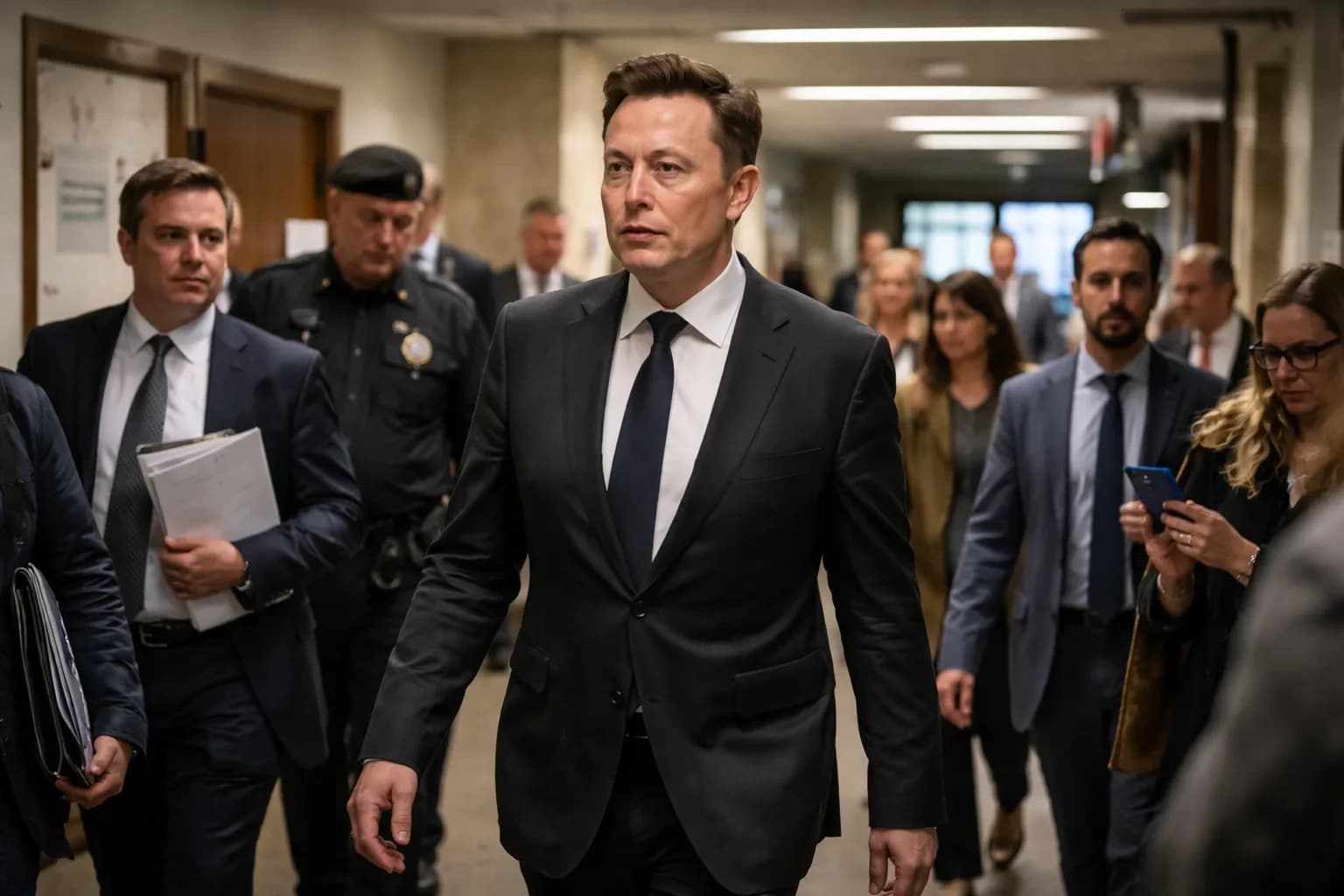
Elon Musk spent three days on the witness stand laying out the core claim in his lawsuit against OpenAI: that the lab he helped launch as a nonprofit research project later turned into a commercially driven company that no longer reflects its original purpose. Musk told the court that his early financial support was tied to the idea that artificial general intelligence research would be developed openly and for the broad public good, not used to build a tightly controlled corporate asset.
His testimony goes to the center of the Musk v. OpenAI dispute. The case is not only about personal disagreements between Musk and Sam Altman. It is also about whether a high-profile nonprofit can create valuable intellectual property, move that work into a for-profit structure, and still claim continuity with its founding mission. That legal question has drawn attention far beyond the AI industry because it touches nonprofit law, board oversight, and donor expectations.
What's new in this update
The latest courtroom sessions introduced internal emails, text messages, and public statements that Musk's legal team says show a clear shift inside OpenAI from mission language to commercial planning. Musk repeated his blunt line that "you can't steal a charity," arguing that OpenAI leadership diverted a public-interest organization into a private value engine.
Lawyers for OpenAI are expected to counter that the organization adapted because advanced AI research became far more expensive than originally anticipated. Training frontier models now requires enormous spending on chips, cloud infrastructure, data pipelines, and top research talent. In that framing, the capped-profit structure and Microsoft partnership were not betrayals but financial mechanisms necessary to keep the organization competitive.
Key details from the testimony
Musk's legal case focuses on the gap between OpenAI's founding narrative in 2015 and the company that exists today. He argues that early supporters were sold on a nonprofit lab committed to open access and safety-first development. He says that promise weakened once OpenAI built a commercial arm, signed major deals, and began treating model access as a strategic product rather than a shared public resource.
Several issues are likely to matter heavily at trial:
- Whether OpenAI's board and executives had the legal authority to restructure operations the way they did.
- Whether early donors and founders were materially misled about how assets would be used.
- Whether Microsoft gained privileged commercial benefits that conflict with the original nonprofit mission.
- Whether OpenAI's public statements about openness and safety created enforceable obligations.
The case also carries reputational weight for Sam Altman and other current or former leaders who may be asked to explain how internal decision-making changed as OpenAI moved from research lab to global AI platform.
Background and context
OpenAI began as a nonprofit research effort with an unusually idealistic public posture. Musk was one of its best-known early backers but left the board in 2018. After that, OpenAI created a capped-profit entity to raise far more capital while keeping a nonprofit parent in place. The company has argued that this hybrid model was the only realistic path to fund cutting-edge model development at global scale.
That explanation has not satisfied Musk, who has spent the last two years escalating criticism of OpenAI's partnership with Microsoft, its closed product ecosystem, and its broader role in the AI arms race. The lawsuit gives him a formal venue to press those concerns under oath and to test whether a court sees the restructuring as legitimate governance or as mission drift.
What to watch next
The next major phase of the trial will likely focus on testimony from current OpenAI leadership, especially Sam Altman, along with additional evidence about the company's internal deliberations. Observers will watch for any documentation showing when OpenAI's priorities changed, how board members discussed commercialization, and whether outside partners influenced governance choices.
The outcome could shape how future AI labs are structured. If Musk's arguments gain traction, nonprofit-backed research groups may face tighter scrutiny when they pursue commercial spinouts or exclusive enterprise partnerships. If OpenAI prevails, the ruling may strengthen the idea that mission-driven tech organizations still have broad flexibility to reorganize when the economics of research change.
Why this matters
This lawsuit is bigger than a feud between major tech figures. It could establish a precedent for how nonprofit entities handle valuable AI assets, how much latitude boards have when raising private capital, and what legal force founding mission statements actually carry once billions of dollars are involved.
Reader context
This story belongs to Northstar Herald's OpenAI Lawsuit and Elon Musk coverage, with related entities including Elon Musk, OpenAI, Sam Altman, Nonprofit Law. The report is based on TechCrunch AI source material.
Related coverage
Why it matters
This legal battle could set a significant precedent regarding the ability of nonprofit organizations to privatize their assets and shift away from their founding missions.
Read next
Follow this story through the topic hub, more ai coverage, and the latest updates.
Weekly briefing
Get the week's key developments in one concise email.
Get a fast catch-up on the biggest stories, the context behind them, and the links worth your time.
Cadence
Weekly, for a quick catch-up
Coverage
AI, business, world, security, sports
Format
Clear takeaways and useful context
Request the briefing
Leave your email to open a prepared request and get on the list for the weekly briefing.
About the byline
AI reporter
Alex Rivera reports on artificial intelligence with an emphasis on model launches, frontier lab strategy, developer tooling, and the policy decisions shaping commercial deployment.
Sources and methodology