Elon Musk Pivots to Space-Based Solar for Future AI Energy Demands
New SpaceX filings suggest a departure from terrestrial solar in favor of orbital arrays to power massive AI data centers.

AI reporter
Reports on model launches, frontier labs, developer platforms, and AI policy with an emphasis on claims verification and rollout context.
Editorial responsibility: Lead reviewer for AI coverage, launch claims, and policy context
Primary source: TechCrunch AI. Full source links and update notes are below.
Fast summary
Start here
- SpaceX IPO filings indicate a strategic shift toward space-based solar power for AI infrastructure.
- xAI is currently utilizing natural gas turbines to power its data centers despite Musk's historical focus on clean energy.
- Musk anticipates a terawatt-scale annual growth in AI compute that may exceed Earth's power grid capacity.
What happened
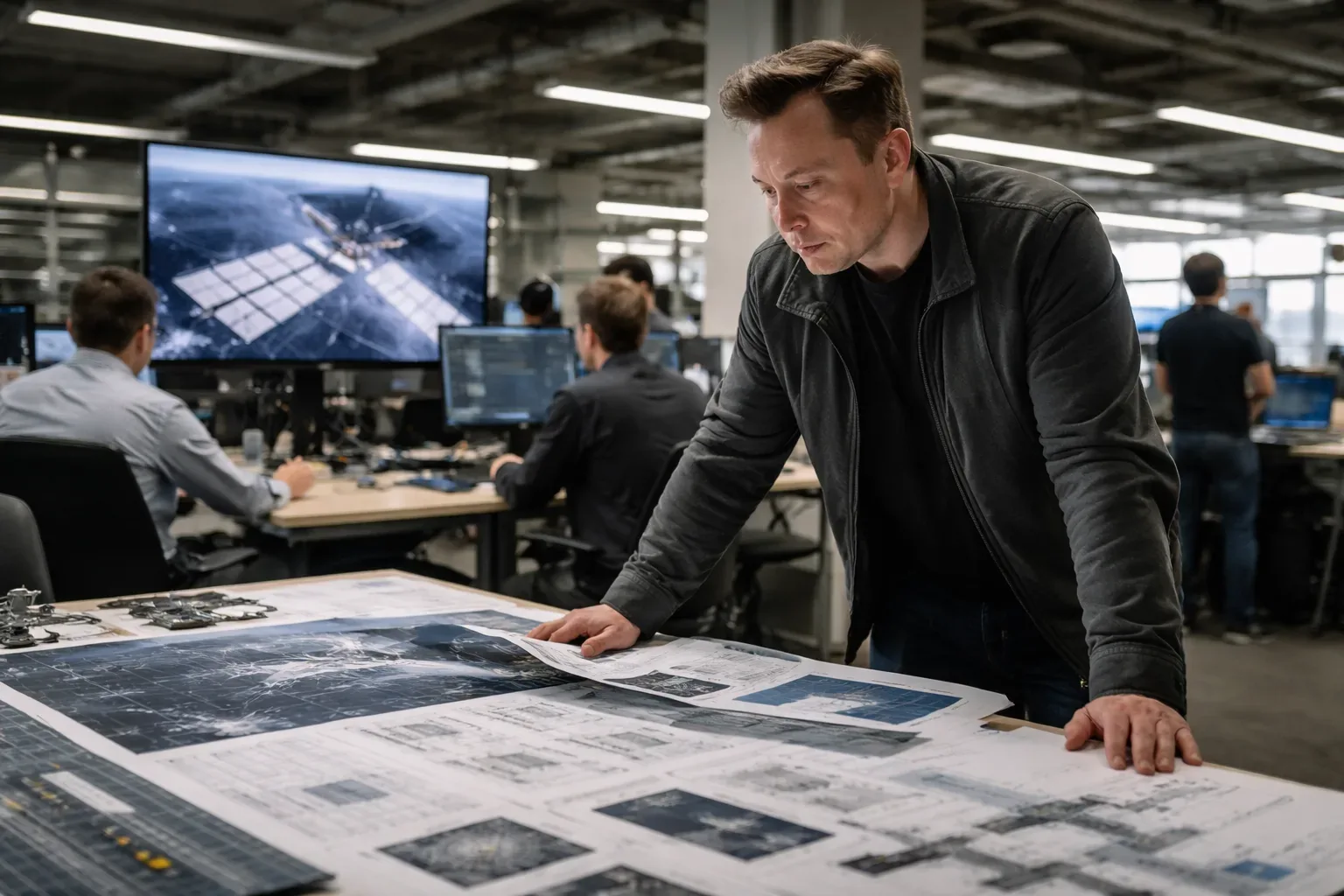
New SpaceX-related filings suggest Elon Musk is moving his long-range energy imagination away from Earth-bound solar and toward orbital power systems as a future answer to AI's exploding compute appetite. The idea is not that terrestrial energy disappears tomorrow. It is that Musk increasingly appears to view it as insufficient for the scale of infrastructure he expects AI to require. In that framing, space-based solar becomes less of a science-fiction side project and more of a strategic energy concept for data centers that could outgrow the practical limits of the terrestrial grid.
That is a striking shift because Musk spent years presenting solar power on Earth as a core pillar of his long-term industrial worldview. If that emphasis is now receding in favor of orbital energy, it signals just how extreme the AI power conversation has become.
What's new in this update
The most important update is the contrast between current reality and long-term rhetoric. xAI is reportedly relying on natural gas turbines and other pragmatic terrestrial infrastructure to meet present demand, while the longer-term vision being floated involves space-based solar arrays and perhaps even orbital compute support. That gap reveals a central tension in the AI infrastructure race: companies need power immediately, even if their stated future points toward radically different energy systems.
The filings also reinforce how seriously Musk appears to take the idea that AI compute growth could eventually overwhelm normal grid expansion. Whether that projection is overblown or not, it is clearly influencing planning assumptions inside his companies.
Key details
Space-based solar is attractive in theory because it can access near-continuous sunlight and avoid many of the land, weather, and intermittency constraints that terrestrial installations face. In practice, however, the concept remains technically and economically daunting, especially if the goal is to beam usable energy reliably into an ecosystem of enormous data centers.
Several tensions define the strategy:
- AI data centers need power on a scale that is already straining local energy systems.
- xAI's current response depends on conventional and fossil-backed infrastructure.
- Space-based solar promises abundant clean generation but remains operationally unproven at the needed scale.
- SpaceX gives Musk a plausible platform for pursuing orbital energy infrastructure more seriously than most rivals could.
This is why the story is more than one executive's eccentric futurecasting. It sits at the intersection of launch capability, AI infrastructure, power scarcity, and industrial ambition.
Background and context
The AI sector has entered a phase where energy is becoming as strategic as chips. Training and inference clusters require not only processors and cooling, but reliable megawatt and gigawatt-scale power access. That reality is pushing major firms into deals for gas plants, nuclear exploration, modular turbines, and unconventional data center siting. Musk's orbital-solar emphasis fits inside that broader scramble, but it goes further by treating off-planet energy as a serious long-horizon extension of the compute race.
It also complicates his historical identity around climate and energy. A turn away from terrestrial solar as the primary answer suggests either that current renewable deployment is too slow for AI's appetite or that Musk sees a more strategically controllable system in orbital infrastructure.
What to watch next
The next question is whether any concrete engineering roadmap emerges beyond the conceptual level. Investors and industry observers will want to see whether this is mainly narrative positioning in support of SpaceX and xAI ambition, or whether capital, partnerships, and technical milestones begin to align around actual space-based power experiments.
Watch also for the nearer-term consequences. If xAI continues expanding with gas-heavy infrastructure while talking about future orbital power, critics may question whether the long-term vision is masking a much dirtier short-term energy reality.
Why this matters
This matters because Elon Musk, SpaceX, xAI, space-based solar power, AI infrastructure, and data-center energy are all converging around a core problem of the AI era: where the electricity will come from. If Musk is right that Earth-bound systems cannot scale quickly enough, then orbital power could become part of a real strategic discussion. If he is wrong, the idea may still reveal how desperate and expansive the search for compute energy has already become.
Reader context
This story belongs to Northstar Herald's Generative AI and Machine Learning coverage, with related entities including Elon Musk, SpaceX, xAI, Space-based Solar Power. The report is based on TechCrunch AI source material.
Related coverage
Why it matters
This pivot reflects the unprecedented energy requirements of artificial intelligence, which are pushing tech leaders to look beyond Earth's power grids for scalable solutions.
Read next
Follow this story through the topic hub, more ai coverage, and the latest updates.
Weekly briefing
Get the week's key developments in one concise email.
Get a fast catch-up on the biggest stories, the context behind them, and the links worth your time.
Cadence
Weekly, for a quick catch-up
Coverage
AI, business, world, security, sports
Format
Clear takeaways and useful context
Request the briefing
Leave your email to open a prepared request and get on the list for the weekly briefing.
About the byline
AI reporter
Alex Rivera reports on artificial intelligence with an emphasis on model launches, frontier lab strategy, developer tooling, and the policy decisions shaping commercial deployment.
Sources and methodology