ElevenLabs Debuts Music v2 with Mid-Track Genre Transitions
The new AI model allows creators to switch musical styles within a single song and edit specific sections like verses or choruses through text prompts.

AI reporter
Reports on model launches, frontier labs, developer platforms, and AI policy with an emphasis on claims verification and rollout context.
Editorial responsibility: Lead reviewer for AI coverage, launch claims, and policy context
Primary source: TechCrunch AI. Full source links and update notes are below.
Fast summary
Start here
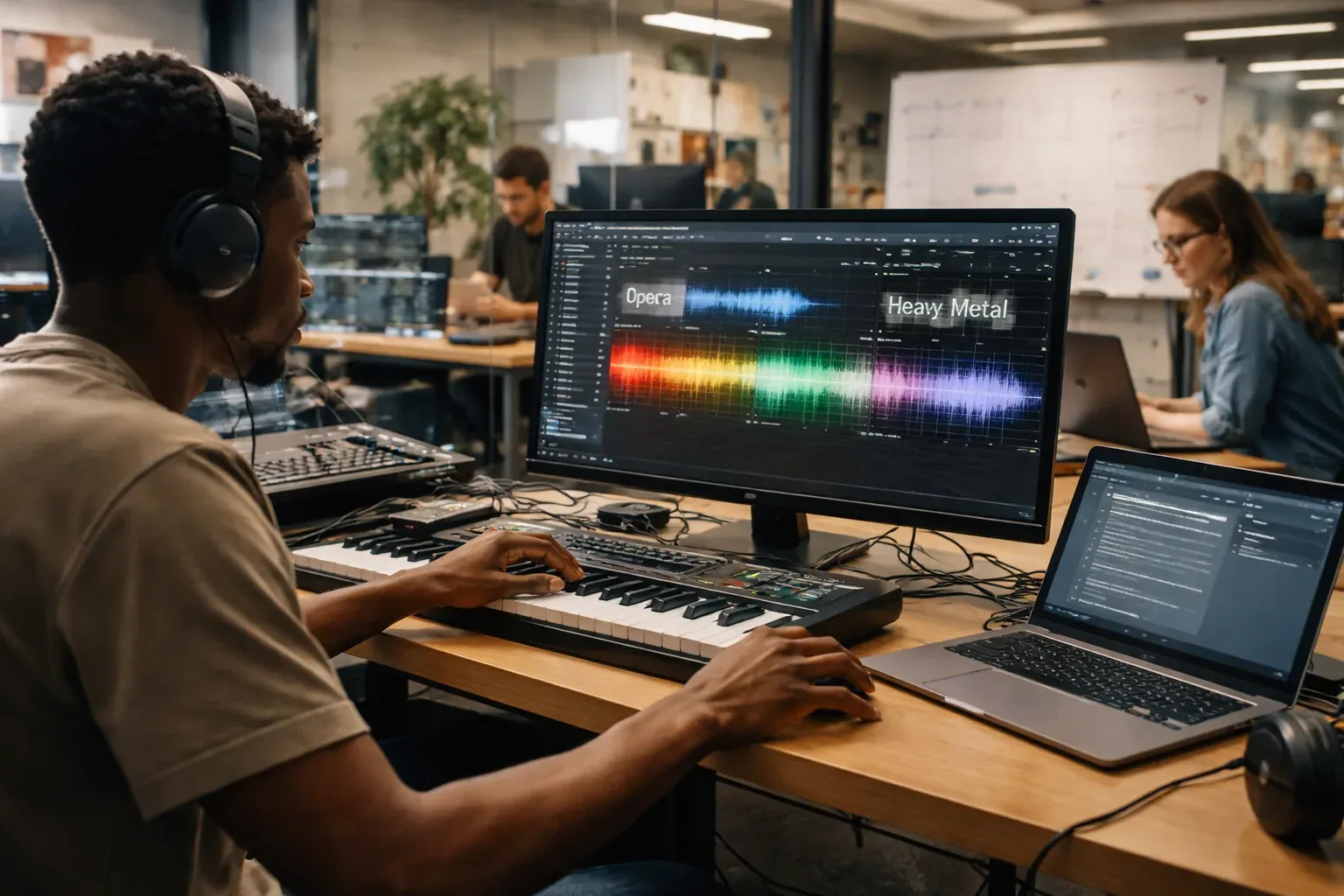
- Music v2 can transition between vastly different genres, such as opera and heavy metal, within the same track.
- Users can regenerate specific sections of a song using text prompts without altering the rest of the composition.
- The model is built on licensed data and cleared for commercial use, distinguishing it from competitors facing copyright litigation.
What happened
ElevenLabs has launched Music v2, a new AI music model designed to give users more control over song structure, section-level editing, and dramatic style changes within a single track. The company says the model can shift between very different genres, such as opera and heavy metal, without forcing the user to rebuild the whole composition from scratch. That kind of modular control is important because many AI music systems still feel like slot machines: they produce a complete output, but changing one section often means losing everything else that worked.
What's new in this update
The headline feature is mid-track genre switching. Instead of generating a song in one style from start to finish, Music v2 lets creators steer transitions between sections with different moods or genres. That opens up use cases for ad creators, experimental musicians, social-media producers, and anyone who wants a track to evolve rather than stay locked in a single template.
The second big change is targeted regeneration. Users can select a particular section, such as a verse, chorus, or bridge, and rewrite that part with new prompts while preserving the rest of the piece. In practical music-production terms, this is far more useful than one-shot generation because it turns the tool into something closer to a revision environment rather than a pure novelty generator.
Key details
Music v2 also supports section-by-section composition and can include non-musical sound effects alongside more conventional song structures. That matters because commercial music workflows often require tightly controlled cues, transitions, or branded sonic moments rather than fully open-ended tracks.
ElevenLabs is also emphasizing that the model is trained on licensed data and cleared for commercial use. In the current AI music landscape, that is not a minor legal footnote. It is a competitive differentiator. Rivals such as Suno and Udio have faced copyright-related scrutiny and litigation, which means any company promising legally safer commercial deployment has a meaningful advantage when talking to advertisers, agencies, and enterprise customers.
The rollout spans both ElevenCreative for marketing teams and ElevenMusic for more direct song-creation use, with API access expected later.
Background and context
ElevenLabs built its early reputation in AI voice synthesis, but the company's broader ambition has become clearer over time: it wants to be a major audio infrastructure player, not just a speech tool. Music v2 fits that trajectory by extending the platform into a part of generative media where control, licensing, and production-readiness matter more than simple wow-factor output.
The competitive backdrop is intense. Google, Stability AI, Suno, and others are all trying to define what serious AI music creation should look like. Some are optimizing for longer tracks, some for easier prompting, and some for consumer experimentation. ElevenLabs appears to be betting that editing precision and licensing clarity will matter more as the market matures.
This is a sensible bet. Once early curiosity fades, creators tend to care less about whether AI can make a song at all and more about whether the tool can make the right song, revise it quickly, and reduce legal uncertainty.
What to watch next
The next question is whether Music v2's control actually holds up in professional use. Genre switching sounds impressive in a demo, but creators will quickly test whether transitions feel coherent, whether section edits remain musically natural, and whether the system can support iterative production under deadline pressure.
The API launch will matter too. If ElevenLabs can push these capabilities into third-party creative tools, the company may become more embedded in commercial content workflows rather than remaining a destination product.
More broadly, Music v2 shows how AI music is evolving from brute-force generation toward editing, structure, and workflow integration. That shift is critical. The companies that win this category may not be the ones that generate the strangest songs. They may be the ones that make AI music genuinely usable for real production.
Why it matters
It provides a more flexible and legally compliant tool for commercial music production, reducing technical barriers for marketers and content creators.
Read next
Follow this story through the topic hub, more ai coverage, and the latest updates.
Weekly briefing
Get the week's key developments in one concise email.
Get a fast catch-up on the biggest stories, the context behind them, and the links worth your time.
Cadence
Weekly, for a quick catch-up
Coverage
AI, business, world, security, sports
Format
Clear takeaways and useful context
Request the briefing
Leave your email to open a prepared request and get on the list for the weekly briefing.
About the byline
AI reporter
Alex Rivera reports on artificial intelligence with an emphasis on model launches, frontier lab strategy, developer tooling, and the policy decisions shaping commercial deployment.
Sources and methodology