Elastic Agrees to Acquire AI Software Reliability Startup
The enterprise search giant is reportedly paying up to $85 million to bolster its observability suite with automated bug-resolution capabilities.

AI reporter
Reports on model launches, frontier labs, developer platforms, and AI policy with an emphasis on claims verification and rollout context.
Editorial responsibility: Lead reviewer for AI coverage, launch claims, and policy context
Primary source: TechCrunch AI. Full source links and update notes are below.
Fast summary
Start here
- Elastic is acquiring DeductiveAI for a deal worth up to $85 million, according to sources.
- DeductiveAI specializes in AI site reliability engineering to automate software bug resolution.
- The acquisition reflects a trend of tech incumbents buying AI-native startups to integrate agentic technologies.
What happened
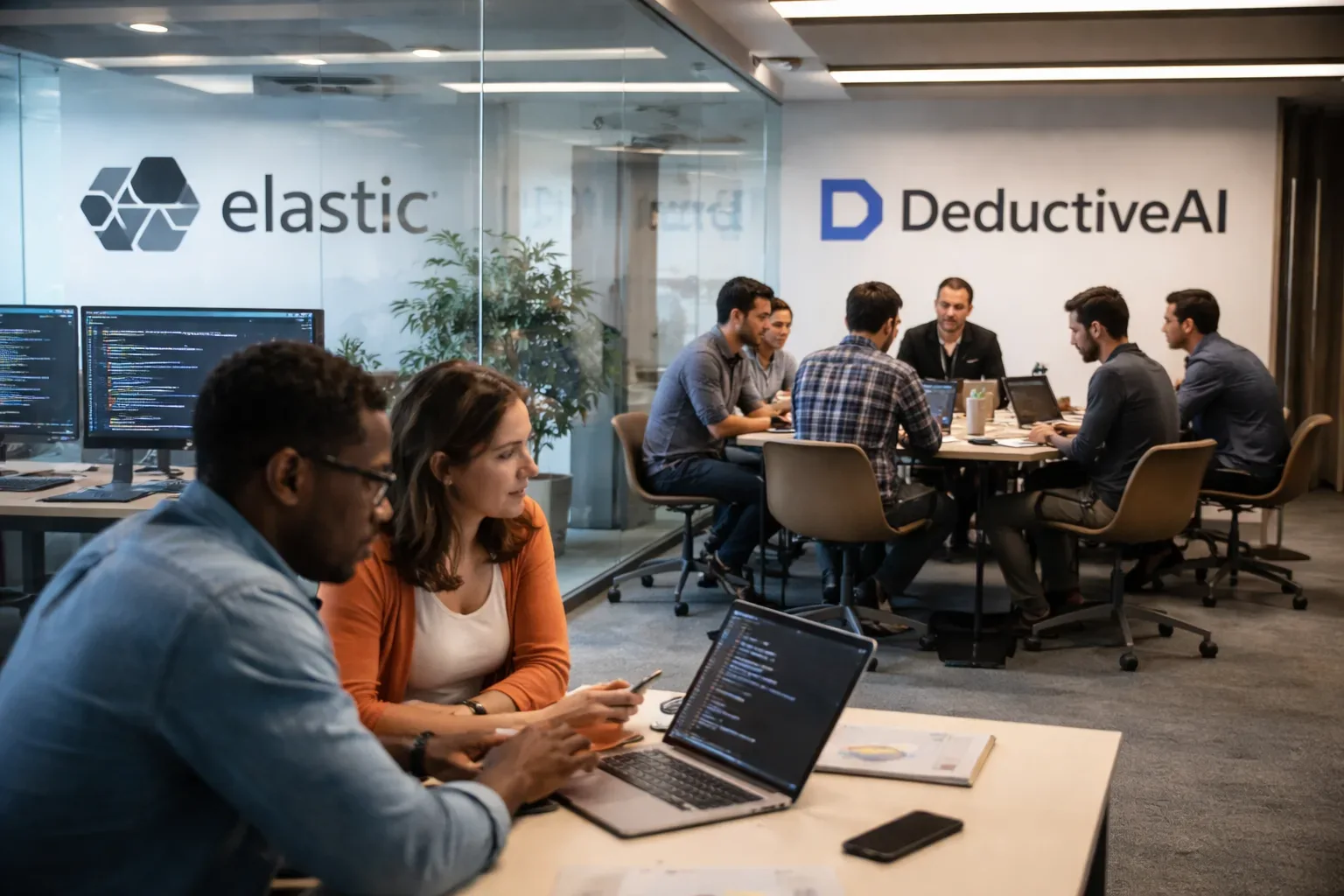
Elastic is reportedly acquiring DeductiveAI for up to $85 million, giving the company a new AI site reliability engineering capability that could strengthen its observability platform. The deal matters because it reflects a broader shift across enterprise software: established companies are not waiting to see whether AI-native tooling becomes core infrastructure. They are buying it directly when they think it can improve automation, debugging, and system reliability fast enough.
That is why the Elastic DeductiveAI acquisition matters beyond one startup exit. It signals that AI SRE is becoming strategically important inside the observability market.
Why DeductiveAI is attractive
DeductiveAI focuses on automating software bug resolution and reliability workflows, which places it in a category many enterprise vendors now want badly: tools that do not just analyze issues, but help act on them. In the observability world, that distinction matters. Monitoring alone is increasingly table stakes. The next layer of value comes from shortening the path between detection and remediation.
That is what makes DeductiveAI relevant to Elastic. It offers the possibility of turning observability data into more agent-like operational response.
Why Elastic would want this now
Elastic has long been associated with search, logging, and observability, but the market around those capabilities is evolving quickly. Customers increasingly expect platforms to do more than surface telemetry. They want software that helps engineers move from alert to diagnosis to fix with less manual effort. An acquisition like this gives Elastic a way to accelerate that transition rather than building everything organically.
Timing matters here because the race is not static. Vendors that hesitate risk being framed as insight providers while rivals position themselves as resolution platforms.
Why AI SRE is becoming a hot category
AI site reliability engineering has gained attention because modern software systems are too complex for purely manual triage at scale. As codebases grow, deployment velocity rises, and AI-generated code increases total output, operations teams face more incidents and more ambiguity. That creates demand for tools that can interpret system behavior, identify likely causes, and automate at least part of the response process.
This is where AI SRE becomes commercially interesting. It promises not just faster dashboards, but lower operational drag on engineering teams.
The startup-acquisition pattern
The Elastic DeductiveAI deal also fits a familiar pattern in the current AI market. Large incumbents are increasingly buying smaller AI-native companies to bring focused capabilities in-house before those startups grow into serious stand-alone threats. In some cases the goal is revenue. In others, it is talent, product acceleration, or defense against competitors who may make similar moves.
That pattern matters because it shows how quickly enterprise software categories are reorganizing around AI functionality.
Why observability vendors feel pressure
Observability is a crowded market, and differentiation is getting harder. Once multiple vendors can collect logs, traces, metrics, and alerting data competently, the next battle shifts to workflow efficiency and automation depth. If one platform can help teams resolve incidents materially faster, that becomes a meaningful buying argument.
This is likely part of Elastic's logic. The company does not just want to help customers see problems. It wants to move closer to helping solve them.
The risks in the acquisition
An acquisition like this is promising, but not guaranteed. AI reliability tools are often compelling in demo form and much harder to operationalize at enterprise scale, especially when trust, false positives, and production risk are involved. Elastic will need to prove that DeductiveAI's capabilities can integrate cleanly into existing workflows without creating a new layer of automation anxiety.
That is the central product challenge. Enterprise buyers want speed, but they also want confidence that automated interventions will not make incidents worse.
What comes next
The next key question is how Elastic packages and integrates DeductiveAI into its observability stack, and whether customers see the feature set as genuinely differentiating rather than simply fashionable. Competitor responses will also matter, especially if other observability players pursue similar M&A.
For now, Elastic's move to acquire DeductiveAI for up to $85 million is a strong sign that AI SRE is moving from experimental category to strategic product area. Observability platforms are being pushed toward action, not just visibility, and this deal shows Elastic intends to compete in that next phase.
Why it matters
This deal signals the rush by established enterprise software firms to acquire AI-native startups to automate complex engineering tasks like software debugging and system monitoring.
Read next
Follow this story through the topic hub, more ai coverage, and the latest updates.
Weekly briefing
Get the week's key developments in one concise email.
Get a fast catch-up on the biggest stories, the context behind them, and the links worth your time.
Cadence
Weekly, for a quick catch-up
Coverage
AI, business, world, security, sports
Format
Clear takeaways and useful context
Request the briefing
Leave your email to open a prepared request and get on the list for the weekly briefing.
About the byline
AI reporter
Alex Rivera reports on artificial intelligence with an emphasis on model launches, frontier lab strategy, developer tooling, and the policy decisions shaping commercial deployment.
Sources and methodology
- https://techcrunch.com/2026/06/18/source-elastic-agrees-to-buy-crv-backed-deductiveai-for-up-to-85m/