MoEngage Bets on Autonomous AI Agents with Acquisition of San
The all-cash deal aims to replace traditional audience segmentation with individual AI agents that make autonomous messaging decisions for each customer.

AI reporter
Reports on model launches, frontier labs, developer platforms, and AI policy with an emphasis on claims verification and rollout context.
Editorial responsibility: Lead reviewer for AI coverage, launch claims, and policy context
Primary source: TechCrunch AI. Full source links and update notes are below.
Fast summary
Start here
- MoEngage acquired San Francisco-based Aampe in an all-cash deal estimated at tens of millions of dollars.
- Aampe's technology assigns a dedicated AI agent to each customer to personalize messaging based on individual behavior.
- The acquisition is intended to help MoEngage compete for enterprise clients migrating from Salesforce and Adobe platforms.
What happened
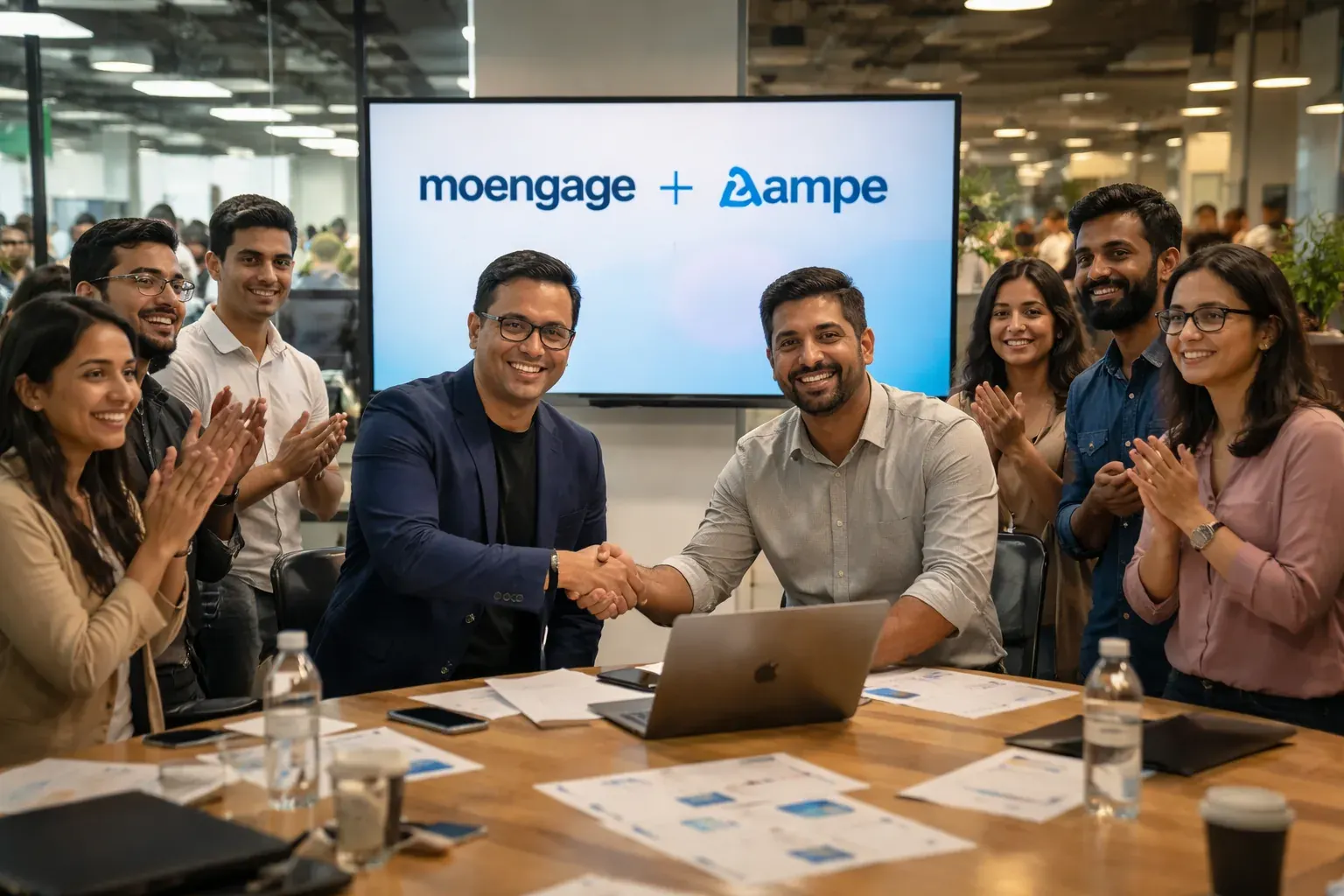
MoEngage has acquired Aampe in a deal aimed at accelerating the use of AI marketing agents across enterprise customer engagement. The transaction brings Aampe's personalization technology into MoEngage's broader marketing platform and positions the India-based software company to compete more aggressively in a market long dominated by larger incumbents such as Salesforce and Adobe.
The significance of the deal is not just that one martech company bought another. It is that MoEngage is betting the next phase of marketing software will revolve around autonomous decision-making at the individual customer level rather than rule-based segmentation built by human operators.
Why Aampe is strategically valuable
Aampe's pitch has centered on assigning AI marketing agents to individual users so messaging decisions can be adjusted continuously based on behavior, timing, and response patterns. That model is different from traditional campaign architecture, where marketers define audience segments first and then manually design journeys for those groups. With AI marketing agents, the promise is a more adaptive system that personalizes message timing, channel choice, and content at scale.
That promise is exactly why MoEngage wanted the company. It gives MoEngage a sharper story for brands that feel older campaign orchestration tools are too slow or too rigid.
Why MoEngage is making this move now
The martech market is under pressure from two directions at once. Enterprise buyers want better performance from customer outreach, and AI has reset expectations around automation. A platform that still relies heavily on fixed segments and static journeys can now look outdated next to systems that claim to optimize decisions in real time.
MoEngage appears to see that shift clearly. Acquiring Aampe allows it to move faster than building every capability internally, and it lets the company present AI marketing agents as a core product direction rather than an experimental add-on.
What this means for enterprise marketing
If AI marketing agents work as promised, they could change how brands think about personalization. Instead of asking teams to predict the best sequence for an audience cluster, the platform would try to infer the best next action for each user individually. That could improve relevance, reduce wasted messaging, and potentially raise retention or conversion rates.
But it also raises a harder operational question: how much autonomy are enterprise marketers willing to hand over? The appeal of AI agents is scale. The risk is reduced human visibility into why specific decisions are being made.
The competitive angle
MoEngage is clearly using the acquisition to strengthen its position against legacy enterprise suites. That matters because the migration story is often where newer vendors win. If companies already feel that Salesforce or Adobe implementations are expensive, complex, or slow to adapt, then a more modern AI marketing agents narrative becomes a powerful sales argument.
Aampe's prior growth and customer list make the deal more credible. MoEngage is not buying a vague idea. It is buying a technology layer with evidence of commercial demand.
The integration challenge
The hard part begins after the press release. AI acquisitions in software often look compelling strategically but become messy operationally. MoEngage will need to integrate product architecture, data flows, measurement logic, and go-to-market messaging without reducing the clarity that made Aampe attractive in the first place.
This matters because enterprise customers do not buy AI rhetoric alone. They want measurable outcomes, governance, and confidence that automated systems will not create brand or compliance problems.
Why this deal matters beyond one company
The MoEngage-Aampe transaction is part of a broader move toward agentic software in business applications. Marketing is a particularly fertile area because customer engagement generates large volumes of behavioral data and frequent decisions about timing, offer selection, and channel. That creates a natural testing ground for AI agents that can act rather than merely recommend.
If this model proves effective, more acquisitions and product repositioning across the martech sector are likely to follow.
What to watch next
The next indicators will be how quickly MoEngage embeds Aampe's capabilities into its platform, whether enterprise customers expand adoption, and how the company explains governance over these AI marketing agents. Performance claims around retention, engagement, and migration away from legacy suites will also be closely watched.
For now, MoEngage's acquisition of Aampe is a meaningful signal that autonomous AI marketing agents are moving closer to the center of enterprise software strategy. The concept is ambitious, but the market opportunity is real: brands want more personalization, less manual complexity, and systems that can make faster decisions than human-built campaign logic allows.
Why it matters
This acquisition signals a shift in the enterprise marketing landscape toward autonomous agents that manage customer interactions without manual segment rules.
Read next
Follow this story through the topic hub, more ai coverage, and the latest updates.
Weekly briefing
Get the week's key developments in one concise email.
Get a fast catch-up on the biggest stories, the context behind them, and the links worth your time.
Cadence
Weekly, for a quick catch-up
Coverage
AI, business, world, security, sports
Format
Clear takeaways and useful context
Request the briefing
Leave your email to open a prepared request and get on the list for the weekly briefing.
About the byline
AI reporter
Alex Rivera reports on artificial intelligence with an emphasis on model launches, frontier lab strategy, developer tooling, and the policy decisions shaping commercial deployment.
Sources and methodology