The Clandestine Network Smuggling Starlink Tech into Iran to Beat
Smugglers are navigating a complex operation to deliver satellite terminals to Iranians living under one of the world's longest-running national internet

World correspondent
Reports on international affairs, diplomacy, and humanitarian developments with an emphasis on official statements, multilateral institutions, and regional context.
Editorial responsibility: Lead reviewer for geopolitics, international institutions, and crisis coverage
Primary source: BBC World News. Full source links and update notes are below.
Fast summary
Start here
- A clandestine network is smuggling Starlink terminals across Iranian borders to bypass a two-month-old national internet blackout.
- The Iranian government has introduced legislation making the distribution of satellite equipment punishable by up to 10 years in prison.
- Estimates suggest over 50,000 Starlink devices are now active in the country despite the legal risks and state surveillance.
What happened
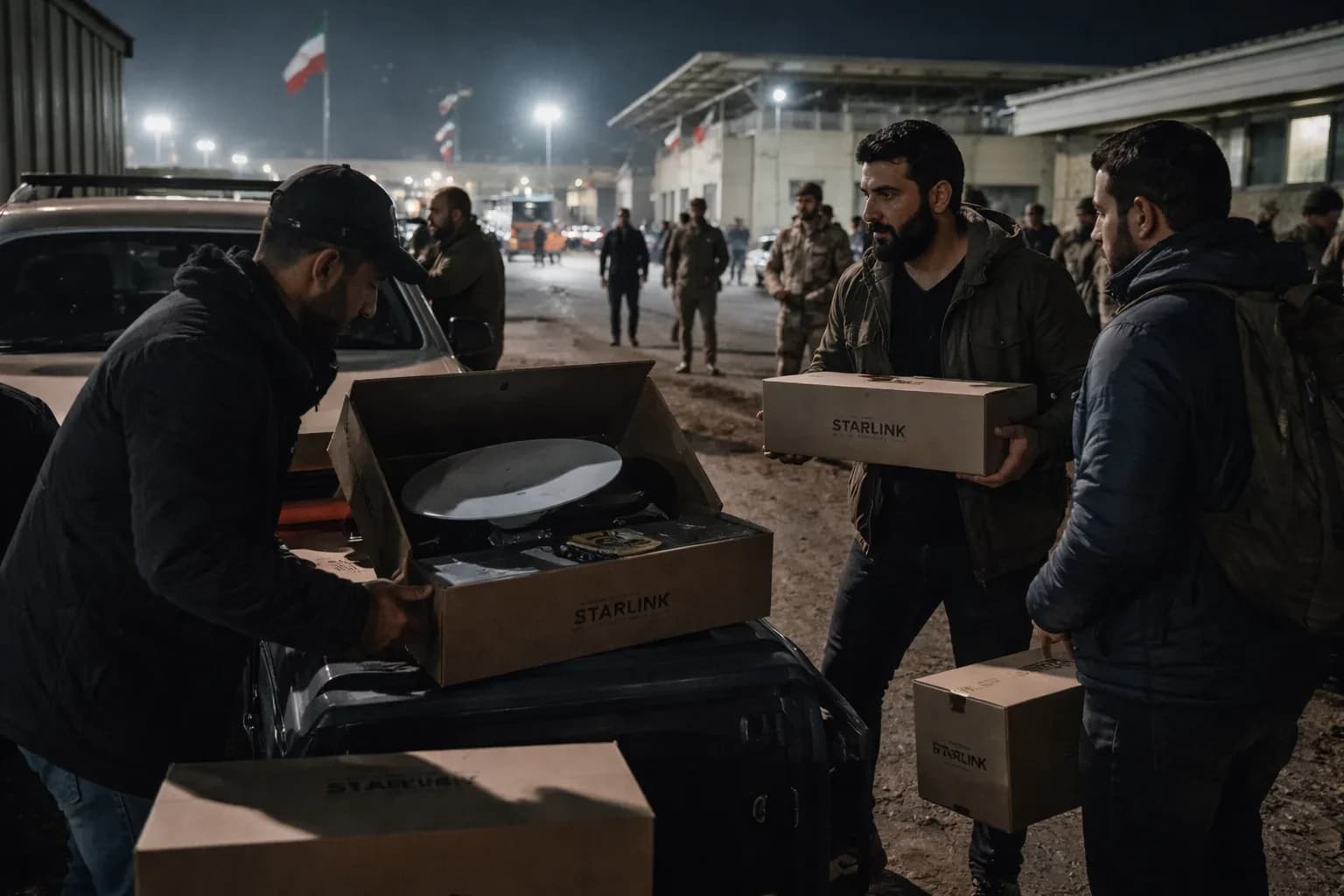
A clandestine network of activists and smugglers is moving Starlink equipment into Iran in an effort to break through the country's prolonged internet blackout. By using Starlink terminals connected to SpaceX's satellite network, Iranians can bypass state-controlled digital infrastructure and regain access to outside information during one of the longest nationwide internet shutdowns the country has faced.
The operation is significant not only because it restores connectivity, but because it directly challenges one of the Iranian state's most powerful tools of control. During periods of unrest or conflict, an internet blackout can isolate citizens, suppress documentation, and strengthen the government's monopoly over news and communication. Starlink changes that equation by offering an alternative channel the state does not fully control.
What's new in this update
Recent accounts from people involved in the smuggling effort suggest the network is growing even as the risks rise. Iran has increased penalties for distributing or using unauthorized satellite equipment, with prison terms that can reach up to 10 years in some cases. Even so, demand for Starlink access appears to be expanding rather than shrinking.
That dynamic matters because it shows the blackout is producing counter-networks rather than submission. The longer the internet shutdown lasts, the more incentive activists, families, and civil society groups have to seek technical workarounds, even if those workarounds depend on dangerous border routes and constant secrecy.
Key details
Starlink terminals allow users to connect through satellites instead of relying on Iran's fixed domestic internet infrastructure. A single terminal can often support multiple users, which means each device potentially serves a wider network of households or community nodes. Rights groups and activists have estimated that tens of thousands of Starlink devices may already be active inside Iran despite the legal risks.
The state portrays the internet blackout and the crackdown on satellite technology as necessary for security, espionage prevention, and information control during a period of instability. Activists argue the opposite: that the blackout is designed to conceal repression, block independent reporting, and trap the public inside state-approved narratives.
Background and context
Iran has a long history of censoring online activity, but a full or near-total internet shutdown carries different consequences than routine filtering. It severs ordinary communication, weakens business and education, and makes it far harder for abuses to be documented in real time. That is why internet freedom and digital rights groups treat these blackouts as more than technical restrictions. They see them as a core human rights issue.
The rise of Starlink in this context is part of a broader global pattern in which satellite internet becomes a political as well as technological tool. In countries where the state tightly controls terrestrial networks, external satellite connectivity can alter the balance between citizens and authorities in ways that conventional telecom systems do not.
What to watch next
The next question is whether the Iranian government escalates enforcement further by increasing surveillance, targeting sellers more aggressively, or trying to develop stronger technical countermeasures against Starlink usage. The smugglers and activists behind the network are likely to keep adapting routes and methods if pressure intensifies.
Observers will also watch whether SpaceX or international rights advocates take additional steps to improve safety, accessibility, or operational resilience for users inside Iran. In an environment this restrictive, technical reliability and user protection are inseparable from political significance.
Why this matters
This matters because internet shutdowns are not only about connectivity. They are about power, visibility, and control. The clandestine network bringing Starlink into Iran is effectively contesting the state's attempt to impose digital darkness. By restoring some internet access during a blackout, activists are preserving communication, documenting events, and defending a basic space for civil society under severe pressure.
Reader context
This story belongs to Northstar Herald's Internet Freedom and Digital Rights coverage, with related entities including Iran, Starlink, SpaceX, Internet Shutdown. The report is based on BBC World News source material.
Related coverage
Why it matters
Unrestricted internet access allows Iranians to document regime crackdowns and access independent information during periods of total state-mandated digital darkness.
Read next
Follow this story through the topic hub, more world coverage, and the latest updates.
Weekly briefing
Get the week's key developments in one concise email.
Get a fast catch-up on the biggest stories, the context behind them, and the links worth your time.
Cadence
Weekly, for a quick catch-up
Coverage
AI, business, world, security, sports
Format
Clear takeaways and useful context
Request the briefing
Leave your email to open a prepared request and get on the list for the weekly briefing.
About the byline
World correspondent
Leila Haddad covers world affairs, diplomacy, and humanitarian crises, with a focus on how fast-moving international developments affect public policy, conflict response, and cross-border institutions.
Sources and methodology