Joint US-Nigeria Operation Kills Top Global Islamic State Leader
Abu-Bilal al-Minuki, described as the second-in-command of ISIS globally, was killed in a strike in Borno State following months of intelligence gathering.

World correspondent
Reports on international affairs, diplomacy, and humanitarian developments with an emphasis on official statements, multilateral institutions, and regional context.
Editorial responsibility: Lead reviewer for geopolitics, international institutions, and crisis coverage
Primary source: BBC World News. Full source links and update notes are below.
Fast summary
Start here
- Abu-Bilal al-Minuki was killed in a precision strike on his compound in Metele, Borno State, along with several of his lieutenants.
- US and Nigerian officials confirmed the operation resulted in zero military casualties or loss of assets after months of reconnaissance.
- Al-Minuki held the title of 'Head of General Directorate of States,' overseeing operations across the Sahel and West Africa.
What happened
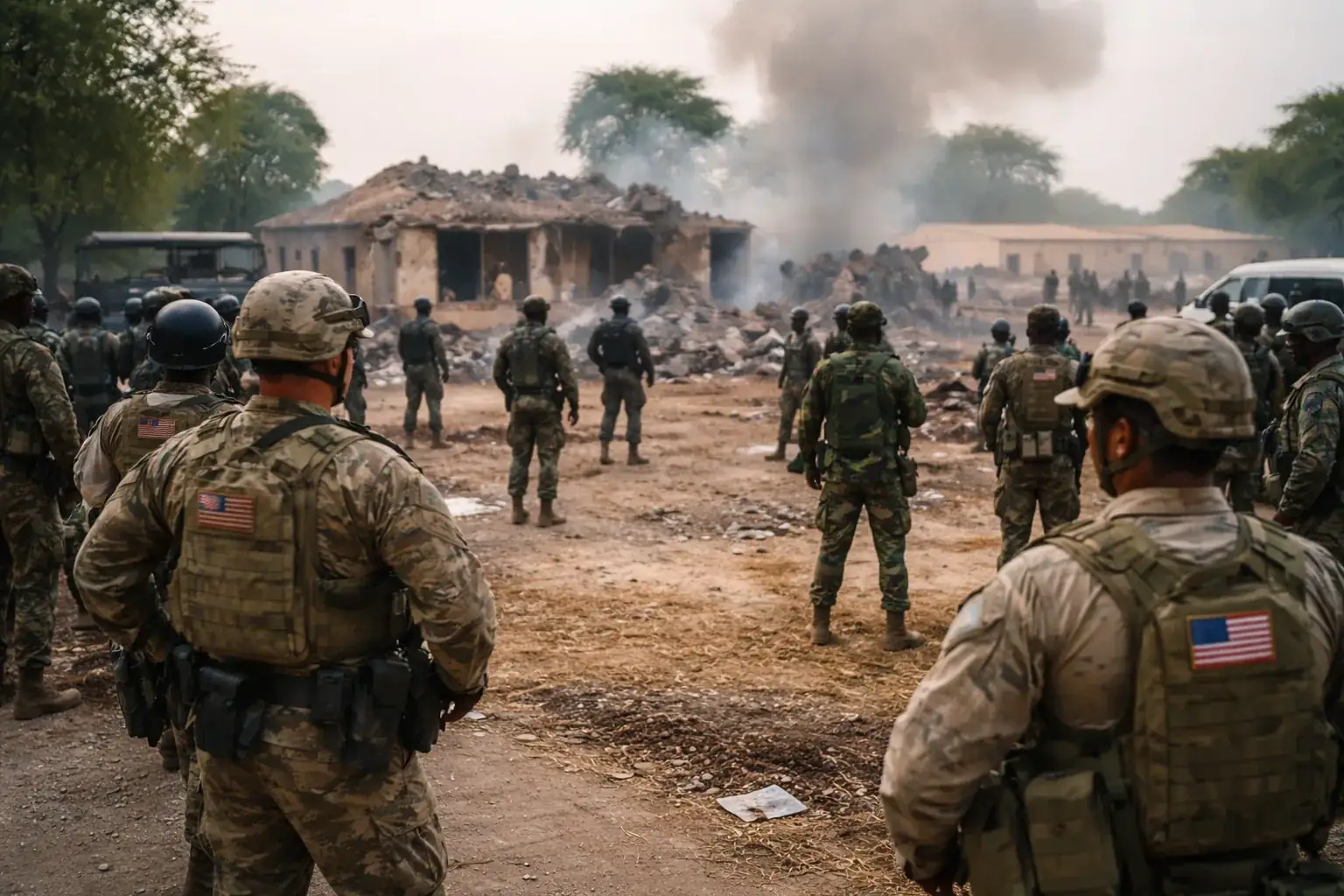
A joint United States-Nigeria operation has killed Abu-Bilal al-Minuki, a senior Islamic State leader described by officials as one of the most important figures in the group's command structure. The strike took place in Borno State, within the wider Lake Chad Basin, after months of intelligence gathering and surveillance by Nigerian and US forces.
The operation matters because Islamic State activity in sub-Saharan Africa has become increasingly central to the group's global footprint. In that context, the death of Abu-Bilal al-Minuki is not being presented as only a local battlefield success. It is being framed as a hit against an increasingly important center of Islamic State power.
What's new in this update
Officials now say that earlier Nigerian claims from 2024 about killing al-Minuki referred to another fighter using the same alias. This latest operation is being described as the confirmed elimination of the actual leader who had risen to a much higher rank inside the Islamic State hierarchy.
That clarification is important because counter-terrorism credibility depends heavily on identification accuracy. Publicly correcting earlier confusion while confirming the new strike helps both Nigeria and the United States present the operation as more than a symbolic declaration. It becomes a verified intelligence success with strategic value.
Key details
According to US and Nigerian officials, the operation targeted al-Minuki's compound in Metele in Borno State and also killed several of his lieutenants. The strike reportedly caused no military casualties for the attacking side. Al-Minuki was said to hold the title "Head of General Directorate of States," a role suggesting responsibility that extended beyond one insurgent theater and across multiple Islamic State affiliates in West Africa and the Sahel.
The setting also matters. Borno State and the Lake Chad Basin remain some of the most contested spaces in the regional insurgency, where Islamic State West Africa Province and Boko Haram-linked actors have long exploited difficult terrain, porous borders, and fragile state control.
Background and context
For years, Nigeria's insurgency was often understood primarily through the lens of Boko Haram. But over time, Islamic State-linked structures in the region became more organizationally significant and more central to the wider group's global attack profile. That shift is one reason Washington has paid closer attention to counter-terrorism cooperation in the Lake Chad Basin.
The area is strategically important not only because of active violence, but because it sits across the borderlands of Nigeria, Niger, Chad, and Cameroon. Armed groups use that geography to evade pressure, exploit weak governance, and reconstitute after setbacks. Any operation that successfully reaches a figure like al-Minuki is therefore difficult to stage and politically valuable to claim.
What to watch next
The first question is succession. Islamic State affiliates often absorb leadership losses faster than governments hope, and analysts will be watching closely to see whether al-Minuki's death creates operational disruption or merely triggers a rapid replacement process. The second question is whether the US-Nigeria partnership deepens further, especially if both governments view the operation as proof that joint intelligence and strike planning can produce results.
Observers will also watch the broader security map across the Sahel and Lake Chad Basin. A successful strike can weaken a network, but it does not by itself solve the underlying conditions that allow insurgent groups to recruit, move, and reassert themselves.
Why this matters
This matters because the death of Abu-Bilal al-Minuki reflects a larger truth about global jihadist violence: the center of gravity has shifted significantly toward sub-Saharan Africa. The joint US-Nigeria operation is therefore important not only for Nigeria's internal security, but for how Washington and regional governments understand the future of Islamic State expansion, counter-terrorism, and instability in West Africa.
Reader context
This story belongs to Northstar Herald's International Relations coverage, with related entities including ISIS, Nigeria, Abu-Bilal al-Minuki, Borno State. The report is based on BBC World News source material.
Related coverage
Why it matters
This operation signals deepening military cooperation between Washington and Abuja as the center of gravity for Islamic State attacks shifts toward sub-Saharan Africa.
Read next
Follow this story through the topic hub, more world coverage, and the latest updates.
Weekly briefing
Get the week's key developments in one concise email.
Get a fast catch-up on the biggest stories, the context behind them, and the links worth your time.
Cadence
Weekly, for a quick catch-up
Coverage
AI, business, world, security, sports
Format
Clear takeaways and useful context
Request the briefing
Leave your email to open a prepared request and get on the list for the weekly briefing.
About the byline
World correspondent
Leila Haddad covers world affairs, diplomacy, and humanitarian crises, with a focus on how fast-moving international developments affect public policy, conflict response, and cross-border institutions.
Sources and methodology