Nvidia Posts Record Profits but Stock Dips as Investors Demand Sustained Hypergrowth
Despite revenue nearly doubling and profits tripling, the world's most valuable company saw a slight stock decline amid concerns over market saturation and competition.
Primary source: BBC World News. Full source links, newsroom standards, and correction details are below.
Fast summary
Start here
- Nvidia's first-quarter revenue reached $81.6 billion, an 85% increase year-over-year, while net income more than tripled to $58.3 billion.
- Shares fell 1.6% in after-hours trading as analysts suggest the bar is exceptionally high for the AI bellwether to sustain its parabolic growth.
- CEO Jensen Huang indicated the company has largely conceded the Chinese data center market to local competitor Huawei due to trade restrictions.
What happened
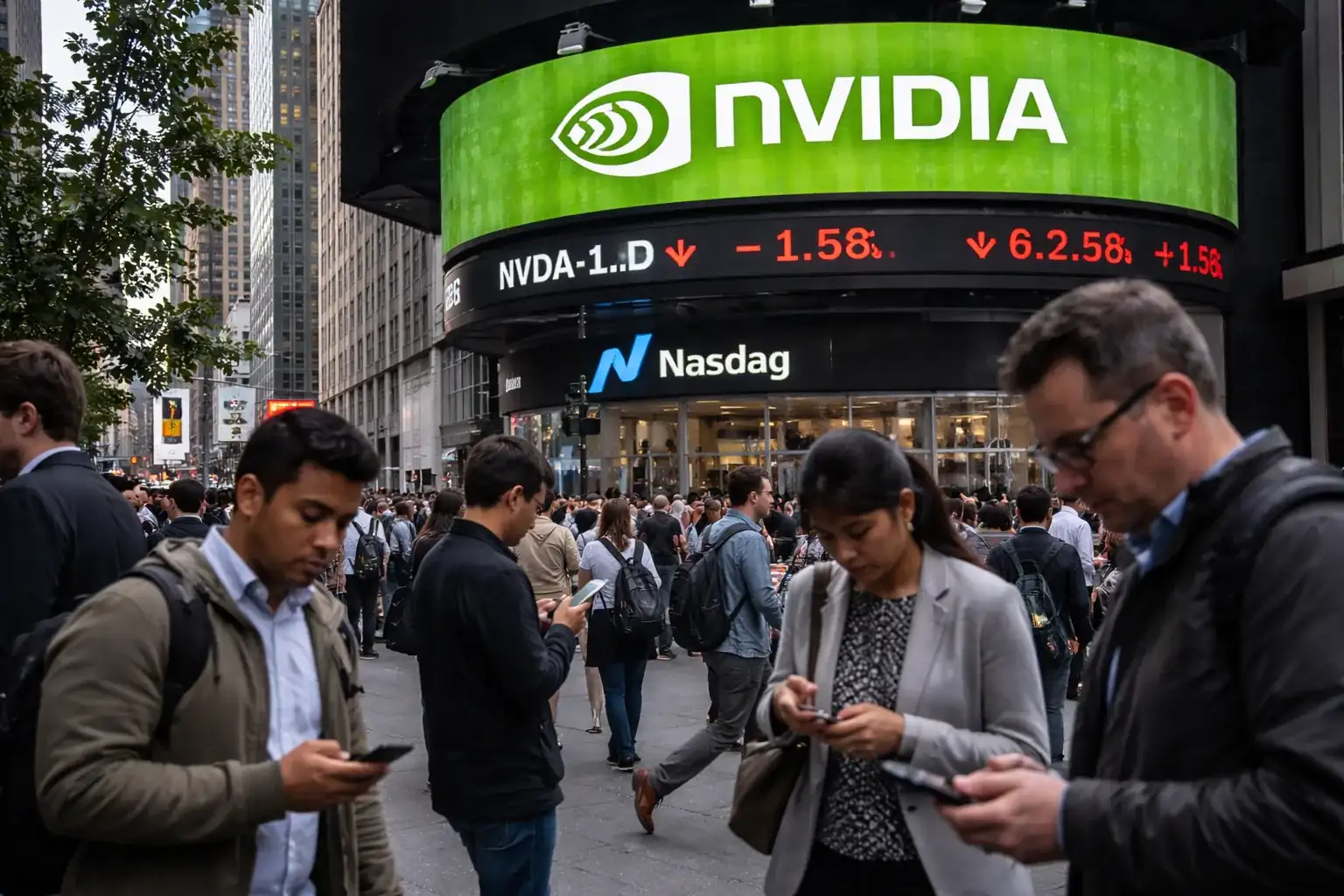
Nvidia reported record-breaking first-quarter financial results that exceeded analyst expectations across the board, yet its stock price fell slightly in after-hours trading. The company's revenue surged 85% to $81.6 billion, driven by massive demand for chips used in data centers and AI model development by firms such as OpenAI and Meta.
What's new in this update
To provide additional value to shareholders, Nvidia announced a significant increase in its quarterly dividend, raising it from one cent to 25 cents per share. Additionally, the company authorized an £80 billion share buyback program. CEO Jensen Huang told analysts that demand for AI hardware has gone 'parabolic' as the industry enters an era of agentic AI.
Key details
The company projects second-quarter revenues to reach $91 billion. However, investor sentiment was tempered by a 'sell the fact' reaction, with shares having already rallied significantly ahead of the earnings report. Analysts also pointed to the 'law of large numbers,' noting that as Nvidia represents roughly 8% of the S&P 500, maintaining hypergrowth becomes increasingly difficult.
Background and context
Nvidia is currently the world's most valuable company with a market capitalization of approximately $5.3 trillion. While it dominates the global market, it faces headwinds in China. Although the US recently allowed the sale of the H200 chip to Chinese customers, Chinese authorities have been hesitant to grant approval, preferring to support domestic suppliers like Huawei.
What to watch next
Market observers are watching how Nvidia manages the growing threat of competition from 'hyperscalers' who are developing their own proprietary chips. Despite the loss of the Chinese market, analysts suggest that global demand remains strong enough to sustain growth, with forecasts for AI infrastructure spending reaching up to $4 trillion annually by 2030.
Why this matters
As the primary provider of infrastructure for the AI boom, Nvidia's performance serves as a critical indicator for the broader tech sector and the global economy.
Reader context
This story belongs to Northstar Herald's world coverage, with related entities including Nvidia, Jensen Huang, Semiconductors, S&P 500. The report is based on BBC World News source material.
Related coverage
Why it matters
As the primary provider of infrastructure for the AI boom, Nvidia's performance serves as a critical indicator for the broader tech sector and the global economy.
Read next
Follow this story through the topic hub, more world coverage, and the latest updates.
Weekly briefing
Get the week's key developments in one concise email.
Get a fast catch-up on the biggest stories, the context behind them, and the links worth your time.
Cadence
Weekly, for a quick catch-up
Coverage
AI, business, world, security, sports
Format
Clear takeaways and useful context
Request the briefing
Leave your email to open a prepared request and get on the list for the weekly briefing.
Author

The world desk follows geopolitics, humanitarian crises, diplomacy, and major international developments with an emphasis on fast updates and public-interest context.
Sources and methodology