Bieber Revives Career Roots with Meta-YouTube Performance at
Justin Bieber's first major show in four years traded elaborate choreography for a stripped-back journey through his digital discovery.

World correspondent
Reports on international affairs, diplomacy, and humanitarian developments with an emphasis on official statements, multilateral institutions, and regional context.
Editorial responsibility: Lead reviewer for geopolitics, international institutions, and crisis coverage
Primary source: BBC World News. Full source links and update notes are below.
Fast summary
Start here
- Bieber performed tracks from his new 2025 albums, Swag and Swag II, alongside career-defining hits like Baby.
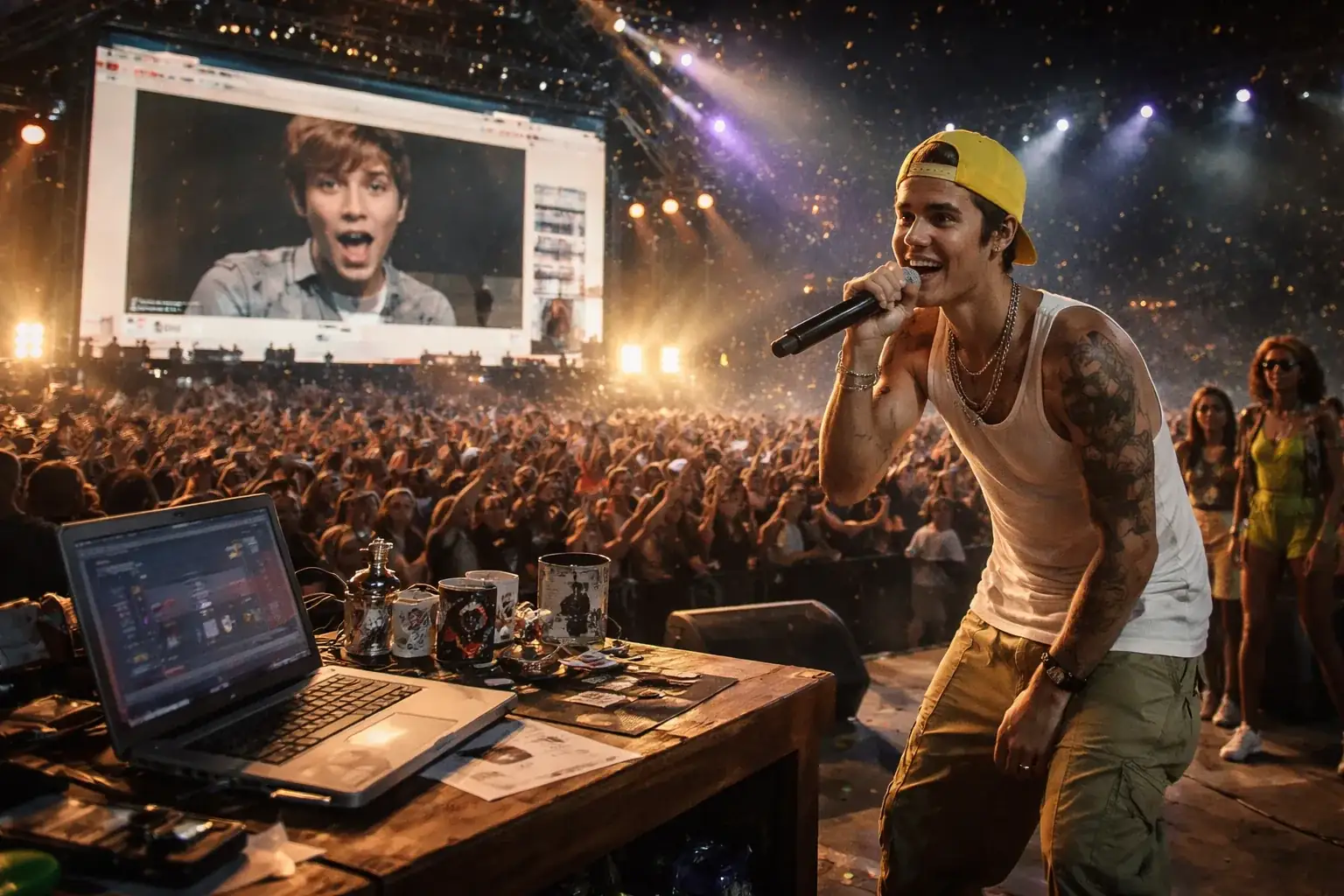
- The set featured a DIY-inspired aesthetic where the singer interacted with a laptop and his own vintage YouTube videos.
- Musical guests including Tems, Wizkid, and The Kid Laroi joined the singer for his first headline set since cancelling his 2022 tour.
What happened
Justin Bieber headlined Coachella with a set that leaned into nostalgia, self-mythology, and the long arc of his career from YouTube discovery to global pop fame. Rather than opening with an oversized spectacle, Bieber chose a deliberately stripped-back presentation that centered on digital screens, a laptop, and archival footage from the videos that first made him famous. It was a clear attempt to frame the performance not just as another festival appearance, but as a statement about survival, reinvention, and control over his own story.
That choice mattered because Bieber's relationship with fame has always been inseparable from the internet. His rise began online, his fandom matured online, and much of the public scrutiny around his health, behavior, and career pauses has played out online as well. By bringing that material back onto the Coachella stage, Bieber turned a headline slot into a kind of public autobiography.
Why the Coachella comeback mattered
This was Bieber's first major live show in four years after the cancellation of his Justice world tour and a long period of uncertainty around his health and willingness to return to full-scale performance. For any artist, Coachella is a major booking. For Bieber, it carried extra weight because it functioned as a public test: could he still command the stage, hold a massive audience, and shape the narrative around his comeback on his own terms?
The answer appears to be yes. Instead of pretending nothing had changed, Bieber used the performance to acknowledge the gap, the fragility, and the history behind his return. That made the show feel less like a restart and more like a carefully chosen re-entry.
The nostalgia strategy
The nostalgia at the center of the Coachella set was not accidental fan service. It was the organizing idea of the performance. Singing alongside the old YouTube clips that launched his career allowed Bieber to collapse time, placing the child star and the adult performer in the same frame. For longtime Beliebers, that was emotionally potent. For casual viewers, it turned the headline slot into a concise reminder of just how unusual Bieber's path has been.
Nostalgia can often feel lazy at festivals, but here it served a sharper purpose. It let Bieber revisit his roots without fully retreating into them.
New music and guest appearances
The set also introduced live material from Swag and Swag II, pairing the backward-looking concept with evidence that Bieber does not intend to exist only as a legacy act. Guests including The Kid Laroi, Wizkid, Tems, and Dijon reinforced that balance between pop history and present relevance. Their appearances kept the show dynamic while connecting Bieber to different corners of the current music landscape.
That mix matters commercially as well as artistically. A comeback built only on old hits can be sentimental but short lived. A comeback that ties nostalgia to new songs gives the artist a forward path.
Health, absence, and public perception
Bieber's long break from major touring followed his Ramsay Hunt syndrome diagnosis, which caused facial paralysis and forced the cancellation of scheduled performances. Since then, every public appearance has been interpreted through the lens of recovery, mental health, and the pressures of celebrity. The Coachella set therefore carried unavoidable subtext. Fans were not just watching a pop star sing; they were watching to see whether he looked steady, engaged, and genuinely ready to be back.
His willingness to reference recent public scrutiny, including viral footage involving photographers, suggested that he understood the conversation and chose not to run from it. That gave the set a level of self-awareness often missing from celebrity comeback narratives.
What comes next
The obvious question after Coachella is whether Bieber will turn the performance into a broader touring cycle. Industry watchers will look for signs of a 2026 world tour, additional festival appearances, or a more sustained live rollout behind his recent albums. The festival crowd response and the heavy attention around the set make that possibility more credible than it was even a few months ago.
For now, Justin Bieber's Coachella headline performance succeeded because it did more than replay the hits. It used nostalgia, YouTube history, and minimal staging to tell a story about how Bieber sees himself after years of interruption. That is why the set mattered. It was less a victory lap than a controlled return, and it signaled that the next era of his career may be built on reflection as much as reinvention.
Why it matters
This performance marks Bieber's definitive return to the global stage following a multi-year hiatus caused by Ramsay Hunt syndrome, signaling a new era in his career.
Read next
Follow this story through the topic hub, more world coverage, and the latest updates.
Weekly briefing
Get the week's key developments in one concise email.
Get a fast catch-up on the biggest stories, the context behind them, and the links worth your time.
Cadence
Weekly, for a quick catch-up
Coverage
AI, business, world, security, sports
Format
Clear takeaways and useful context
Request the briefing
Leave your email to open a prepared request and get on the list for the weekly briefing.
About the byline
World correspondent
Leila Haddad covers world affairs, diplomacy, and humanitarian crises, with a focus on how fast-moving international developments affect public policy, conflict response, and cross-border institutions.
Sources and methodology