Sonny Rollins, the 'Saxophone Colossus' of Jazz, Dies at 95
The legendary musician and two-time Grammy winner, who defined post-bop saxophone improvisation, passed away at his New York home.
Primary source: BBC World News. Full source links, newsroom standards, and correction details are below.
Fast summary
Start here
- Sonny Rollins died Monday at his home in Woodstock, New York, according to a statement from his publicist.
- During a career spanning seven decades, he recorded over 60 albums and collaborated with icons including Miles Davis and Charlie Parker.
- He was awarded the National Medal of the Arts by President Barack Obama in 2011.
What happened
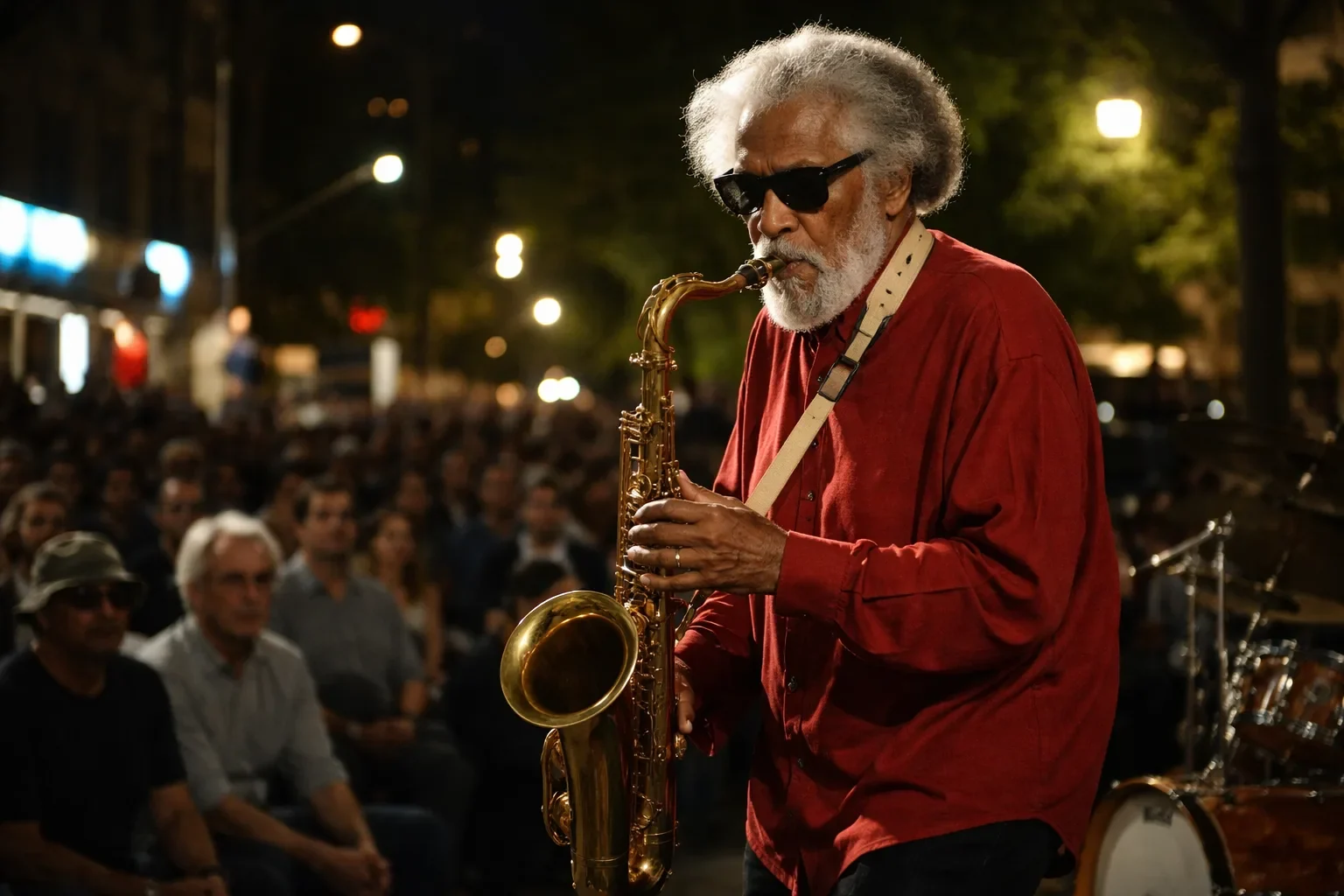
Sonny Rollins, the legendary jazz saxophonist often referred to as the 'Saxophone Colossus,' died on Monday at the age of 95. His publicist confirmed that he passed away at his residence in Woodstock, New York. Rollins was a pivotal figure in American music, having been a prolific recording artist from the late 1940s until his retirement in 2014 due to respiratory illness.
What's new in this update
The announcement of his passing included a 2009 quote from Rollins reflecting his spiritual views on creativity and the afterlife, stating that he believed life was not the 'be-all and end-all.' While his cause of death has not been officially announced, his publicist described him as one of the most honored and influential figures in the history of the genre.
Key details
Born Walter Theodore Rollins in New York in 1930, he was mentored by pianist Thelonious Monk. He became famous for his long, unscripted solos and his ability to improvise without a set plan. His 1956 album Saxophone Colossus is considered a masterpiece of the genre. He famously took a hiatus in the early 1960s to practice on the Williamsburg Bridge, leading to his landmark 1962 album, The Bridge.
Background and context
Rollins was known for his resilience and philosophical approach to life. After the September 11 attacks, during which he was evacuated from his home near the World Trade Center, he remarked that losing his possessions taught him that 'possessions are not where it's at.' Throughout his career, he won two Grammy Awards and received a National Medal of the Arts from President Barack Obama, who cited Rollins as an inspiration for taking creative risks.
What to watch next
Following his passing, there is likely to be renewed interest in the public campaign to rename the Williamsburg Bridge in his honor. Tributes from the international jazz community and major cultural institutions are expected as the music world commemorates the end of an era for the post-bop generation.
Why this matters
Rollins was one of the last surviving titans of the mid-century jazz era, fundamentally shaping the art of improvisation and the role of the tenor saxophone.
Reader context
This story belongs to Northstar Herald's International Relations coverage, with related entities including Sonny Rollins, Jazz, Music History, Saxophone Colossus. The report is based on BBC World News source material.
Related coverage
Why it matters
Rollins was one of the last surviving titans of the mid-century jazz era, fundamentally shaping the art of improvisation and the role of the tenor saxophone.
Read next
Follow this story through the topic hub, more world coverage, and the latest updates.
Weekly briefing
Get the week's key developments in one concise email.
Get a fast catch-up on the biggest stories, the context behind them, and the links worth your time.
Cadence
Weekly, for a quick catch-up
Coverage
AI, business, world, security, sports
Format
Clear takeaways and useful context
Request the briefing
Leave your email to open a prepared request and get on the list for the weekly briefing.
Author

The world desk follows geopolitics, humanitarian crises, diplomacy, and major international developments with an emphasis on fast updates and public-interest context.
Sources and methodology