FIFA Claims Concourse Crowds Responsible for Visible Empty Seats at World Cup
Football's governing body defends official attendance figures of nearly 45,000 despite visual evidence of vacant seating in Guadalajara.
Primary source: BBC World News. Full source links, newsroom standards, and correction details are below.
Fast summary
Start here
- FIFA reported 44,985 attendees for the 46,000-seat Estadio Akron, despite visual reports of empty seats.
- The governing body clarified that official figures track scanned tickets rather than active seating occupancy at a given moment.
- Reports indicate tickets for smaller nations are selling well below face value on secondary markets due to high travel and hotel costs.
What happened
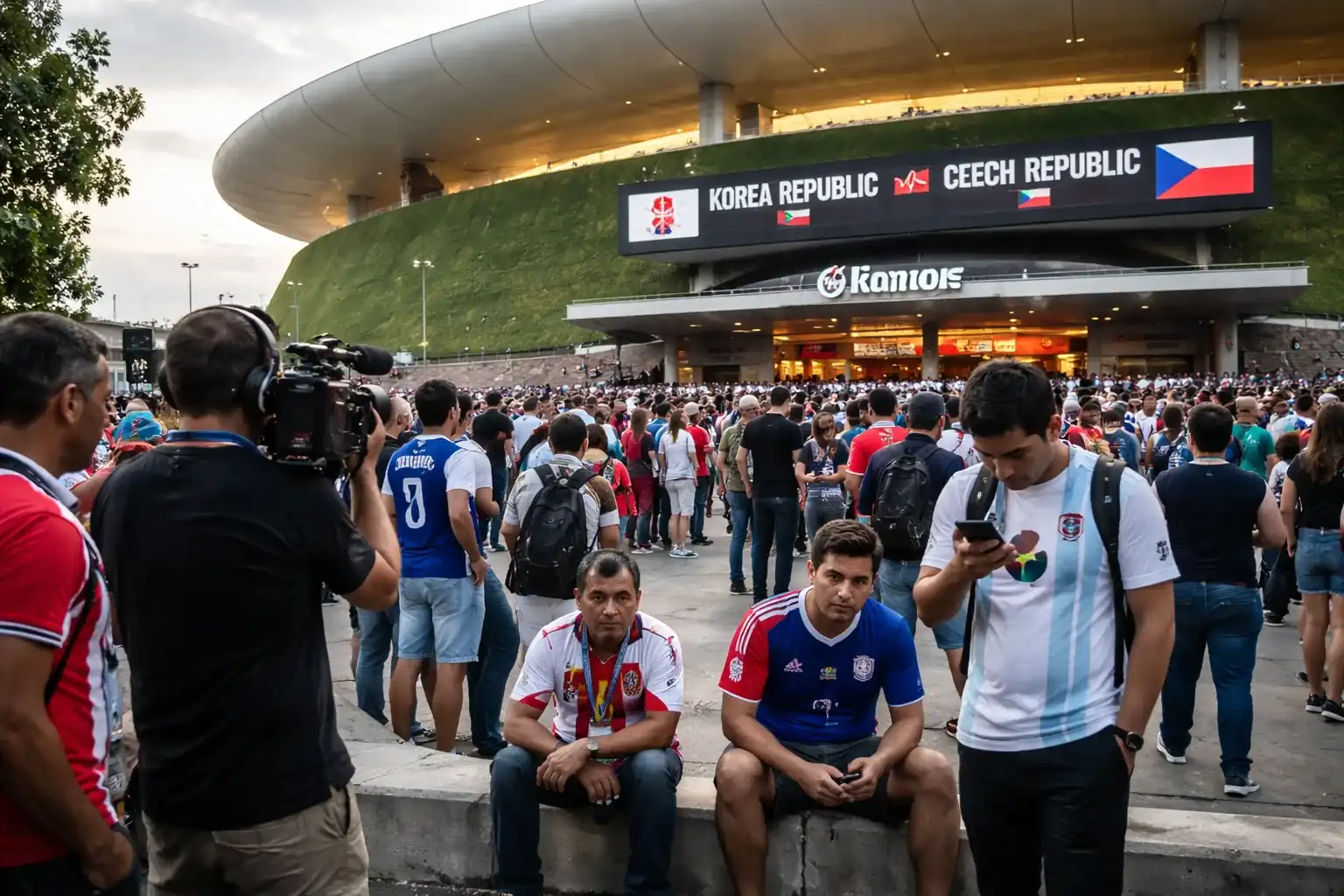
FIFA is facing scrutiny over its attendance reporting at the Estadio Akron in Guadalajara following a Group A match between South Korea and the Czech Republic. Despite a nearly full official attendance report, spectators and broadcasters noted significant swathes of unoccupied seats throughout the stadium. The discrepancy has led to accusations that football's world governing body is exaggerating the number of fans present to mask lower-than-expected demand for certain fixtures. The match, which saw South Korea secure a 2-1 victory, was intended to be a high-interest event for the region, yet the visual evidence suggests that the stadium was far from its 46,000-seat capacity during active play.
What's new in this update
In a formal response to the attendance controversy, FIFA issued a statement clarifying that its official figures are based on verified operational data rather than visual assessments. The governing body explained that the reported 44,985 figure reflects the number of tickets scanned at the gates and the total number of spectators present within the broader 'stadium footprint.' FIFA specifically noted that many ticketed fans were visible standing in the concourses or using stadium amenities rather than remaining in their assigned seats for the duration of the match. To bolster this claim, organizers released official photography showing a mostly full stadium from specific angles during the first half.
Key details
The match between South Korea and the Czech Republic ended in a 2-1 win for the Koreans, though the atmosphere was impacted by the uneven distribution of fans. While there was a sizeable South Korean contingent present in Mexico, the Czech presence was notably limited. The Czech Republic is playing in its first World Cup in 20 years, but their fans face a daunting travel schedule that includes a trip to Atlanta before returning to Mexico City. At the Estadio Akron, the empty seats were most visible in the sections typically reserved for international traveling supporters, contrasting with the packed 80,000-seat Azteca stadium seen during the tournament's opening fixture between Mexico and South Africa.
Background and context
The attendance issue is being viewed through the lens of a broader economic struggle for traveling fans in this expanded 48-team tournament. Pre-tournament warnings about ticket pricing and the logistical challenges of a three-nation host system—comprising Mexico, Canada, and the United States—have become a focal point for critics. Investigations have found that tickets for matches involving smaller nations are now frequently available for prices well below face value on both FIFA's own resale platform and secondary marketplaces. Additionally, escalating hotel and travel prices have led to suggestions that many fans are being priced out of the tournament, leaving stadiums with 'sold out' status but significant physical vacancies.
What to watch next
As the group stage progresses, observers will be watching to see if FIFA adjusts its ticketing strategy or if the 'concourse' explanation remains the standard response to visual seat vacancies. The Czech Republic's next matches will be a key indicator of fan mobility, as they navigate the long-distance travel requirements of the North American format. Market analysts will also continue to monitor secondary ticket platforms to determine if demand for non-host matches stabilizes. FIFA and local organizing committees remain under pressure to prove that the expanded format is sustainable and that the atmosphere in stadiums matches the record-breaking attendance figures being officially reported.
Why it matters
Discrepancies in attendance figures and high ticket costs raise questions about the accessibility and commercial success of the expanded 48-team World Cup format.
Read next
Follow this story through the topic hub, more world coverage, and the latest updates.
Weekly briefing
Get the week's key developments in one concise email.
Get a fast catch-up on the biggest stories, the context behind them, and the links worth your time.
Cadence
Weekly, for a quick catch-up
Coverage
AI, business, world, security, sports
Format
Clear takeaways and useful context
Request the briefing
Leave your email to open a prepared request and get on the list for the weekly briefing.
Author

The world desk follows geopolitics, humanitarian crises, diplomacy, and major international developments with an emphasis on fast updates and public-interest context.
Sources and methodology