ISS Crew Resumes Operations After Disagreement Over Russian Repair Method
Five astronauts were ordered into a lifeboat spacecraft as Russian cosmonauts used a saw to address a worsening air leak in the station's transfer tunnel.
Primary source: BBC World News. Full source links, newsroom standards, and correction details are below.
Fast summary
Start here
- Five of seven crew members sheltered in the SpaceX Dragon 'Freedom' during a high-stakes repair operation on the Russian segment.
- NASA ordered the safety measures after disagreeing with the repair techniques used by Russian cosmonauts, which involved using a saw to access a crack.
- The crew returned to the station after Roscosmos paused the repairs, which were targeting a persistent six-year-old leak that recently worsened.
What happened
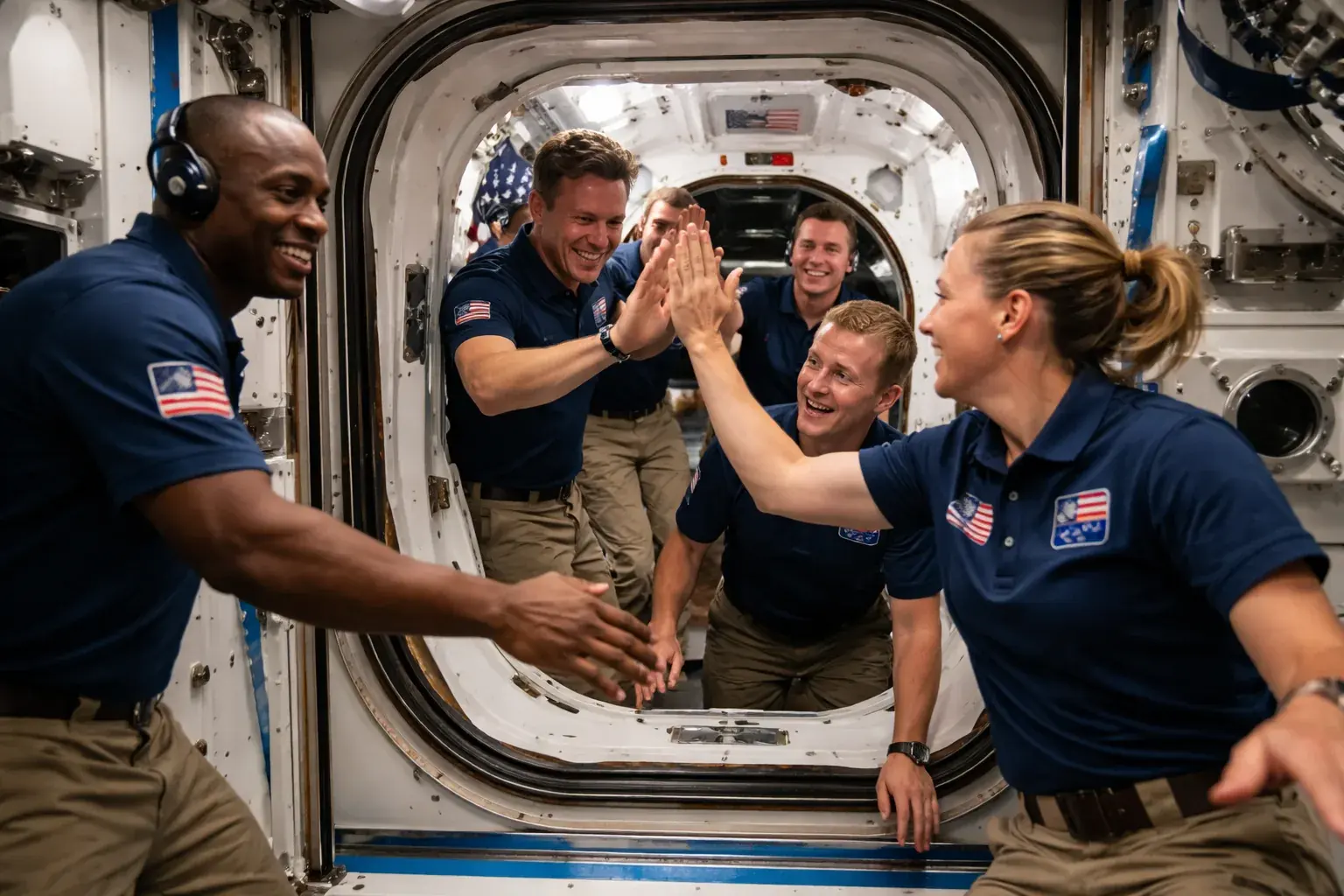
Five astronauts on the International Space Station (ISS) were ordered to shelter inside a docked SpaceX Dragon spacecraft on Friday. The 'safe-haven' procedure was initiated while two Russian cosmonauts attempted to repair an air leak that had begun worsening earlier in the week. The crew, including astronauts from NASA and the ESA, were told to suit up and prepare for a potential emergency evacuation back to Earth.
What's new in this update
The shelter order was triggered by NASA's disagreement with the specific repair methods employed by the Russian space agency, Roscosmos. Station commander Sergey Kud-Sverchkov and flight engineer Sergei Mikaev were reportedly using a saw to gain access to a crack in the PrK transfer tunnel. Concerned by the method, NASA mission control in Houston directed the other five crew members to remain in the Dragon shuttle until the work was paused.
Key details
The sheltering crew members included Jessica Meir, Jack Hathaway, Sophie Adenot, Andrey Fedyaev, and Chris Williams. While they were braced for departure, the Russian cosmonauts remained in their segment with access to a separately docked Soyuz MS-28 spacecraft as their escape route. After Roscosmos halted the saw-based repair attempt, NASA cleared the sheltering astronauts to return to their normal station operations.
Background and context
The air leak in the Zvezda service module's transfer tunnel has been a recurring issue for approximately six years. While the station has managed small leaks through patchwork fixes in the past, a fresh pressure drop noticed after the arrival of a cargo ship last month prompted the decision to attempt a more extensive repair. The ISS has been continuously operated by a US-Russian-led consortium since 1998 and remains the largest human-made object in space.
What to watch next
Although the Russian news agency Tass reported that the safety of the crew and onboard systems was not compromised, the leak remains an unresolved technical challenge. Future repair efforts will likely require closer technical coordination between NASA and Roscosmos to agree on safety standards and tools used for structural maintenance on the aging station.
Why this matters
The incident highlights the operational complexities and safety protocols required to maintain the International Space Station as it faces aging hardware challenges.
Reader context
This story belongs to Northstar Herald's world coverage, with related entities including NASA, Roscosmos, International Space Station, SpaceX Dragon. The report is based on BBC World News source material.
Related coverage
Why it matters
The incident highlights the operational complexities and safety protocols required to maintain the International Space Station as it faces aging hardware challenges.
Read next
Follow this story through the topic hub, more world coverage, and the latest updates.
Weekly briefing
Get the week's key developments in one concise email.
Get a fast catch-up on the biggest stories, the context behind them, and the links worth your time.
Cadence
Weekly, for a quick catch-up
Coverage
AI, business, world, security, sports
Format
Clear takeaways and useful context
Request the briefing
Leave your email to open a prepared request and get on the list for the weekly briefing.
Author

The world desk follows geopolitics, humanitarian crises, diplomacy, and major international developments with an emphasis on fast updates and public-interest context.
Sources and methodology