Tragedy at the Citadel: At Least 30 Feared Dead After Stampede in
A festive gathering at the historic 19th-century fortress turned into a fatal crush as overcrowding and heavy rain triggered a panic at the site's

World correspondent
Reports on international affairs, diplomacy, and humanitarian developments with an emphasis on official statements, multilateral institutions, and regional context.
Editorial responsibility: Lead reviewer for geopolitics, international institutions, and crisis coverage
Primary source: BBC World News. Full source links and update notes are below.
Fast summary
Start here
- At least 30 people, many of them young students, are believed to have died during a Saturday Easter event in Milot.
- The crush occurred at the Citadelle Laferriere, a UNESCO World Heritage site and a prominent symbol of Haitian independence.
- Officials believe a combination of social media-driven overcrowding and sudden heavy rainfall catalyzed the disaster.
What happened
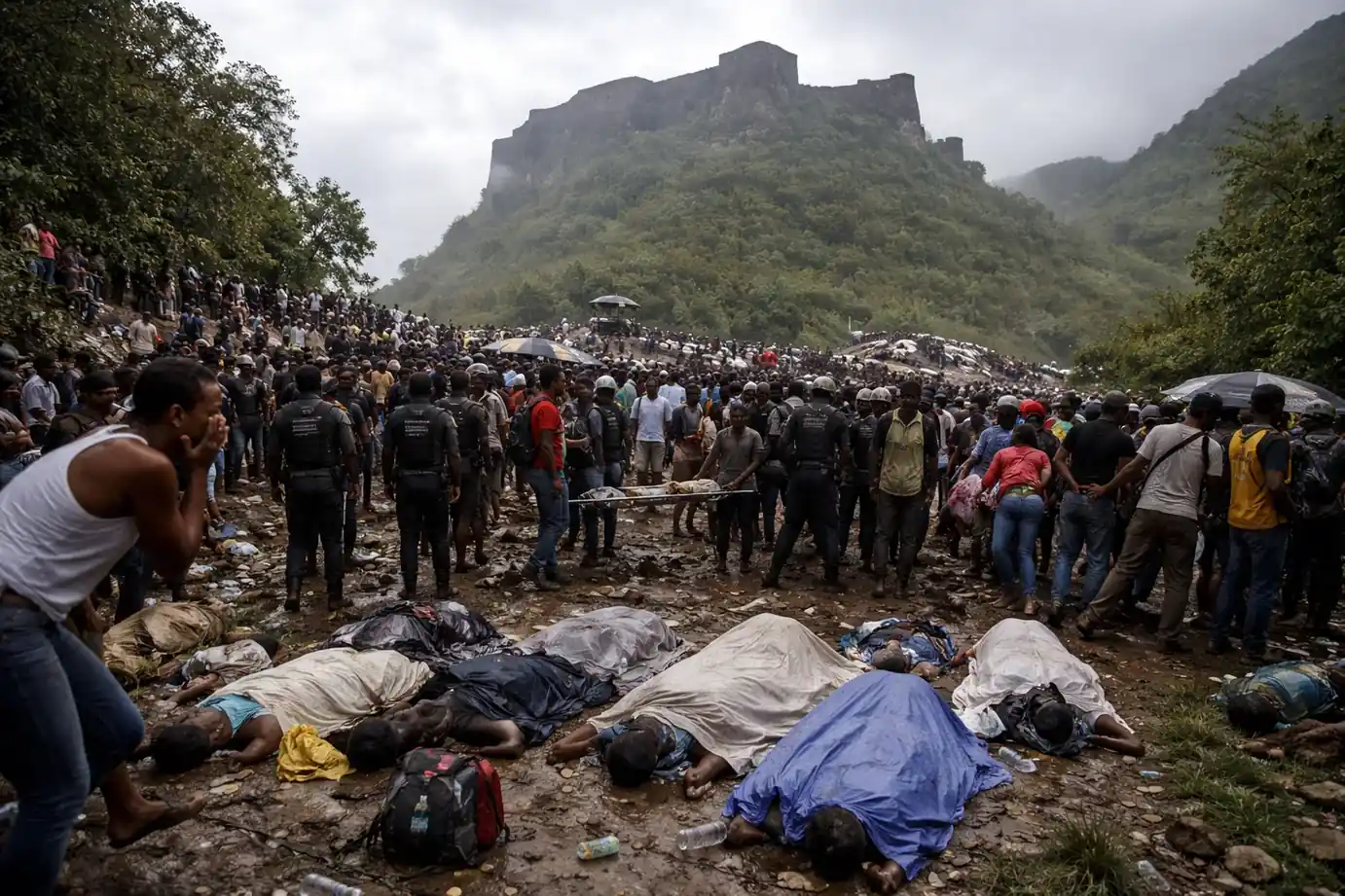
At least 30 people are feared dead after a stampede during an Easter gathering at the Citadelle Laferriere, the famous mountain fortress near Milot in northern Haiti. What began as a holiday visit to one of the country's most important historic landmarks turned into a mass-casualty event when a dense crowd near the entrance area was caught in a crush.
Officials said the death toll could still rise as responders continue sorting through the aftermath and confirming injuries. Early reporting suggested that many of those caught in the panic were young visitors and students who had traveled to the UNESCO World Heritage site for the annual celebration. The incident has shocked Haiti not only because of the loss of life, but because the Citadelle is widely seen as one of the country's strongest symbols of national pride and endurance.
What's new in this update
Prime Minister Alix Didier Fils-Aime has ordered an investigation into the disaster while emergency teams continue assisting victims and families. Authorities are examining whether crowd management failed before conditions worsened and whether the site received far more visitors than organizers expected.
Initial reports indicate that heavy rain may have triggered a sudden rush for shelter or exit space among people already gathered in a confined area. Investigators are also looking at the role of social media promotion, which local officials believe may have attracted a much larger turnout than the site could safely absorb. If that proves true, the disaster will likely raise questions about whether modern crowd surges are outpacing the safety planning used at heritage locations with limited infrastructure.
Key details
The Citadelle Laferriere sits atop a mountain and is reached through access points that were never designed for modern mass-event throughput. That physical reality matters. Historic sites often contain narrow approaches, limited shelter, uneven surfaces, and chokepoints that become dangerous when a crowd begins moving all at once.
Several factors appear to have contributed to the tragedy:
- A holiday gathering that drew unusually large numbers of visitors.
- Congestion around entry or exit areas near the fortress.
- Sudden bad weather that may have prompted panic movement.
- Limited crowd-control systems at a site built for historical preservation, not large-scale event operations.
The government has not yet released a final official toll, but local officials and Haitian media outlets reported at least 30 deaths. That number alone makes this one of the most devastating public-safety incidents linked to a cultural site in Haiti in recent years.
Background and context
The Citadelle Laferriere, also called Citadelle Henry, was built in the early nineteenth century under Henri Christophe after Haiti won independence from France. It was designed as part of a defensive network meant to protect the new Black republic from a possible French return. Over time, it became one of the most recognizable monuments in the Caribbean and one of the clearest architectural statements of Haiti's post-independence identity.
That symbolic weight explains why the disaster cuts so deeply. Haiti is already living through overlapping crises, including gang violence, political instability, institutional weakness, and severe economic strain. Against that backdrop, the Citadelle has remained one of the country's few internationally recognized cultural anchors and tourism assets. A deadly stampede there feels, for many Haitians, like a blow to a rare space associated with continuity and dignity.
What to watch next
The investigation will likely focus on practical questions: how many people were on site, what safety preparations existed, whether local authorities approved the event plan, and how emergency access was managed once the crush began. Future public gatherings at the fortress may be subject to tighter capacity controls, ticketing rules, or weather-triggered shutdown procedures.
Why this matters
This tragedy is about more than one failed event. It highlights how vulnerable major gatherings can become when fragile public systems, historic infrastructure, and large uncontrolled crowds meet under pressure. In Haiti's current environment, even sites of cultural unity are not insulated from institutional breakdown.
Reader context
This story belongs to Northstar Herald's Haiti and Public Safety coverage, with related entities including Laferriere Citadel, Milot, Alix Didier Fils-Aime, Easter 2024. The report is based on BBC World News source material.
Related coverage
Why it matters
This disaster adds a new layer of tragedy to a nation already struggling with systemic gang violence and political instability, affecting one of its few stable cultural and tourist hubs.
Read next
Follow this story through the topic hub, more world coverage, and the latest updates.
Weekly briefing
Get the week's key developments in one concise email.
Get a fast catch-up on the biggest stories, the context behind them, and the links worth your time.
Cadence
Weekly, for a quick catch-up
Coverage
AI, business, world, security, sports
Format
Clear takeaways and useful context
Request the briefing
Leave your email to open a prepared request and get on the list for the weekly briefing.
About the byline
World correspondent
Leila Haddad covers world affairs, diplomacy, and humanitarian crises, with a focus on how fast-moving international developments affect public policy, conflict response, and cross-border institutions.
Sources and methodology