Dutch Authorities Dismantle Hosting Infrastructure Linked to Russian
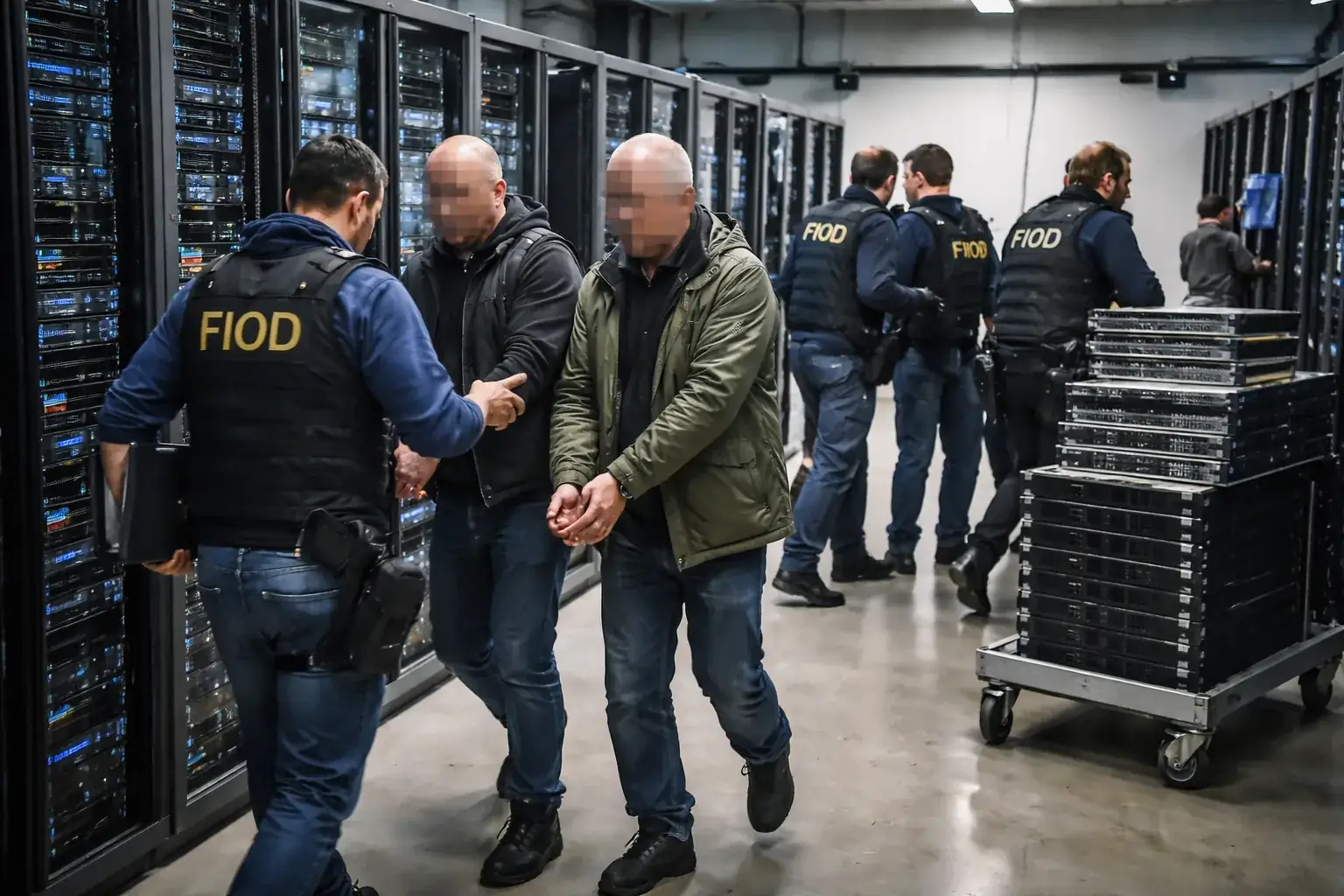
Two men were arrested in the Netherlands for allegedly violating sanctions by facilitating Russian influence operations through more than 800 seized

Security reporter
Reports on cybersecurity incidents, threat actors, and digital policy with a focus on technical claims, vendor disclosures, and security-response timelines.
Editorial responsibility: Lead reviewer for threat attribution, incident framing, and security vendor claims
Primary source: Krebs on Security. Full source links and update notes are below.
Fast summary
Start here
- Dutch financial crime agency FIOD arrested two individuals for providing economic resources to EU-sanctioned entities.
- Authorities seized more than 800 servers used by MIRhosting and WorkTitans to support Russian intelligence operations.
- The hosting infrastructure was reportedly used to launch DDoS attacks against Danish government bodies during elections.
What happened
Dutch authorities have seized more than 800 servers and arrested two men accused of helping provide digital infrastructure to sanctioned Russian cyber operations. The case centers on MIRhosting and WorkTitans, two companies investigators say functioned as part of a technical bridge that kept malicious hosting capacity available to networks linked with Russian cyberattacks and influence activity. By moving against the hosting layer rather than only the visible attackers, the Netherlands is targeting the operational backbone that allows disruptive campaigns to stay online.
That matters because modern cyber conflict depends on service providers, transit arrangements, hosting resellers, and jurisdictional loopholes as much as it depends on malware authors or state hackers themselves. Removing infrastructure can be more strategically useful than chasing individual operators one by one.
What's new in this update
The arrests appear to mark an escalation in how European authorities are enforcing sanctions in cyberspace. Instead of treating infrastructure support as a gray zone, Dutch investigators are alleging that the suspects effectively provided economic resources to sanctioned entities by keeping server capacity and connectivity available after formal restrictions were already in place. That turns the القضية from a narrow technical matter into a sanctions-enforcement case with clear national-security implications.
Investigators also say infrastructure associated with the suspects was used in pro-Russian activity targeting Denmark, including DDoS attacks around municipal elections. That allegation raises the stakes considerably, because it links the seized server network not just to generic abuse, but to politically sensitive operations aimed at democratic institutions inside the EU.
Key details
The investigation reportedly traces a continuity path from sanctioned entities such as Stark Industries into successor or linked structures that continued operating under new names. If that mapping is correct, then MIRhosting and WorkTitans were not simply passive service providers caught in incidental abuse. They were part of an ecosystem that allowed previously sanctioned capability to persist despite regulatory attempts to shut it down.
Several elements are central to the case:
- FIOD is treating hosting support as a sanctions and financial-crime issue.
- More than 800 servers were seized, indicating a substantial operational footprint.
- The alleged abuse includes infrastructure tied to DDoS and influence-related activity.
- Denmark's election-period targeting highlights the geopolitical sensitivity of the network.
This is why the operation will be watched across Europe. It suggests that hosting providers can no longer assume that legal risk ends at formal deniability if investigators can show continuity of service to sanctioned actors.
Background and context
Since Russia's full-scale invasion of Ukraine, European states have tightened sanctions not only on physical goods and financial flows but also on digital enablers. Hosting networks, proxy services, botnet support infrastructure, and resilient server capacity all matter in modern hybrid warfare. Yet enforcement has often lagged because digital services can be rebranded, relocated, or layered through intermediaries more easily than traditional assets.
The alleged role of Stark Industries and related successor infrastructure underscores that problem. Sanctioned digital operations do not necessarily vanish when one corporate shell is named. They mutate, migrate, and seek new providers. That is why authorities are increasingly looking at ecosystem-level facilitation rather than isolated domain seizures or takedowns.
What to watch next
The legal case will likely focus on whether the suspects knowingly enabled sanctioned actors or whether they can plausibly claim ordinary commercial service provision without intent to support cyberattacks. That distinction will matter for precedent. If prosecutors establish a strong knowledge standard, other European providers may face new pressure to intensify due diligence around suspicious customers and inherited infrastructure.
It will also be important to watch the operational fallout. Seizing 800 servers can disrupt malicious activity, but it can also expose additional clients, victims, and linked infrastructure that were not obvious at the time of arrest.
Why this matters
This matters because the Netherlands, FIOD, MIRhosting, WorkTitans, Stark Industries, sanctions enforcement, and Russian cyberattacks are all part of the same strategic contest over who gets to keep the internet's enabling infrastructure. The Dutch action is not only a criminal case. It is a signal that Europe is willing to treat server hosting and network facilitation as part of the battlefield in hybrid conflict. If that approach spreads, digital infrastructure providers will face much greater scrutiny when their systems appear to support state-linked attack campaigns.
Reader context
This story belongs to Northstar Herald's Cybersecurity and National Security coverage, with related entities including Netherlands, MIRhosting, WorkTitans, Stark Industries. The report is based on Krebs on Security source material.
Related coverage
Why it matters
This operation disrupts a critical technical bridge used by Russian-backed groups to launch cyber warfare and disinformation campaigns within the European Union.
Read next
Follow this story through the topic hub, more security coverage, and the latest updates.
Weekly briefing
Get the week's key developments in one concise email.
Get a fast catch-up on the biggest stories, the context behind them, and the links worth your time.
Cadence
Weekly, for a quick catch-up
Coverage
AI, business, world, security, sports
Format
Clear takeaways and useful context
Request the briefing
Leave your email to open a prepared request and get on the list for the weekly briefing.
About the byline
Security reporter
Marcus Kane covers cybersecurity, national-security technology, and digital risk, tracking how breaches, state-backed operations, and platform vulnerabilities affect institutions and users.
Sources and methodology