SpaceX Appoints Former Sequoia Leader Roelof Botha to Board
The appointment adds a veteran director and longtime associate of Elon Musk to the newly public company's audit committee.

AI reporter
Reports on model launches, frontier labs, developer platforms, and AI policy with an emphasis on claims verification and rollout context.
Editorial responsibility: Lead reviewer for AI coverage, launch claims, and policy context
Primary source: TechCrunch AI. Full source links and update notes are below.
Fast summary
Start here
- Former Sequoia Capital managing partner Roelof Botha has joined the SpaceX board and audit committee.
- The appointment fills a vacancy and follows SpaceX's recent record-setting initial public offering.
- Botha and Elon Musk share a professional relationship dating back to their tenure at PayPal in 2000.
What happened
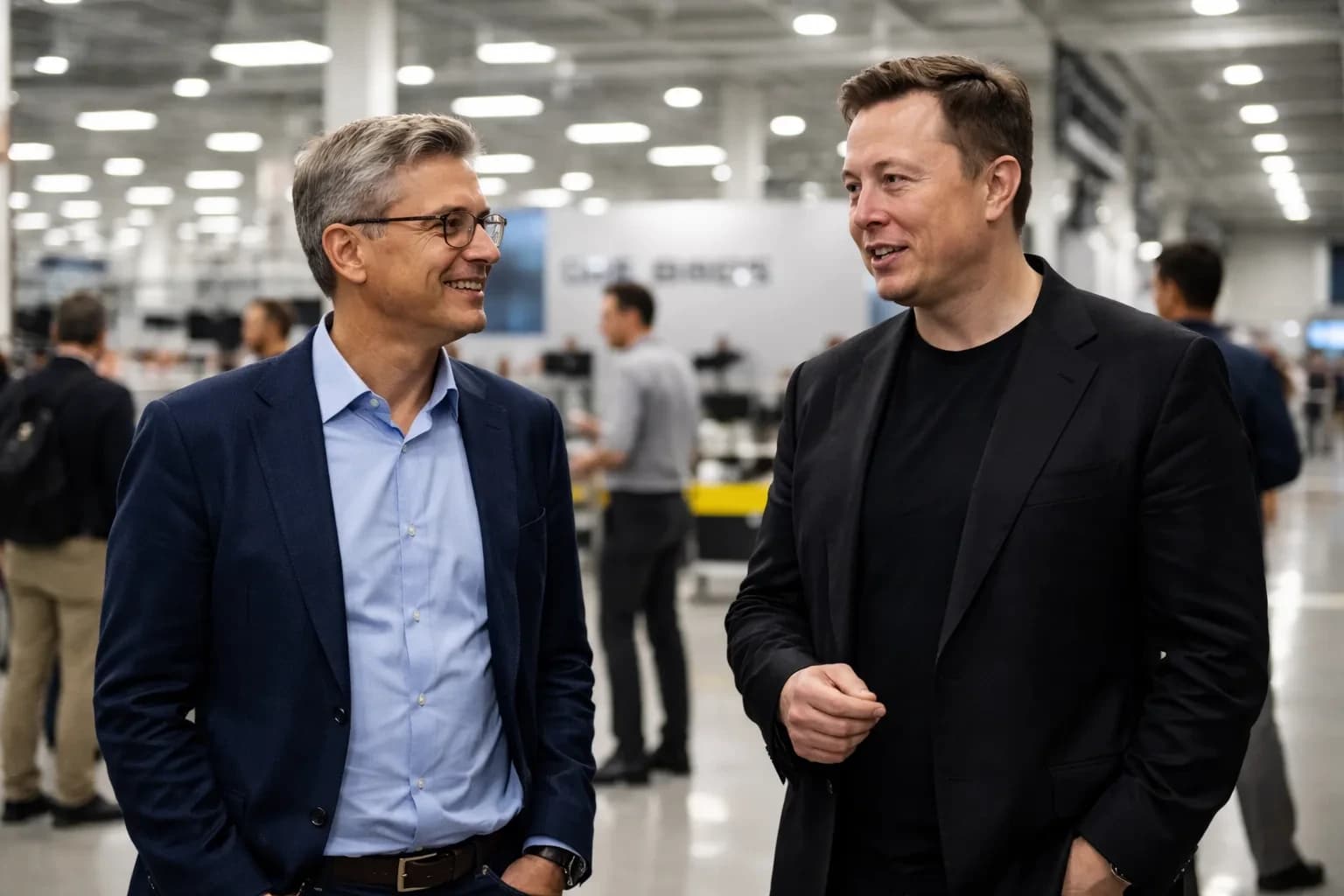
Roelof Botha has joined the SpaceX board of directors and its audit committee, adding one of Silicon Valley's most recognizable venture capital figures to the governance structure of a newly public company still overwhelmingly shaped by Elon Musk. The appointment matters because SpaceX is now operating under a different level of scrutiny after its record-setting IPO. Once a company enters the public market, board composition stops being an internal prestige question and becomes part of the market's assessment of discipline, oversight, and institutional credibility.
That is why Botha's arrival matters. It is not only about who joined the board, but about what kind of board SpaceX appears to want at this stage.
Why Roelof Botha is significant
Botha brings a mix of venture, finance, and public-company board experience that is rare even among elite investors. His long tenure at Sequoia Capital and his history with high-growth technology companies make him the type of director markets often read as financially literate, strategically connected, and operationally seasoned. That profile fits naturally on an audit committee, where credibility depends less on charisma than on judgment, governance familiarity, and the ability to ask hard questions.
In a company like SpaceX, those qualities matter because scale alone does not reduce governance risk. It often increases it.
The Elon Musk connection
Botha's history with Musk going back to the PayPal era adds a second layer to the appointment. On one hand, that history can be seen as useful because it means he understands the operating style, ambition, and unpredictability that often accompany Musk-led companies. On the other hand, it raises the familiar governance question of whether deep personal and professional familiarity strengthens oversight or softens it.
That tension is central to reading any Musk-adjacent board decision. Experience with the founder can be an asset, but independence still matters.
Why the post-IPO context matters
SpaceX after its IPO is not just a larger version of private SpaceX. Public listing changes the accountability environment. Reporting, shareholder expectations, audit integrity, related-party disclosure, and board composition all acquire higher consequence. Investors look more closely not only at launch cadence and revenue potential, but at whether the company is developing the institutional structure expected of a public-market giant.
That is why filling a board vacancy now has more meaning than it would have six months earlier. The appointment is part of SpaceX's transition into public-company adulthood.
The governance reality at SpaceX
Even with Botha's addition, the basic governance reality does not change: Elon Musk still holds dominant voting power. That means the board's strength depends not just on the credentials of its members, but on how willing and able they are to exercise judgment in a structure where ultimate founder influence remains overwhelming. In that environment, the existence of an experienced director is helpful, but not automatically decisive.
This is the central governance puzzle for companies controlled by founders after going public: institutions can grow, but control can remain highly concentrated.
Why the audit committee role matters
The audit committee appointment is especially important because it touches the area where public-market trust is most technical and most unforgiving. Investors may tolerate eccentricity in product vision or leadership style, but they become far less patient if reporting discipline, conflict oversight, or internal controls appear weak. A respected audit committee member can help reassure the market that some of the most consequential processes are being watched closely.
That is the practical value of Botha's role, more than the symbolism of the board seat itself.
What comes next
The next question is whether Botha's addition signals broader board evolution at SpaceX or whether it is mainly a targeted governance reinforcement after the IPO. Shareholders and observers will also watch how the company handles disclosure, controls, and board independence as public-market pressure deepens.
For now, Roelof Botha joining the SpaceX board is best understood as a governance signal. It gives the company another highly experienced figure at a moment when public scrutiny matters more than ever. But the larger question remains unresolved: how much institutional oversight can truly shape a company when its founder still controls the overwhelming majority of the vote?
Why it matters
The addition of a seasoned director provides institutional oversight for the recently public SpaceX, though Elon Musk retains more than 80% of the company's voting power.
Read next
Follow this story through the topic hub, more ai coverage, and the latest updates.
Weekly briefing
Get the week's key developments in one concise email.
Get a fast catch-up on the biggest stories, the context behind them, and the links worth your time.
Cadence
Weekly, for a quick catch-up
Coverage
AI, business, world, security, sports
Format
Clear takeaways and useful context
Request the briefing
Leave your email to open a prepared request and get on the list for the weekly briefing.
About the byline
AI reporter
Alex Rivera reports on artificial intelligence with an emphasis on model launches, frontier lab strategy, developer tooling, and the policy decisions shaping commercial deployment.
Sources and methodology