Nvidia Targets $200B CPU Market With New RTX Spark AI Superchip
The chipmaker is partnering with Microsoft, Dell, and HP to launch PCs capable of running local AI agents starting this fall.
Primary source: TechCrunch AI. Full source links and update notes are below.
Fast summary
Start here
- Nvidia unveiled the 1-petaflop RTX Spark CPU designed specifically for AI-driven Windows PCs at Computex.
- Major manufacturers including Dell, HP, and Lenovo will ship RTX Spark-powered laptops beginning in fall 2026.
- The hardware features a secure sandbox developed with Microsoft to run autonomous AI agents and local language models.
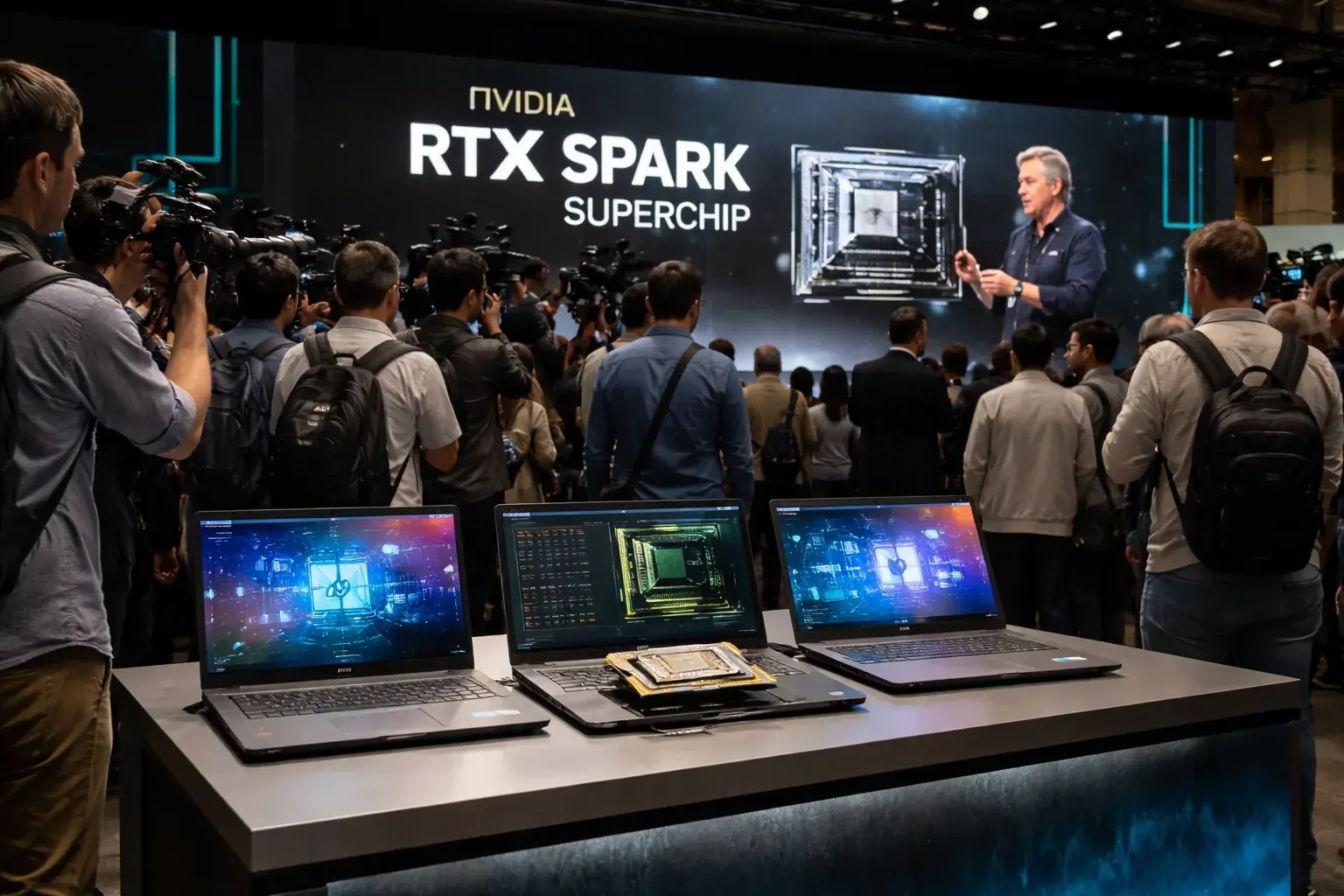
What happened
During the Computex trade show in Taipei, Nvidia introduced a new PC processor dubbed the RTX Spark. Described by CEO Jensen Huang as a "superchip," the hardware is designed to power a new class of Windows PCs focused on running autonomous AI agents locally rather than relying exclusively on cloud-based processing.
What's new in this update
The RTX Spark is a 1-petaflop chip optimized to handle complex large language models and AI agents like OpenClaw or Hermes Agent. Microsoft has already positioned a flagship device using the chip, the Surface Laptop Ultra, which it claims is the most powerful Surface laptop ever built. This marks a significant shift in Nvidia's strategy to capture the consumer and creator market with specialized AI hardware.
Key details
Nvidia confirmed that major PC vendors including ASUS, Dell, HP, Lenovo, and MSI will release Spark-powered models this fall, with Acer and Gigabyte to follow. To support this ecosystem, over 100 software developers, including Adobe, Blender, and Riot Games, have committed to optimizing applications for the new architecture, which utilizes Nvidia's established CUDA software stack.
Background and context
This pivot toward CPUs follows Nvidia's recent success in the high-end server market with its Vera processor, which has already generated $20 billion in sales. CEO Jensen Huang recently told investors that the company sees a $200 billion opportunity in AI-focused CPUs. The company is seeking to overcome past hurdles in the consumer ARM-based market, such as the 2013 Surface RT project which resulted in a $900 million write-off for Microsoft.
What to watch next
While the core hardware specifications are public, manufacturers have yet to disclose final pricing for the upcoming consumer laptops. Observers are waiting to see if these machines will be priced to compete with affordable alternatives like the Mac Mini, which is popular for local AI tasks, or if they will occupy a premium tier similar to Nvidia's $4,800 DGX Spark developer mini-computer.
Why this matters
This move signals Nvidia's aggressive expansion from the data center into the personal computing hardware market, challenging incumbents for the future of AI-native workstations.
Reader context
This story belongs to Northstar Herald's Generative AI and AI Infrastructure coverage, with related entities including Nvidia, RTX Spark, Microsoft, Computex. The report is based on TechCrunch AI source material.
Related coverage
Why it matters
This move signals Nvidia's aggressive expansion from the data center into the personal computing hardware market, challenging incumbents for the future of AI-native workstations.
Read next
Follow this story through the topic hub, more ai coverage, and the latest updates.
Weekly briefing
Get the week's key developments in one concise email.
Get a fast catch-up on the biggest stories, the context behind them, and the links worth your time.
Cadence
Weekly, for a quick catch-up
Coverage
AI, business, world, security, sports
Format
Clear takeaways and useful context
Request the briefing
Leave your email to open a prepared request and get on the list for the weekly briefing.
Author
See who assembled this story and follow more of their work.
Sources and methodology