Meta Strikes Deal with Reliance for First AI Data Center in India
The 168-megawatt facility in Gujarat will support Meta's global AI computing requirements while utilizing renewable energy and desalinated seawater

AI reporter
Reports on model launches, frontier labs, developer platforms, and AI policy with an emphasis on claims verification and rollout context.
Editorial responsibility: Lead reviewer for AI coverage, launch claims, and policy context
Primary source: TechCrunch AI. Full source links and update notes are below.
Fast summary
Start here
- Meta will lease capacity at a new 168-megawatt AI-enabled data center in Jamnagar, Gujarat, built by Reliance Industries.
- The facility will be powered by renewable energy and use desalinated seawater for cooling, with Meta covering the resource costs.
- The agreement marks Meta's first infrastructure commitment in India as the country targets 8GW of data center capacity by 2030.
What happened
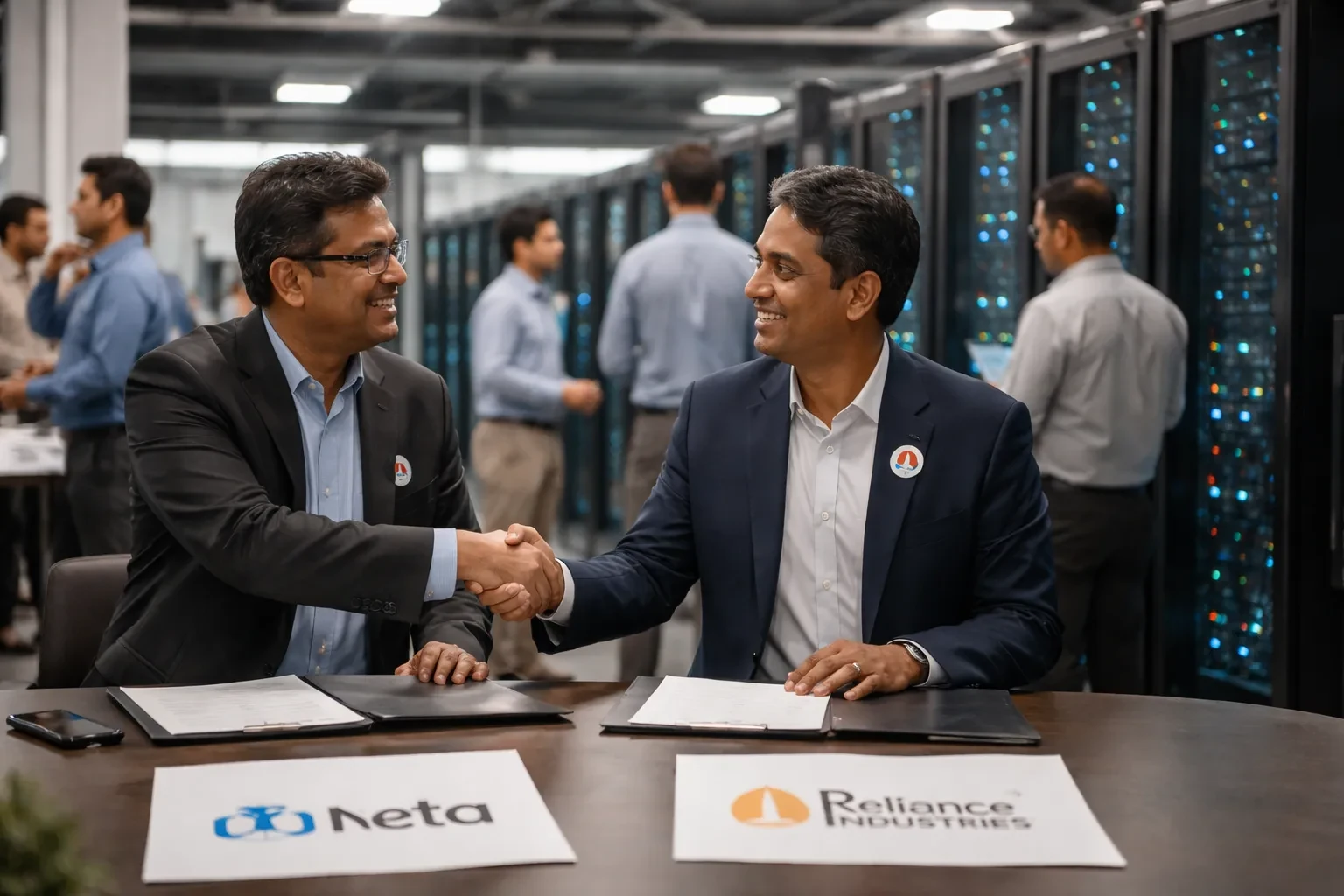
Meta and Reliance have partnered on Meta's first AI data center deal in India, a significant infrastructure move that places a 168-megawatt AI-enabled facility in Jamnagar, Gujarat at the center of the company's computing strategy. The project will give Meta access to new large-scale capacity in one of its most important growth markets while strengthening India's role in global AI infrastructure.
This matters because the race for artificial intelligence leadership is increasingly constrained by hardware and energy, not just models and talent. Companies need reliable data center capacity to train and run advanced systems, and that makes deals like this strategically important far beyond the local market.
What's new in this update
The headline development is that Meta has signed its first infrastructure commitment in India with Reliance Industries, shifting the companies' relationship from software and digital-platform partnership into hard AI infrastructure. Instead of building the site alone, Meta is reportedly leasing capacity while Reliance handles development and operations.
That structure is notable because it shows how large AI companies are trying to scale quickly in regions where they already have deep user reach. Rather than waiting years to create every element of a facility from scratch, they are partnering with major local industrial groups that can move faster on land, utilities, construction, and government coordination.
Key details
The planned AI data center in Jamnagar is expected to provide 168 megawatts of capacity and is designed to use renewable energy as well as desalinated seawater for cooling. Meta is also expected to cover the energy and water costs associated with its operations at the site.
Several parts of the deal stand out:
- Meta gains dedicated AI computing capacity in India
- Reliance provides design, construction, and operating support
- The site uses sustainability-oriented cooling and energy planning
- The project positions Jamnagar as an emerging AI infrastructure hub
The agreement also fits Meta's broader push to lock in power-intensive infrastructure for AI workloads such as model training, inference, and related platform operations.
Background and context
India has become a major battleground for data center expansion, cloud investment, and AI infrastructure planning. Capacity has grown rapidly in recent years, and the Indian government has encouraged that expansion through policy incentives, localization advantages, and support for foreign technology investment.
For Meta, India is too important to treat only as a distribution market. It is one of the company's largest user bases and an increasingly critical geography for long-term product, business, and infrastructure planning. Securing AI data center capacity in India therefore serves both regional and global needs.
The partnership with Reliance also makes strategic sense because Reliance has the industrial scale, political connectivity, and execution muscle to support energy-intensive projects at large size. In the AI era, those attributes can be as important as software expertise.
This move follows a broader trend. Major technology firms are now competing not just on model performance but on who can secure the megawatts, cooling systems, land access, and grid relationships needed to sustain AI growth over many years.
What to watch next
The next questions will focus on execution and scope. Observers will want to know how quickly the Jamnagar facility progresses, which AI workloads Meta prioritizes there, and whether the initial agreement expands into a broader infrastructure relationship.
Three follow-up areas are especially important:
- Whether Meta adds more AI computing capacity in India later
- How fast the Jamnagar site is delivered and ramped
- Whether Reliance uses the project to attract more global AI infrastructure deals
If the buildout proceeds smoothly, the project could become a model for how international AI firms partner with local industrial giants in emerging compute markets.
Why this matters
The Meta and Reliance AI data center in India deal matters because it highlights where the AI race is increasingly being won: through physical infrastructure, power access, and long-term compute positioning. Models may grab headlines, but data centers decide who can scale them.
For India, the partnership strengthens its claim to be more than a back-office or user market. It signals that the country is becoming a serious destination for frontier AI infrastructure investment.
Why it matters
The deal secures critical computing power for Meta in its largest user market while solidifying India's position as a global hub for AI infrastructure development.
Read next
Follow this story through the topic hub, more ai coverage, and the latest updates.
Weekly briefing
Get the week's key developments in one concise email.
Get a fast catch-up on the biggest stories, the context behind them, and the links worth your time.
Cadence
Weekly, for a quick catch-up
Coverage
AI, business, world, security, sports
Format
Clear takeaways and useful context
Request the briefing
Leave your email to open a prepared request and get on the list for the weekly briefing.
About the byline
AI reporter
Alex Rivera reports on artificial intelligence with an emphasis on model launches, frontier lab strategy, developer tooling, and the policy decisions shaping commercial deployment.
Sources and methodology