Google DeepMind Enters Hollywood with $75 Million A24 Partnership
The tech giant's AI division will collaborate with the independent film studio to build creative tools informed by professional filmmakers.

AI reporter
Reports on model launches, frontier labs, developer platforms, and AI policy with an emphasis on claims verification and rollout context.
Editorial responsibility: Lead reviewer for AI coverage, launch claims, and policy context
Primary source: TechCrunch AI. Full source links and update notes are below.
Fast summary
Start here
- Google DeepMind has committed $75 million to indie film studio A24 to develop AI-powered creative tools.
- The partnership aims to integrate feedback from artists and filmmakers directly into the development of new AI features.
- The move follows similar AI investments in Hollywood by major competitors including Netflix and Amazon's MGM Studios.
What happened
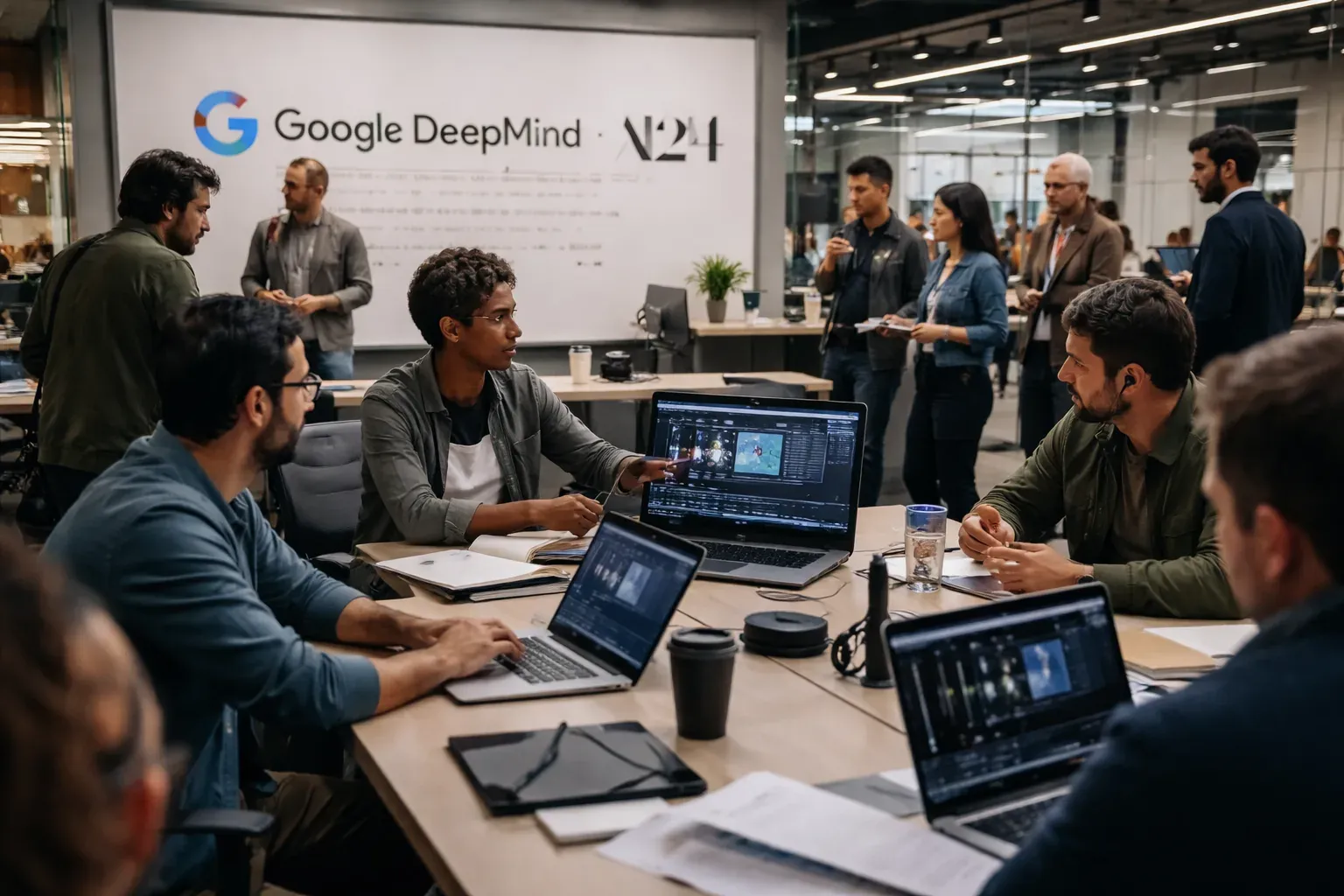
Google DeepMind has committed $75 million to A24 in a partnership centered on AI filmmaking tools, bringing one of the world's most prominent AI labs into a direct working relationship with one of the most recognizable independent film studios in Hollywood. The deal is significant not only because of the money, but because of what the collaboration implies: generative AI is moving deeper into professional film production, and the next phase may be shaped inside real studio workflows rather than in generic software demos.
That shift gives the announcement more weight than a routine investment story. Google DeepMind is not merely licensing a model to a media company. It is seeking influence over how AI filmmaking tools are designed, tested, and normalized in a prestige creative environment.
Why A24 is a meaningful partner
A24 matters because it is associated with distinctive creative identity rather than industrial-scale franchise production alone. The studio has built its reputation on filmmaker-driven projects, awards success, and a brand that signals taste as much as commerce. If AI filmmaking tools are developed with input from A24 talent and production teams, Google DeepMind gains something valuable: credibility that its tools are being shaped by people who care about craft, not just automation.
That is strategically important in Hollywood, where much of the resistance to generative AI comes from fear that technology companies want efficiency without respecting artistic process.
Why Google DeepMind is entering Hollywood this way
DeepMind could have pursued a more abstract enterprise-software path. Instead, by backing A24 directly, it is choosing a story about collaboration with creators. That helps Google DeepMind argue that AI filmmaking tools can support directors, editors, artists, and producers rather than displace them outright. It also gives the company a showcase environment where the tools can be tested against serious production demands.
In practical terms, that means Hollywood becomes a proving ground. If the tools work for A24-level productions, Google DeepMind can later market them more broadly across the film and media industry.
The creative and labor tension
The partnership also lands in an environment of ongoing distrust. Writers, actors, visual artists, and film crews have spent years warning that generative AI could be used to weaken labor power, imitate creative work, or replace early-stage craft jobs under the language of innovation. Because of that, every major AI move in Hollywood is judged not only on technical capability, but on governance, consent, and transparency.
This is why the promise of filmmaker feedback matters so much. Without visible creative control and guardrails, AI filmmaking tools risk being seen as extraction software for studios rather than support software for artists.
Why the $75 million number matters
The scale of the investment gives the story seriousness. A nine-figure-adjacent commitment signals that Google DeepMind sees media tools as a strategic frontier, not a side experiment. It also suggests the company expects competition. Other major players, including streaming and studio groups with their own AI ambitions, are clearly moving into the same territory.
Money alone will not win that race, but it buys access, development time, and the ability to shape industry expectations early.
What kind of tools could emerge
Although the announcement centers broadly on AI filmmaking tools, the most likely areas of experimentation include previsualization, script breakdown support, scene planning, editing assistance, asset organization, and controlled generative workflows for concept development. The politically sensitive question will be whether the tools remain assistive or begin to move toward substitution in areas traditionally handled by human specialists.
That distinction will define much of the industry's reaction.
What to watch next
The next indicators will be whether A24 productions visibly adopt these tools, how filmmakers describe the experience publicly, and whether unions or guild voices raise objections as details become clearer. It will also matter whether Google DeepMind publishes a framework for responsible AI filmmaking use or keeps the collaboration relatively opaque.
For now, the Google DeepMind and A24 deal marks a major moment in the convergence of AI and Hollywood. It suggests the future argument is no longer about whether AI will enter film production. The argument is about who will shape the tools, whose interests they will serve, and whether the industry's most respected creative brands can help legitimize that transition.
Why it matters
This deal signals a shift toward formalizing AI's role in high-end cinema production through direct collaboration with established creative talent. It positions Google DeepMind as a central player in the race to define generative AI standards for the film industry.
Read next
Follow this story through the topic hub, more ai coverage, and the latest updates.
Weekly briefing
Get the week's key developments in one concise email.
Get a fast catch-up on the biggest stories, the context behind them, and the links worth your time.
Cadence
Weekly, for a quick catch-up
Coverage
AI, business, world, security, sports
Format
Clear takeaways and useful context
Request the briefing
Leave your email to open a prepared request and get on the list for the weekly briefing.
About the byline
AI reporter
Alex Rivera reports on artificial intelligence with an emphasis on model launches, frontier lab strategy, developer tooling, and the policy decisions shaping commercial deployment.
Sources and methodology
- https://techcrunch.com/2026/06/22/google-deepmind-bets-75m-on-ais-future-in-hollywood-with-a24-deal/