Human Expertise Reclaimed: Ford Rehires ‘Gray Beard’ Engineers After
The American automaker is pivotally re-integrating 350 veteran specialists to identify failure points that automated systems missed, aiming for $1 billion

AI reporter
Reports on model launches, frontier labs, developer platforms, and AI policy with an emphasis on claims verification and rollout context.
Editorial responsibility: Lead reviewer for AI coverage, launch claims, and policy context
Primary source: TechCrunch AI. Full source links and update notes are below.
Fast summary
Start here
- Ford rehired 350 veteran engineers, including former employees and supplier experts, after AI systems failed to maintain quality standards.
- The company expects the return of human oversight to generate approximately $1 billion in savings this year by catching defects before production.
- Despite the shift, Ford is not abandoning AI but is using 'gray beard' experts to retrain staff and refine automated tools for better accuracy.
What happened
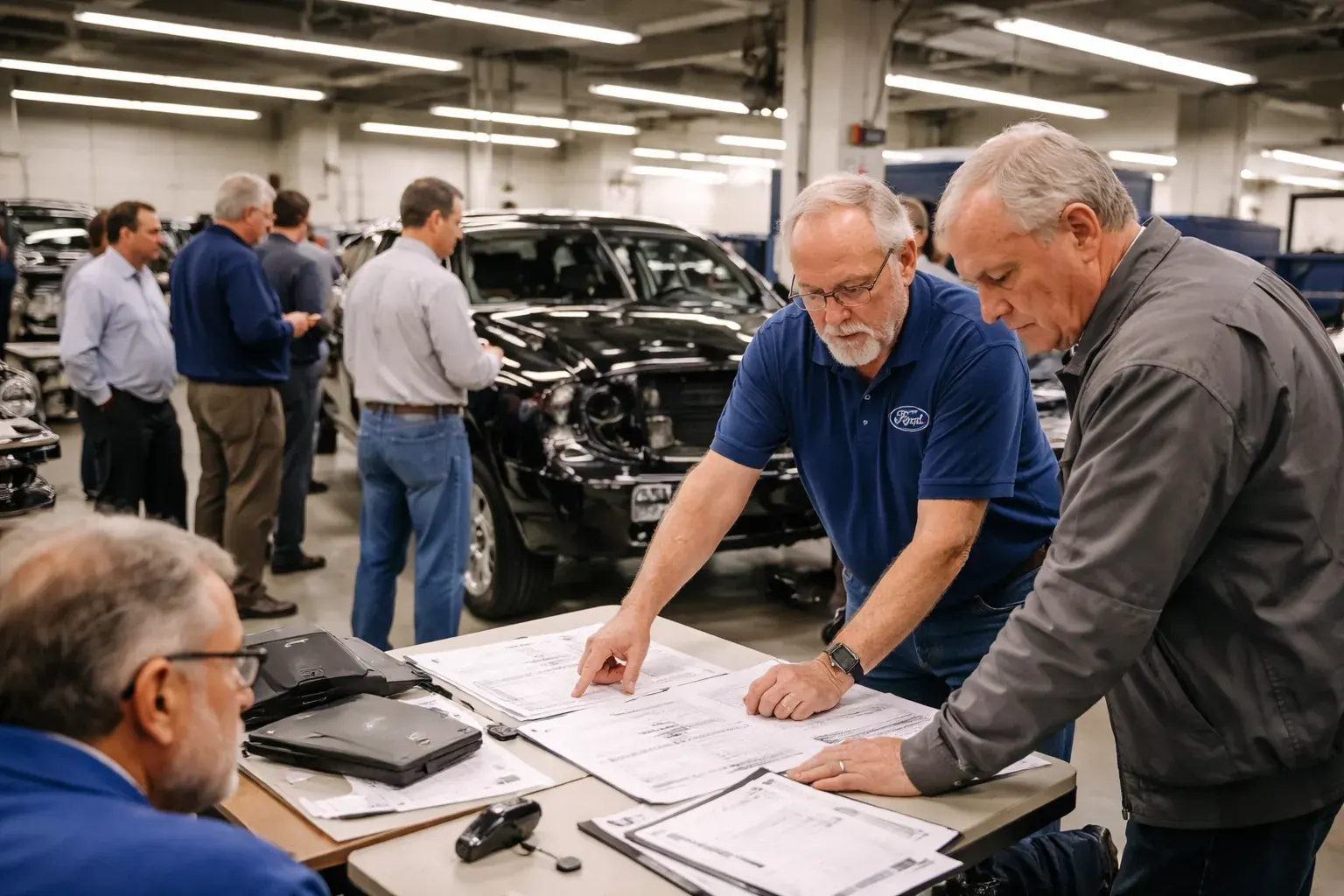
Ford Motor Company has officially pivoted its quality assurance strategy by rehiring 350 veteran engineers, colloquially known as “gray beards,” to rectify deficiencies in its manufacturing and design processes. This decision follows a period where the automaker relied heavily on artificial intelligence and automated systems to ensure vehicle quality, a strategy that executives now admit yielded disappointing results. Chief Operating Officer Kumar Galhotra confirmed that these technical specialists, many of whom are former Ford employees or veterans from major suppliers, are now tasked with identifying potential failure points in vehicle components long before they reach the assembly plant floor. The move highlights a renewed emphasis on human intuition and deep technical experience in an era where many industries are attempting to automate complex oversight roles entirely.
What's new in this update
The recent disclosure from Ford leadership provides a candid admission regarding the limits of current AI technology in the automotive sector. Vice President of vehicle hardware engineering, Charles Poon, clarified that the company had mistakenly assumed that ingesting design requirements into AI models would automatically result in a high-quality product. This update reveals the specific scale of the corrective action—350 hires—and the immediate financial implications. Ford anticipates that reintegrating these veterans will lead to a reduction of $1 billion in costs throughout the current year. This financial upside is primarily driven by the prevention of recalls, warranty claims, and production delays that occurred when automated systems failed to flag subtle engineering flaws.
Key details
The "gray beard" engineers are being deployed as an elite strike force within the engineering department. Their primary objective is to "hunt for failure points" across the supply chain and design phases. Beyond mere oversight, these specialists are performing a dual role: they are actively training the younger generation of Ford engineers and reprogramming the very AI tools that previously fell short. This suggests that the failure was not necessarily in the concept of AI, but in its implementation and the lack of a mature dataset or nuanced logic that only decades of hands-on experience can provide. Notably, Ford’s shift back to human-centric quality control coincides with the brand taking the top spot among mainstream automakers in the latest JD Power Initial Quality Survey, suggesting the strategy is already yielding measurable improvements.
Background and context
For several years, the global automotive industry has been under intense pressure to digitalize and automate to compete with tech-heavy rivals and reduce labor costs. Ford, like many of its peers, invested heavily in automated quality systems and AI-driven design validation to streamline the path from concept to driveway. However, the complexity of modern vehicles—which now feature a mix of sophisticated mechanical hardware and millions of lines of software code—presents a unique challenge for autonomous monitoring. Previous reliance on these systems often led to late-stage discovery of defects, resulting in expensive recalls and a tarnished reputation for reliability. The rehiring of retirees and veterans represents a strategic retreat from automation-first dogmas that have occasionally plagued legacy manufacturers attempting to modernize too quickly.
What to watch next
Observers should monitor whether other major manufacturers follow Ford’s lead in re-emphasizing human technical specialists over purely algorithmic quality control. The $1 billion savings target will be a key metric for investors in upcoming quarterly earnings reports, serving as a proof-of-concept for the value of institutional memory. Additionally, the evolution of Ford’s internal AI training will be critical; the goal is to create a hybrid environment where veteran knowledge is codified into better software models. If Ford maintains its high ranking in quality surveys through the next year, it may solidify a new industry standard that balances cutting-edge machine learning with the indispensable oversight of seasoned engineering veterans who understand the physical realities of the assembly line.
Why it matters
This move signals a significant reality check for heavy industry's reliance on pure AI, suggesting that human institutional knowledge remains irreplaceable for complex hardware engineering. It also demonstrates how high-stakes manufacturing errors can lead to massive financial losses that only experienced specialists can mitigate.
Read next
Follow this story through the topic hub, more ai coverage, and the latest updates.
Weekly briefing
Get the week's key developments in one concise email.
Get a fast catch-up on the biggest stories, the context behind them, and the links worth your time.
Cadence
Weekly, for a quick catch-up
Coverage
AI, business, world, security, sports
Format
Clear takeaways and useful context
Request the briefing
Leave your email to open a prepared request and get on the list for the weekly briefing.
About the byline
AI reporter
Alex Rivera reports on artificial intelligence with an emphasis on model launches, frontier lab strategy, developer tooling, and the policy decisions shaping commercial deployment.
Sources and methodology