Elon Musk's Last Co-Founders Reportedly Depart xAI
The last two remaining co-founders of Elon Musk's AI startup, xAI, have reportedly left the company as it undergoes a major foundational rebuild under

AI reporter
Reports on model launches, frontier labs, developer platforms, and AI policy with an emphasis on claims verification and rollout context.
Editorial responsibility: Lead reviewer for AI coverage, launch claims, and policy context
Primary source: TechCrunch AI. Full source links and update notes are below.
Fast summary
Start here
- Manuel Kroiss and Ross Nordeen, the last of the 11 original co-founders, have reportedly left xAI.
- The departures come shortly after Musk announced xAI is being rebuilt from the foundations up.
- xAI was recently acquired by SpaceX, aligning it with Musk's other major corporate entities.
What happened
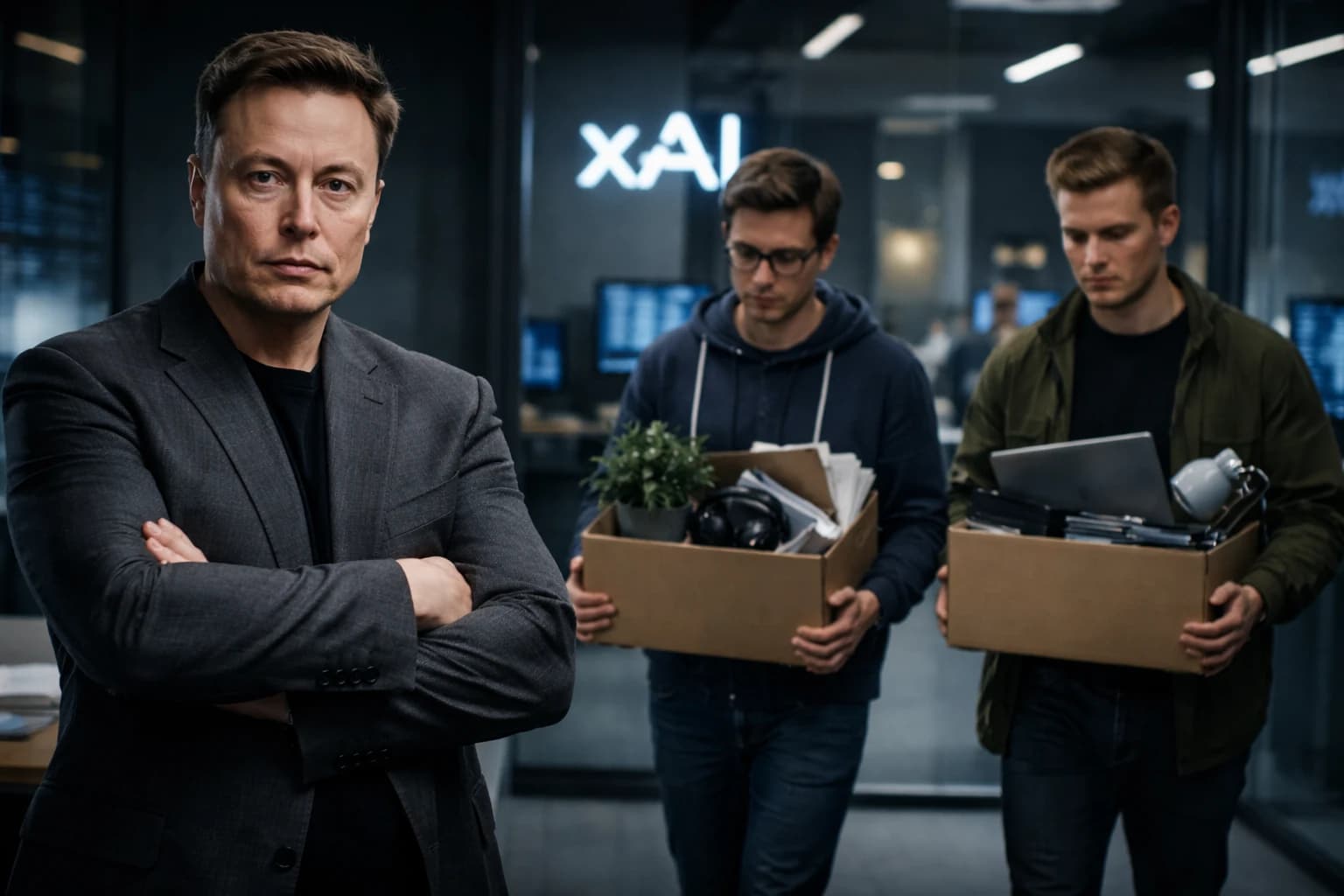
The final original co-founders still remaining at xAI are reportedly leaving, meaning that Manuel Kroiss and Ross Nordeen would become the last of the startup's founding group to depart as the company undergoes a broad restructuring under Elon Musk. If confirmed, the change would mean none of the original 11 co-founders remain in place at a company that was once presented as a fast-moving challenger in the frontier AI race.
That is a striking level of turnover for any startup, but especially for one positioned as strategically important inside Musk's broader technology empire.
Why the departures matter
The xAI co-founders depart story matters because founding teams are not interchangeable in frontier AI companies. Early leaders shape model direction, hiring culture, technical priorities, and how a company balances research with product ambition. When the last original co-founders leave, it signals more than normal executive churn. It suggests a company may be entering an entirely different phase of identity.
In xAI's case, that phase appears tied closely to reorganization, consolidation, and greater alignment with SpaceX and the rest of Musk's operating structure.
Why this looks like more than ordinary turnover
Companies lose executives all the time. What makes this different is the completeness of the reset. Reports indicate the departures follow comments from Musk suggesting that xAI is being rebuilt from the foundations up. That language implies dissatisfaction not just with outcomes, but with the original design of the company itself.
When a founder says the company was not built correctly the first time, and then all original co-founders disappear, the implication is that technical leadership, operational design, or strategic execution has been judged insufficient for the next stage.
The SpaceX integration angle
The reported acquisition of xAI by SpaceX is central to understanding the shift. Once xAI becomes more tightly embedded in Musk's other major corporate assets, the logic of the organization changes. It may become less of an independent AI startup and more of a strategic component inside a broader industrial and infrastructure ecosystem.
That changes what leadership is expected to do. A standalone startup can tolerate some chaos if its mission is rapid experimentation. A company being folded into a larger corporate structure may be expected to align more tightly with shared capital priorities, compute strategy, infrastructure needs, and executive command.
Why Ross Nordeen and Manuel Kroiss are notable names
The fact that Ross Nordeen and Manuel Kroiss are the remaining names matters because they represented continuity with xAI's original formation. Nordeen was associated with operational execution and close ties to Musk's management style, while Kroiss reportedly had a key role in the technical side, including pretraining efforts. Losing both means the company is no longer carrying forward its founding leadership DNA in any obvious form.
That raises natural questions:
- Who now sets the technical vision?
- How much autonomy does xAI still have?
- Is the company being optimized for research, product, infrastructure, or IPO positioning?
Those questions become more urgent when the original architects are gone.
What this says about Musk's AI strategy
The Elon Musk xAI story increasingly looks like one of centralization. Rather than preserving xAI as a stable independent AI lab, the direction appears to be toward deeper integration with Musk's wider corporate machinery. That may make strategic sense if the goal is to align compute, hardware, capital, and deployment across multiple companies. But it also means the original startup experiment may be over in all but name.
What to watch next
The most important next signals will be who replaces the departed co-founders in practice, how xAI describes its technical roadmap, and whether the company starts operating more transparently as a division-like unit inside a broader Musk ecosystem rather than as a conventional AI startup.
Why this matters
The last co-founders reportedly depart xAI story matters because it marks a decisive break between the company that was launched and the one now being rebuilt. When every original co-founder is gone, leadership change is no longer incremental. It is structural.
Related coverage
Why it matters
The departure of all original co-founders signals a complete transformation of xAI's leadership and technical strategy as it merges into the SpaceX corporate ecosystem.
Read next
Follow this story through the topic hub, more ai coverage, and the latest updates.
Weekly briefing
Get the week's key developments in one concise email.
Get a fast catch-up on the biggest stories, the context behind them, and the links worth your time.
Cadence
Weekly, for a quick catch-up
Coverage
AI, business, world, security, sports
Format
Clear takeaways and useful context
Request the briefing
Leave your email to open a prepared request and get on the list for the weekly briefing.
About the byline
AI reporter
Alex Rivera reports on artificial intelligence with an emphasis on model launches, frontier lab strategy, developer tooling, and the policy decisions shaping commercial deployment.
Sources and methodology