Cursor Debuts Mobile Interface for Oversight of Autonomous Coding
The new iOS application allows developers to initiate and guide AI coding agents remotely, reflecting a broader industry shift toward high-level oversight

AI reporter
Reports on model launches, frontier labs, developer platforms, and AI policy with an emphasis on claims verification and rollout context.
Editorial responsibility: Lead reviewer for AI coverage, launch claims, and policy context
Primary source: TechCrunch AI. Full source links and update notes are below.
Fast summary
Start here
- Cursor released a dedicated iOS application to facilitate real-time mobile interaction with autonomous coding agents.
- The app integrates with the Cursor 2.0 ecosystem, which emphasizes independent agents over traditional code autocomplete features.
- Industry leadership, including executives from Anthropic, reports a significant workflow transition from desktop-heavy setups to mobile-first agent management.
What happened
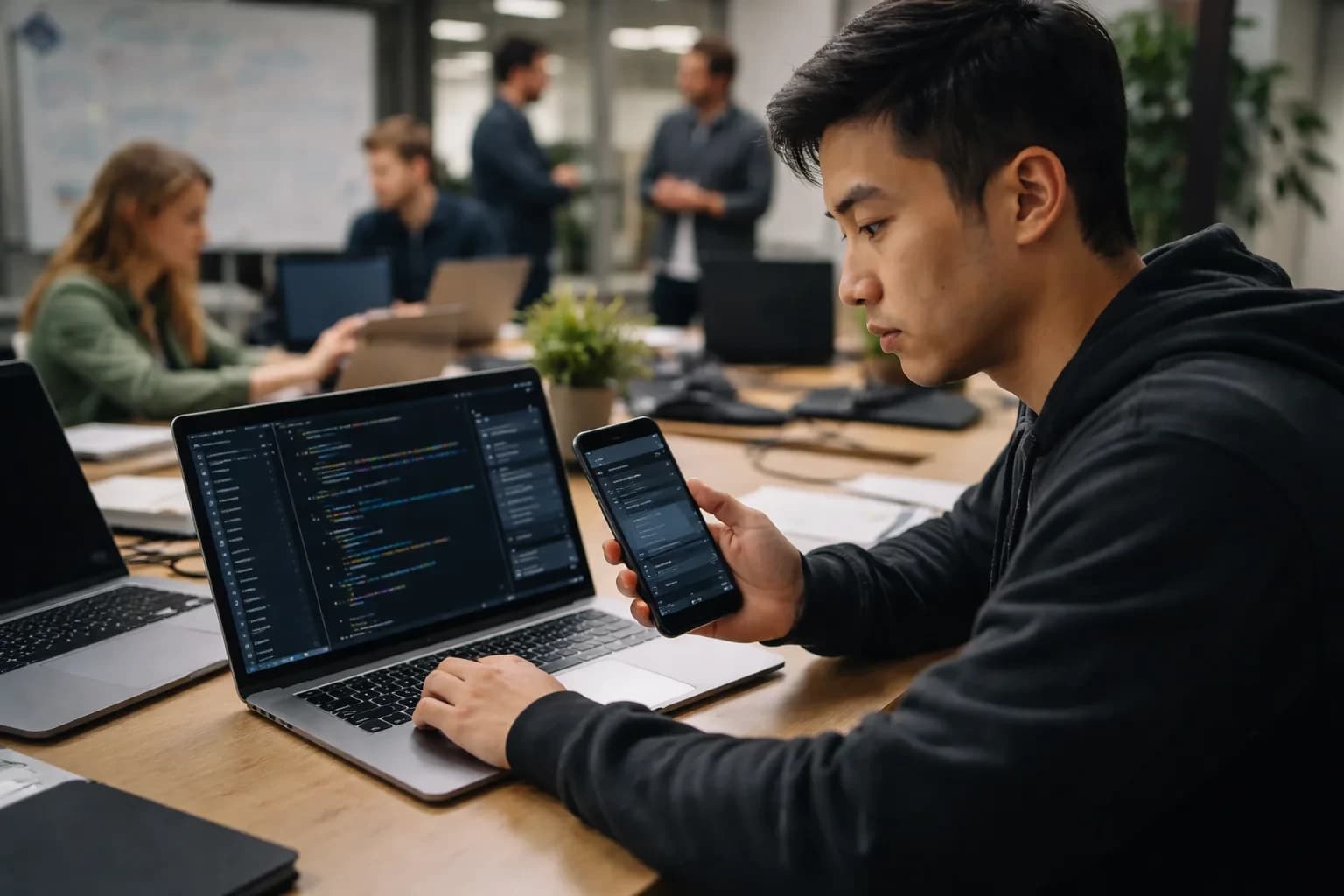
Cursor, the AI-driven code editor recently acquired by SpaceX for $60 billion, has officially expanded its ecosystem into the mobile sphere with the launch of a new iOS application. Announced on Monday, the app is specifically designed to allow developers to prompt and manage coding agents directly from their smartphones. This move represents a strategic effort to unbind software development from the traditional desktop environment, enabling engineers to maintain progress on complex projects while away from their primary workstations. The application is built to leverage the advancements introduced in the Cursor 2.0 update, which pivoted the platform from being a standard integrated development environment with AI features toward a suite of autonomous agents capable of handling sophisticated programming tasks with minimal human intervention.
What's new in this update
The core functionality of the mobile app centers on the ability to either spin up entirely new coding agents or continue interactions with those already active on the desktop client. This cross-platform synchronization ensures that the state of an agent's work remains consistent whether the developer is at their desk or on the move. By providing a streamlined interface for prompting and feedback, Cursor is effectively turning the smartphone into a remote control for large-scale software engineering. The update reflects a growing realization within the AI sector that the primary value of generative models for coding is no longer found in simple line-by-line completion, but in the higher-level logic and task execution provided by independent agents that require periodic guidance rather than constant manual input.
Key details
Cursor’s entry into the mobile market is part of an accelerating trend among top-tier AI firms. Both Anthropic and OpenAI have previously introduced mobile versions of their respective platforms, providing interfaces that allow users to interact with large language models optimized for technical tasks. However, Cursor’s specific focus on 'agents'—entities designed to perform sequences of actions autonomously—sets it apart from more general chat-based interfaces. The acquisition by SpaceX earlier this year for $60 billion underscored the immense valuation and strategic importance placed on next-generation development tools. Despite the transition in corporate ownership, Cursor’s development cycle appears to have remained aggressive, prioritizing the accessibility of its agent-based architecture across the most common mobile operating systems, starting with Apple's iOS devices.
Background and context
The shift toward mobile coding is driven by a fundamental change in how code is produced. Historically, software development required high-resolution displays and physical keyboards to manage the cognitive load of large codebases. However, as AI models become more capable of synthesizing these codebases internally, the developer's primary task has shifted toward high-level oversight and architectural guidance. This abstraction means that engineers spend more time defining requirements and reviewing logic than typing syntax. Boris Cherny, the head of Claude Code at Anthropic, recently noted that his own workflow has shifted almost entirely to mobile devices. He remarked that six months ago, the idea of coding on a phone would have seemed unthinkable, but the reliability of agentic tools has made the multi-monitor setup increasingly redundant for high-level orchestration.
What to watch next
Looking forward, the success of Cursor’s mobile app will likely depend on how effectively it handles complex debugging and project architecture reviews on smaller screens. As AI-based coding tools continue to abstract away the manual aspects of programming, we should expect a broader re-evaluation of developer hardware and technical education. If the trend observed by industry leaders continues, the market may see a decline in the demand for traditional workstation peripherals in favor of more robust mobile AI interfaces. Furthermore, the integration with SpaceX’s broader technological goals remains a point of interest, as the aerospace giant looks to integrate advanced AI into its own internal engineering pipelines. For now, the focus remains on whether professional developers will embrace the 'continuous conversation' model of coding that mobile agents facilitate.
Why it matters
This development signals a fundamental shift in software engineering where the developer’s role moves from writing lines of code to orchestrating complex AI agents. As tools become more agentic, the requirement for multi-monitor desktop setups is diminishing in favor of continuous, conversational mobile oversight.
Read next
Follow this story through the topic hub, more ai coverage, and the latest updates.
Weekly briefing
Get the week's key developments in one concise email.
Get a fast catch-up on the biggest stories, the context behind them, and the links worth your time.
Cadence
Weekly, for a quick catch-up
Coverage
AI, business, world, security, sports
Format
Clear takeaways and useful context
Request the briefing
Leave your email to open a prepared request and get on the list for the weekly briefing.
About the byline
AI reporter
Alex Rivera reports on artificial intelligence with an emphasis on model launches, frontier lab strategy, developer tooling, and the policy decisions shaping commercial deployment.
Sources and methodology