China Tightens Grip on AI Talent with New Travel Restrictions
Beijing is requiring top researchers and startup founders to seek government approval before traveling abroad to preserve its competitive edge in the

AI reporter
Reports on model launches, frontier labs, developer platforms, and AI policy with an emphasis on claims verification and rollout context.
Editorial responsibility: Lead reviewer for AI coverage, launch claims, and policy context
Primary source: TechCrunch AI. Full source links and update notes are below.
Fast summary
Start here
- Chinese authorities are restricting international travel for prominent AI founders and researchers to prevent industry brain drain.
- Regulators have barred the founders of AI startup Manus from leaving the country during an investigation into a $2 billion Meta acquisition.
- The performance gap between top U.S. and Chinese AI models has narrowed to 2.7% as of March 2026, down from 31% in 2023.
What happened
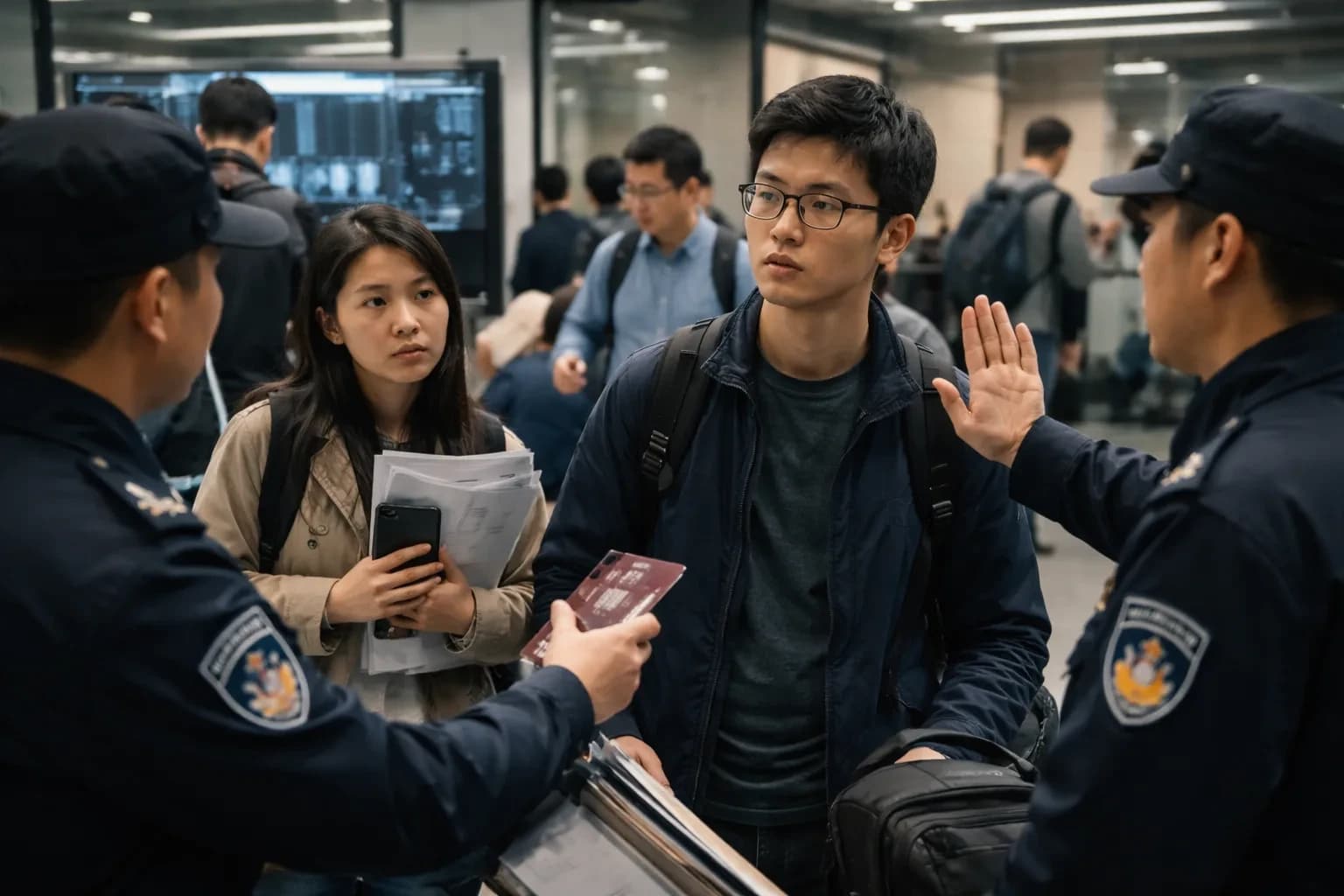
China has begun tightening controls on the international movement of high-value AI talent, requiring some leading founders, executives, and researchers to seek approval before traveling abroad. The policy shift shows how far Beijing has moved from seeing AI primarily as a commercial growth engine to treating it as a strategic national-security sector whose people, capital, and intellectual property need direct state oversight.
In practice, that means top talent in Chinese artificial intelligence is no longer operating with the assumptions of a normal global technology market. Travel itself is becoming a regulated privilege for certain people working in the field, especially those tied to major startups, sensitive research, or cross-border dealmaking. The move reflects a broader Chinese view that the AI race with the United States is narrowing and that human expertise is now one of the country's most defensible assets.
What's new in this update
One of the clearest recent examples involves Manus, an AI startup whose founders were reportedly prevented from leaving the country while authorities reviewed Meta's proposed $2 billion acquisition of the company. That case is notable because it combines three things Beijing is increasingly wary of: top domestic AI talent, foreign acquisition of a promising Chinese firm, and the possibility that a strategic technology asset could move into U.S. hands.
The Manus episode has become a visible symbol of a wider policy hardening. Rather than allowing AI founders to operate like ordinary startup executives pursuing global exits, Chinese regulators are signaling that major deals in the sector may now be judged through the lens of industrial policy and geopolitical rivalry.
Key details
The timing is important. According to Stanford's latest AI index, the performance gap between leading U.S. and Chinese models has narrowed dramatically, falling from 31% in 2023 to 2.7% by March 2026. Even if American companies still lead in some model quality metrics and ecosystem power, that shrinking spread helps explain why Beijing is becoming more defensive about talent leakage.
The new restrictions fit into a larger pattern:
- Chinese authorities have pressured firms to scrutinize foreign capital tied to sensitive AI companies.
- Companies such as ByteDance, StepFun, and Moonshot AI have faced tighter controls around outside investment.
- Export restrictions and procurement rules have been used to shield domestic supply chains and state-backed computing priorities.
- Travel oversight now appears to be joining capital controls and hardware policy as another tool of competitive containment.
This approach suggests that Beijing increasingly sees founders and researchers almost as strategic infrastructure, comparable to chips, rare earths, or cloud capacity.
Background and context
For years, Chinese technology companies operated inside a partially globalized model: they raised international capital, hired across borders, and pursued overseas listings or partnerships where possible. That environment has changed sharply as Washington and Beijing have expanded export controls, investment scrutiny, and national-security framing around advanced technology.
Artificial intelligence sits at the center of that change because it touches military planning, cyber capability, industrial automation, scientific research, and information control. When officials worry about "brain drain," they are not just talking about losing employees. They are talking about losing future model breakthroughs, applied research expertise, and the capacity to build domestic champions that can compete with OpenAI, Anthropic, Google, Meta, and other U.S. players.
What to watch next
The next question is whether these travel restrictions stay targeted or broaden into a more formal system affecting a much wider circle of AI personnel. Investors will also watch what happens to cross-border deals involving Chinese AI startups and whether founders begin seeking new ownership or financing structures that satisfy Beijing without fully closing off foreign capital.
Why this matters
This is one of the clearest signs yet that China now treats elite AI talent as a strategic resource that cannot be allowed to circulate freely when geopolitical competition is intensifying. That has implications not only for researchers and founders, but for how global AI markets, acquisitions, and partnerships will function from here.
Reader context
This story belongs to Northstar Herald's Artificial Intelligence coverage, with related entities including China, Manus, Meta, Tech Policy. The report is based on TechCrunch AI source material.
Related coverage
Why it matters
The restrictions signal Beijing's view of AI talent as a critical national security asset, marking a major shift in how the state manages its tech workforce.
Read next
Follow this story through the topic hub, more ai coverage, and the latest updates.
Weekly briefing
Get the week's key developments in one concise email.
Get a fast catch-up on the biggest stories, the context behind them, and the links worth your time.
Cadence
Weekly, for a quick catch-up
Coverage
AI, business, world, security, sports
Format
Clear takeaways and useful context
Request the briefing
Leave your email to open a prepared request and get on the list for the weekly briefing.
About the byline
AI reporter
Alex Rivera reports on artificial intelligence with an emphasis on model launches, frontier lab strategy, developer tooling, and the policy decisions shaping commercial deployment.
Sources and methodology