AI Re-creations of Deceased Pilot Voices Prompt NTSB Docket Shutdown
Federal investigators restricted access to dozens of crash files after users converted visual spectrograms back into cockpit audio recordings.
Primary source: TechCrunch AI. Full source links and update notes are below.
Fast summary
Start here
- The National Transportation Safety Board (NTSB) temporarily disabled its public docket system after discovering AI-generated audio of deceased pilots circulating online.
- Users utilized spectrogram images and public transcripts to recreate cockpit voice recorder audio from UPS Flight 2976 using tools like Codex.
- While general access has been restored, 42 investigations remain closed to the public pending a review of sensitive data.
What happened
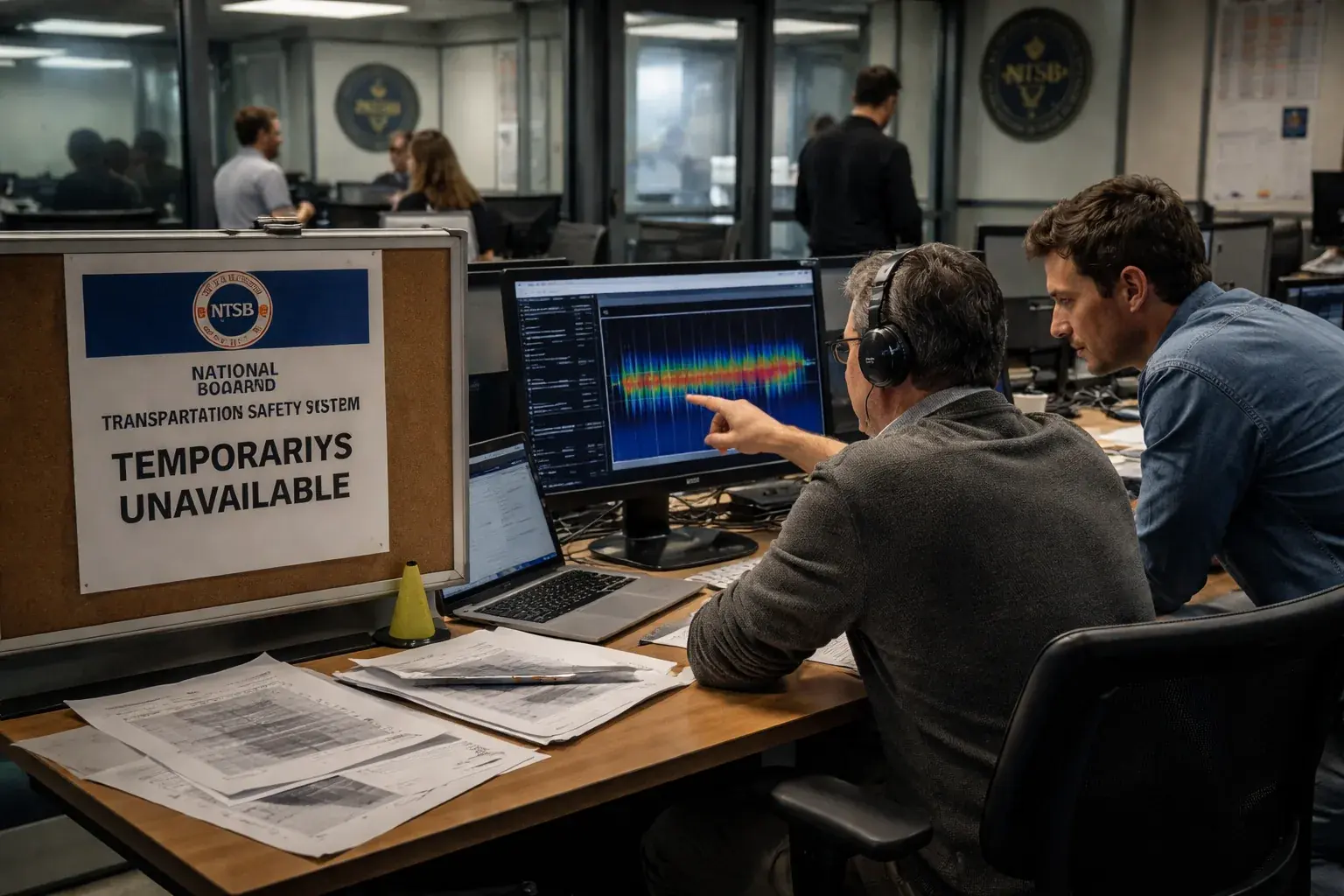
The NTSB took its public investigation database offline after AI-generated audio clips of pilots killed in a UPS plane crash began circulating on social media. While federal law prohibits the NTSB from releasing actual cockpit voice recordings (CVR) to the public, the agency had included spectrograms—visual representations of sound frequencies—within its investigative dockets. External parties used these images to reconstruct the voices of the deceased crew members.
What's new in this update
On Friday, the NTSB restored public access to most of its docket system but kept 42 specific investigations closed pending further review. This includes the documentation related to the UPS Flight 2976 crash in Louisville, Kentucky. The agency is currently evaluating how to prevent scientific data from being used to generate approximations of sensitive audio that is legally protected from disclosure.
Key details
The reconstruction process involved using AI tools like Codex to interpret the megabytes of data encoded within spectrogram files. By combining the high and low-frequency data found in these images with publicly available written transcripts, users were able to generate audio approximations of the pilots' final moments. The vulnerability was previously highlighted by YouTuber Scott Manley, who noted the potential for spectrograms to be converted back into sound signals.
Background and context
The NTSB docket system is designed to be a transparent resource for data on transportation accidents, containing thousands of files intended for public and industry safety research. Federal law mandates that while transcripts of cockpit recorders can be released, the actual audio recordings must remain confidential to respect the privacy of the victims. Spectrograms have historically been treated as technical data rather than audio surrogates.
What to watch next
The NTSB's ongoing review of the 42 closed dockets suggests a likely shift in how the agency publishes technical audio data. Moving forward, the agency may implement stricter redaction standards for spectrograms or remove them entirely from public-facing dockets to prevent AI-driven reconstructions of legally protected cockpit audio.
Why it matters
This incident reveals a privacy loophole where technical data intended for research can be reverse-engineered by AI to bypass federal laws protecting crash victim audio.
Read next
Follow this story through the topic hub, more ai coverage, and the latest updates.
Weekly briefing
Get the week's key developments in one concise email.
Get a fast catch-up on the biggest stories, the context behind them, and the links worth your time.
Cadence
Weekly, for a quick catch-up
Coverage
AI, business, world, security, sports
Format
Clear takeaways and useful context
Request the briefing
Leave your email to open a prepared request and get on the list for the weekly briefing.
Author
See who assembled this story and follow more of their work.
Sources and methodology